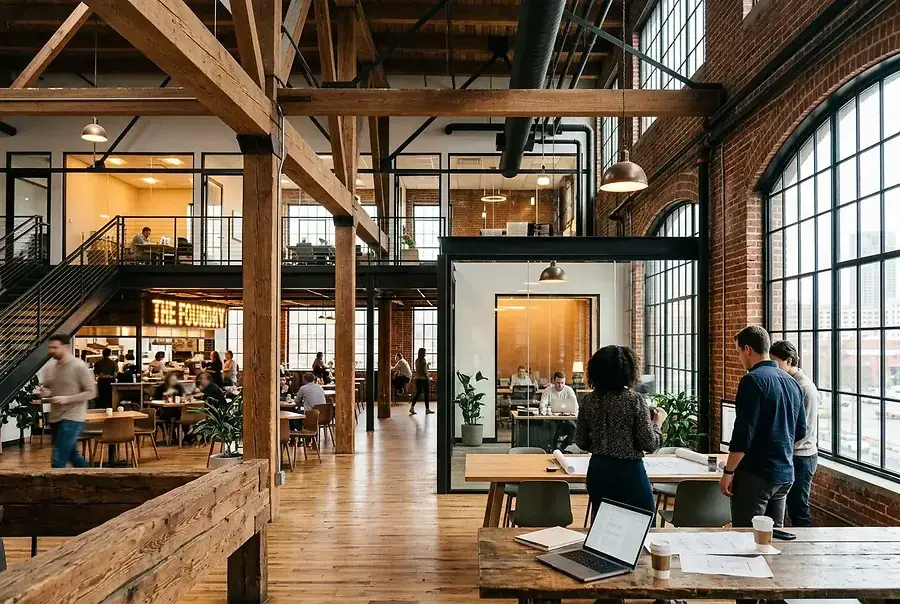
The Adaptive Reuse Opportunity in Birmingham's Industrial Landscape
Birmingham's industrial heritage presents a remarkable opportunity for forward-thinking investors and developers. The city's landscape is dotted with vacant warehouses, factories, and manufacturing facilities that once powered the region's economy. Rather than allowing these structures to deteriorate, adaptive reuse has emerged as a transformative strategy that breathes new life into these properties while generating substantial returns on investment.
The adaptive reuse market in Birmingham is experiencing unprecedented growth. Developers are converting former steel mills into loft apartments, transforming warehouses into creative office spaces, and repurposing manufacturing plants into mixed-use developments. This trend reflects a broader shift in how cities approach urban revitalization, combining historic preservation with modern commercial viability.
Why Birmingham? The city offers several compelling advantages for adaptive reuse projects:
- Abundant inventory of structurally sound industrial buildings
- Lower acquisition costs compared to new construction
- Strong community support for revitalization initiatives
- Proximity to growing residential and commercial markets
- Access to tax incentives and historic preservation credits
Investors who act now can position themselves at the forefront of Birmingham's commercial renaissance, capturing significant value as the market continues to mature.
Understanding Zoning and Regulatory Requirements for Conversions
Navigating Birmingham's Zoning Framework
Before converting an industrial property, you must thoroughly understand Birmingham's zoning regulations. Most industrial spaces are zoned for manufacturing and warehousing, which may not align with your intended use. The good news is that Birmingham's planning department has streamlined processes for adaptive reuse projects, recognizing their community benefits.
Key zoning considerations include:
- Current zoning designation – Determine if your intended use is permitted or requires a variance
- Mixed-use compatibility – Many conversions blend residential, commercial, and office spaces
- Parking requirements – Industrial zones often have different parking standards than commercial zones
- Height and setback restrictions – Verify that existing structures comply with current regulations
Historic Preservation and Building Codes
Many of Birmingham's industrial buildings qualify for historic designation, which opens doors to valuable tax credits but also introduces compliance requirements. The National Register of Historic Places offers federal tax credits of up to 20% for qualified rehabilitation expenses.
Important: Work with architects and contractors experienced in historic preservation. Building code compliance for older structures can be complex, but modern solutions often allow you to maintain historic character while meeting contemporary safety standards.
Permits and Approvals
The approval process typically involves multiple steps:
- Zoning variance or conditional use permit application
- Historic preservation review (if applicable)
- Building permit and architectural review
- Environmental assessment and remediation (if needed)
- Final inspections and occupancy certification
Budget 6-12 months for the approval process and allocate funds for professional consultants, including zoning attorneys, architects, and environmental specialists.
Financial Planning and ROI Projections for Adaptive Reuse Projects
Understanding Project Costs
Adaptive reuse projects involve multiple cost categories that differ from traditional construction. Successful financial planning requires detailed analysis of each component:
- Acquisition costs – Industrial properties typically cost 30-50% less than comparable new construction sites
- Structural and mechanical upgrades – HVAC, electrical, and plumbing systems often require complete replacement
- Remediation expenses – Environmental cleanup can range from minimal to substantial depending on prior industrial use
- Architectural and design fees – Budget 5-8% of total project cost for professional services
- Permitting and regulatory compliance – Allocate 2-4% for approvals and inspections
Revenue Projections and Market Analysis
Birmingham's commercial real estate market demonstrates strong fundamentals for adaptive reuse conversions. Recent market data shows:
Class A office space commands $18-24 per square foot annually, while creative and flexible office spaces in converted industrial buildings achieve $12-18 per square foot—offering competitive returns with lower acquisition costs.
When projecting revenues, consider your target tenant profile:
- Creative industries – Design firms, tech startups, and media companies value character and flexibility
- Retail and hospitality – Restaurants, galleries, and boutiques thrive in adaptive reuse spaces
- Residential lofts – High-end apartment conversions command premium rents in desirable neighborhoods
- Mixed-use developments – Combining multiple uses maximizes revenue potential and reduces vacancy risk
Calculating ROI and Break-Even Analysis
A typical adaptive reuse project in Birmingham might look like this:
- Property acquisition: $1.5 million (50,000 sq ft at $30/sq ft)
- Conversion costs: $2.5 million ($50/sq ft)
- Total project cost: $4 million
- Projected annual revenue: $600,000-$750,000 (at $12-15/sq ft)
- Operating expenses: $200,000 annually
- Net operating income: $400,000-$550,000
- Projected ROI: 10-14% annually after stabilization
Timeline considerations: Most adaptive reuse projects reach stabilization within 18-24 months of completion. Factor in 12-18 months for construction and 6-12 months for lease-up when projecting your break-even point.
Financing and Incentive Programs
Several financing options and incentive programs can improve project economics:
- Historic Preservation Tax Credits – Federal credits up to 20% of qualified expenses
- New Markets Tax Credits – Available for projects in designated opportunity zones
- SBA loans – Favorable terms for small business-backed projects
- Local incentive programs – Birmingham offers tax abatements and grants for qualifying projects
- Conventional financing – Banks increasingly offer favorable terms for adaptive reuse with strong business plans
Positioning Your Birmingham Portfolio for Long-Term Commercial Success
Adaptive reuse represents more than a real estate transaction—it's a strategic investment in Birmingham's future. As the city continues its transformation from an industrial center to a vibrant mixed-use destination, investors who understand the market dynamics and execute disciplined projects will capture exceptional value.
Success requires attention to detail across multiple dimensions: thorough due diligence on zoning and regulatory requirements, realistic financial projections based on market data, and experienced teams to navigate the conversion process. The properties that will deliver the strongest returns are those in walkable neighborhoods with strong demographic fundamentals and emerging tenant demand.
The window of opportunity in Birmingham's adaptive reuse market remains open, but it's narrowing as more developers recognize the potential. Properties that were overlooked just a few years ago are now attracting serious investor interest. By acting strategically and thoughtfully, you can position your portfolio to benefit from this transformative trend while contributing to the revitalization of Birmingham's historic neighborhoods and commercial districts.