The Rise of Adaptive Reuse in Lebanon's Commercial Market
Lebanon, Pennsylvania's commercial landscape is experiencing a remarkable transformation. Across the region, property owners and investors are discovering the tremendous potential hidden within aging warehouses, vacant retail spaces, and underutilized industrial buildings. Adaptive reuse—the practice of converting existing structures for new purposes—has emerged as a powerful strategy to breathe new life into these properties while meeting the evolving demands of modern businesses.
The shift toward adaptive reuse represents more than just a trend; it reflects a fundamental change in how communities approach urban development and sustainability. Rather than demolishing aging structures, forward-thinking investors are recognizing that these buildings often possess valuable characteristics: solid construction, prime locations, and unique architectural features that new construction cannot replicate.
Understanding Adaptive Reuse: Benefits for Property Owners and Investors
Financial Advantages
The financial benefits of adaptive reuse are compelling. Converting an existing structure typically costs significantly less than new construction while offering comparable or superior results. Property owners benefit from:
- Lower development costs compared to ground-up construction
- Faster project timelines that get properties generating revenue sooner
- Tax incentives available for historic preservation and rehabilitation projects
- Increased property values through strategic improvements and repositioning
- Reduced financing requirements due to lower overall project costs
Environmental and Community Impact
Beyond financial returns, adaptive reuse delivers substantial environmental benefits. By preserving existing structures, developers reduce construction waste, minimize energy consumption associated with new building materials, and maintain the character of established neighborhoods. This sustainable approach aligns with growing consumer preferences for environmentally responsible businesses, making adaptively reused spaces increasingly attractive to tenants seeking green credentials.
Communities benefit as well. Adaptive reuse projects revitalize neglected areas, create local jobs during renovation, and generate ongoing employment through new business operations. These projects often become catalysts for broader neighborhood improvement and increased foot traffic to surrounding businesses.
Flexibility and Market Appeal
Modern businesses require flexibility. Adaptive reuse projects can be designed to accommodate diverse tenant needs—from creative agencies and tech startups to specialized manufacturing and professional services. The open floor plans and high ceilings common in converted industrial spaces appeal to contemporary business models that prioritize collaboration and innovation.
Successful Conversion Examples and Market Opportunities in Lebanon, PA
Industrial to Mixed-Use Conversions
Lebanon's industrial heritage provides excellent opportunities for conversion. Former manufacturing facilities with their characteristic high ceilings, robust structural systems, and spacious layouts are ideal candidates for mixed-use developments combining office, retail, and event spaces. These conversions preserve architectural character while creating vibrant, multi-functional environments.
Retail Repositioning Strategies
The changing retail landscape has left many traditional shopping centers and standalone retail buildings underutilized. Smart investors are converting these spaces into:
- Flexible office suites for growing businesses
- Co-working spaces and business incubators
- Experiential retail combining shopping with dining and entertainment
- Health and wellness centers
- Educational and training facilities
Warehouse to Creative Spaces
The most successful adaptive reuse projects in Lebanon share a common characteristic: they respect the building's original character while boldly reimagining its purpose.
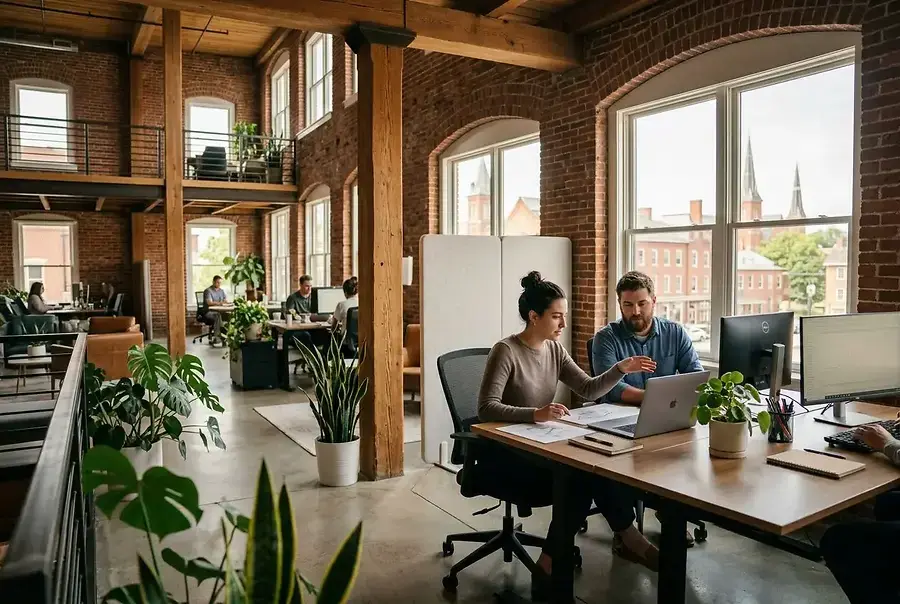
Lebanon's warehouse district presents particularly promising opportunities. These substantial structures, often featuring exposed brick, timber beams, and abundant natural light from large windows, have proven exceptionally popular with creative industries. Design studios, artist collectives, photography studios, and media production companies thrive in these authentic, inspiring environments that would be prohibitively expensive to replicate in new construction.
Key Market Opportunities
Several factors make Lebanon particularly attractive for adaptive reuse investment:
- Strategic location between major metropolitan areas provides access to diverse talent and customer bases
- Affordable properties compared to urban centers, improving project economics
- Growing entrepreneurial community seeking affordable, characterful business spaces
- Supportive local government increasingly offering incentives for adaptive reuse projects
- Strong construction heritage means many buildings are well-built and structurally sound
Implementation Considerations
Successful adaptive reuse requires careful planning. Property owners should:
- Conduct thorough structural and environmental assessments before committing to projects
- Work with architects experienced in adaptive reuse to maximize potential
- Understand local zoning regulations and obtain necessary variances
- Identify target tenants early to inform design decisions
- Budget appropriately for unexpected challenges common in older buildings
Positioning Your Commercial Property for Future Growth
The commercial real estate market continues evolving rapidly. Businesses increasingly seek spaces that offer character, flexibility, and community connection—precisely what well-executed adaptive reuse projects provide. Property owners who recognize this shift and act strategically position themselves for sustained success.
The opportunity is clear: Lebanon's underutilized commercial properties represent significant potential for investors willing to think creatively. By embracing adaptive reuse strategies, property owners can transform struggling assets into thriving business destinations that generate strong returns while contributing positively to their communities.
Whether you own a vacant warehouse, an underperforming retail center, or an aging office building, adaptive reuse offers a proven pathway to renewed purpose and profitability. The key is understanding your property's unique potential and partnering with experienced professionals who can help realize that vision.
The future of Lebanon's commercial real estate belongs to those who see possibility in existing structures and possess the vision to transform them into spaces where modern businesses flourish.
