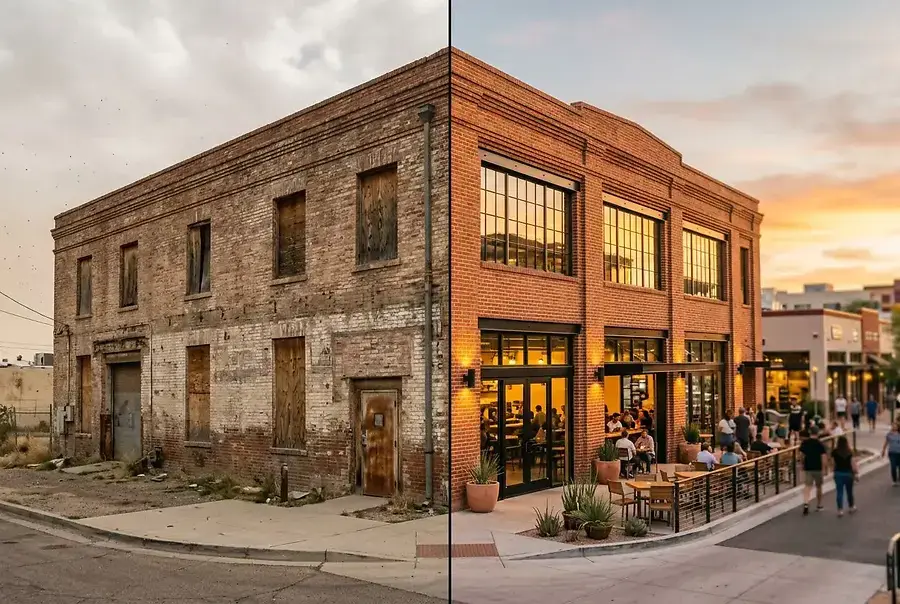
Introduction: The Rise of Adaptive Reuse in Tucson's Commercial Market
Tucson's downtown landscape is experiencing a remarkable transformation. Where vacant storefronts and deteriorating historic buildings once dominated entire blocks, innovative investors are now breathing new life into these forgotten structures. Adaptive reuse—the practice of converting buildings originally designed for one purpose into spaces serving entirely different functions—has become a powerful catalyst for commercial revitalization in Arizona's second-largest city.
This trend isn't merely about preservation; it's about creating profitable, sustainable commercial spaces that honor Tucson's rich architectural heritage while meeting contemporary business needs. From converted warehouses housing trendy restaurants to historic theaters transformed into event venues, adaptive reuse projects are reshaping the city's economic landscape and attracting both local entrepreneurs and national investors.
Understanding Adaptive Reuse: Benefits, Challenges, and Market Demand
The Benefits of Adaptive Reuse
Adaptive reuse offers compelling advantages for investors and the community alike:
- Cost Efficiency: While renovation requires significant investment, it often costs less than new construction while preserving valuable architectural character.
- Faster Time to Market: Existing structures eliminate lengthy permitting processes associated with new development, allowing investors to launch commercial operations more quickly.
- Tax Incentives: Federal and state historic preservation tax credits can offset 20-40% of qualified rehabilitation expenses, dramatically improving project economics.
- Sustainability: Reusing existing buildings reduces waste and environmental impact compared to demolition and new construction.
- Community Appeal: Historic buildings attract customers seeking authentic, distinctive spaces with character and charm.
- Location Advantages: Many historic properties occupy prime downtown locations with established foot traffic and infrastructure.
Understanding the Challenges
Despite these benefits, adaptive reuse projects present significant hurdles that require careful planning:
- Structural and Hidden Issues: Aging buildings often conceal expensive problems—outdated electrical systems, plumbing failures, asbestos, or foundation damage—that inflate renovation budgets.
- Regulatory Complexity: Historic preservation requirements, building codes, and zoning restrictions can complicate and extend project timelines.
- Financing Challenges: Traditional lenders may hesitate to finance adaptive reuse projects due to perceived risks and unconventional designs.
- Design Constraints: Preserving historic elements while meeting modern commercial needs requires creative architectural solutions.
Market Demand in Tucson
Tucson's commercial real estate market is increasingly hungry for adaptive reuse opportunities. Growing demand for authentic, locally-owned businesses has created strong tenant interest in distinctive historic spaces. Millennials and Gen Z consumers actively seek out businesses located in character-filled venues, making adaptive reuse properties particularly attractive for restaurants, boutiques, galleries, and creative offices.
Successful Adaptive Reuse Projects in Tucson and What Makes Them Profitable
Case Study: The Warehouse District Transformation
Tucson's historic warehouse district has emerged as a prime example of successful adaptive reuse. Former industrial buildings have been converted into mixed-use spaces combining restaurants, breweries, art galleries, and office lofts. These projects succeed because they:
- Maintain original architectural features while modernizing interiors
- Create vibrant, walkable neighborhoods that attract multiple complementary businesses
- Leverage the district's authentic industrial aesthetic as a marketing advantage
- Generate consistent revenue through diverse tenant bases
The Theater District Revival
Historic theaters throughout downtown Tucson have been reimagined as event venues, performance spaces, and entertainment destinations. These conversions prove particularly profitable because they:
- Serve multiple revenue streams (events, performances, private rentals, concessions)
- Attract significant foot traffic that benefits surrounding businesses
- Qualify for substantial historic preservation tax credits
- Create community gathering spaces that build brand loyalty and repeat customers
Key Profitability Factors
Location remains paramount. The most successful adaptive reuse projects occupy high-traffic downtown corridors with established customer bases. Additionally, projects that create mixed-use environments—combining retail, dining, and office space—generate multiple revenue streams and maximize property utilization.
Successful investors also prioritize authentic preservation of distinctive architectural elements. Properties that maintain original character while offering modern amenities command premium rents and attract quality tenants willing to pay for distinctive spaces.
Getting Started: Steps for Identifying and Converting Properties into Commercial Spaces
Step 1: Identify Promising Properties
Begin by analyzing Tucson's commercial real estate market for underutilized historic buildings. Look for properties that:
- Occupy prime downtown locations with strong foot traffic
- Feature distinctive architectural character and original details
- Are listed on historic registries (qualifying for tax credits)
- Have been vacant or underutilized for extended periods
- Offer reasonable acquisition costs relative to market potential
Step 2: Conduct Thorough Due Diligence
Before committing capital, invest in comprehensive property assessments:
- Structural Engineering: Identify hidden damage and necessary repairs
- Environmental Testing: Screen for asbestos, lead, mold, and other hazards
- Historic Assessment: Determine preservation requirements and tax credit eligibility
- Market Analysis: Evaluate tenant demand and rental rate potential
- Zoning Review: Confirm proposed commercial use complies with local regulations
Step 3: Secure Appropriate Financing
Adaptive reuse projects require creative financing strategies. Explore options including:
- Historic preservation tax credit financing
- New Markets Tax Credit programs
- Community development financial institutions (CDFIs)
- SBA loans for small business owners
- Traditional commercial mortgages with experienced lenders
Step 4: Assemble Your Team
Success requires expertise across multiple disciplines. Partner with professionals experienced in:
- Historic preservation architecture
- Commercial real estate development
- Construction management
- Historic preservation tax credits
- Local zoning and building code compliance
Step 5: Execute the Conversion
Work closely with your team to balance preservation with modernization. Maintain original character while installing contemporary systems for HVAC, electrical, plumbing, and technology. Design spaces that appeal to target tenants while respecting the building's historic integrity.
Step 6: Market and Lease the Space
Once conversion is complete, position your property strategically in the market. Highlight distinctive features, location advantages, and the authentic appeal that attracts quality tenants. Consider offering flexible lease terms to attract pioneering businesses that help establish the property's reputation.
Conclusion: The Future of Adaptive Reuse in Tucson
Adaptive reuse represents far more than a real estate investment strategy—it's a pathway to revitalizing communities, preserving history, and creating profitable commercial enterprises. As Tucson's downtown continues to evolve, savvy investors who understand the benefits, challenges, and execution strategies of adaptive reuse will position themselves to capitalize on this transformative trend.
The buildings are there, waiting to be reimagined. The market demand is growing. The financial incentives are substantial. The question isn't whether adaptive reuse will succeed in Tucson—it's whether you'll be part of this exciting transformation.