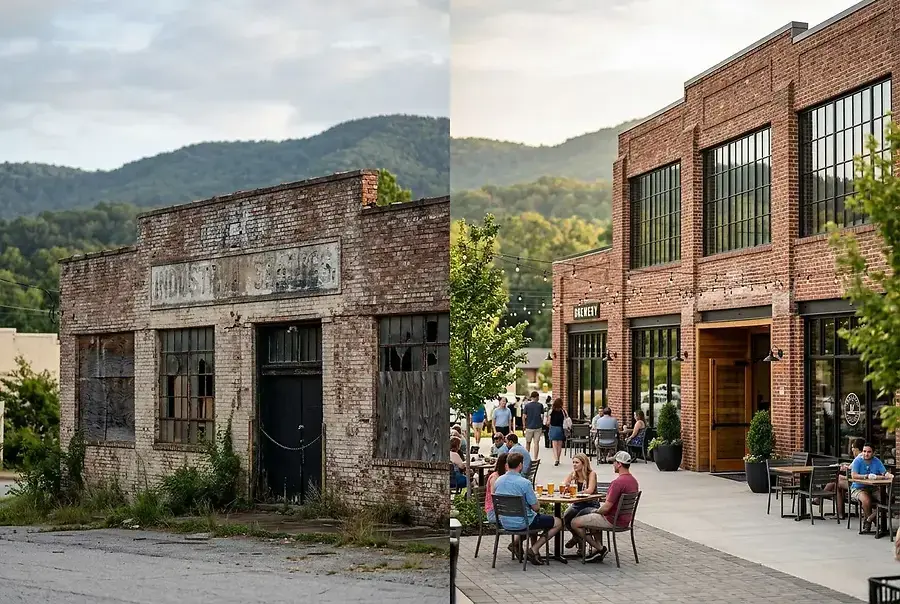
The Rise of Adaptive Reuse in North Georgia's Commercial Real Estate Landscape
North Georgia's commercial real estate market is experiencing a transformative shift as investors and developers increasingly recognize the potential of adaptive reuse projects. Rather than demolishing aging structures, forward-thinking entrepreneurs are breathing new life into underutilized buildings, creating vibrant mixed-use spaces, trendy retail destinations, and innovative office environments. This trend reflects a broader movement toward sustainable development and smart capital deployment across Atlanta, Cherokee, Cobb, Pickens, Gilmer, Fannin, and Forsyth counties.
The appeal of adaptive reuse extends beyond environmental consciousness. These projects often deliver superior returns on investment compared to ground-up construction, thanks to lower acquisition costs, reduced development timelines, and existing infrastructure. Historic warehouses become loft apartments, defunct factories transform into creative office spaces, and abandoned retail buildings emerge as thriving community hubs. The North Georgia region, with its rich industrial heritage and growing population, presents exceptional opportunities for savvy investors willing to see potential where others see only deterioration.
Why North Georgia is Primed for Adaptive Reuse Success
Several factors make North Georgia an ideal market for adaptive reuse ventures:
- Abundant inventory: Decades of industrial and commercial development have left numerous underutilized structures ripe for conversion
- Growing demand: Population growth and economic expansion create strong demand for residential, retail, and office space
- Infrastructure advantage: Existing utilities, transportation networks, and accessibility reduce development costs
- Community support: Local governments increasingly incentivize adaptive reuse through tax credits and expedited permitting
- Authentic character: Historic buildings provide unique architectural features that new construction cannot replicate
Identifying High-Potential Properties for Adaptive Reuse Conversion
Success in adaptive reuse begins with identifying the right properties. Not every vacant building represents a viable investment opportunity. Experienced investors employ a systematic approach to evaluate potential projects.
Key Property Evaluation Criteria
Structural integrity and building systems form the foundation of any assessment. Engage qualified structural engineers and building inspectors to evaluate the foundation, roof, walls, and mechanical systems. Properties with solid bones but outdated systems often present the best opportunities—significant issues requiring complete replacement can quickly erode project economics.
Location remains paramount. Properties in emerging neighborhoods or near major employment centers, transportation hubs, and amenities command premium rents and attract quality tenants. Consider proximity to downtown Atlanta, major highways, and established commercial districts within your target counties.
Zoning compatibility is equally critical. Identify properties zoned for your intended use or in areas where zoning modifications are feasible. Properties already zoned for mixed-use development or in opportunity zones offer faster paths to project realization.
Financial Feasibility Analysis
Conduct thorough financial modeling before committing capital. Calculate acquisition costs, renovation expenses, carrying costs during development, and projected rental income. The most promising adaptive reuse projects typically show clear pathways to profitability within 5-7 years.
Research available incentives including:
- Federal Historic Preservation Tax Credits (up to 20% of qualified rehabilitation expenses)
- Georgia state tax incentives for adaptive reuse projects
- Local property tax abatements and economic development grants
- New Markets Tax Credits for projects in designated communities
Navigating Permits, Zoning, and Regulatory Requirements Across North Georgia Counties
The regulatory landscape varies significantly across North Georgia's seven counties. Understanding these differences is essential for project success and timeline management.
County-Specific Considerations
Atlanta and Cobb County offer the most developed adaptive reuse frameworks with established historic district guidelines and streamlined permitting processes. These urban and suburban markets move quickly but require strict adherence to design standards.
Cherokee and Forsyth counties present emerging opportunities with less competition but potentially longer approval timelines as local governments develop adaptive reuse policies. Early engagement with planning departments can shape favorable outcomes.
Pickens, Gilmer, and Fannin counties offer rural and small-town properties with lower acquisition costs and less regulatory complexity, though tenant markets may be more limited.
Essential Permitting Steps
Begin with comprehensive due diligence:
- Obtain Phase I Environmental Site Assessments to identify potential contamination
- Review historical building records and previous use documentation
- Verify current zoning and identify any deed restrictions or easements
- Consult with local planning departments regarding adaptive reuse feasibility
- Engage qualified architects and engineers early in the process
The permitting process typically includes:
- Zoning verification and variance requests if necessary
- Historic preservation review for properties in designated districts
- Building code compliance assessment and remediation planning
- Environmental remediation if Phase I findings warrant investigation
- Design review by local architectural review boards
- Construction permits and inspections throughout renovation
Building Code Compliance Strategies
Modern building codes present the greatest challenge in adaptive reuse projects.
Smart developers work with code officials early to identify practical compliance solutions that preserve historic character while meeting safety requirements.Options include:
- Variance requests for specific code provisions
- Alternative compliance methods approved by building officials
- Phased compliance approaches spreading costs across project timeline
- Performance-based code interpretations focusing on safety outcomes rather than prescriptive requirements
Positioning Your Investment Strategy in North Georgia's Adaptive Reuse Market
The adaptive reuse market in North Georgia continues to mature, offering sophisticated investors multiple pathways to success. Whether you're targeting historic downtown properties in Atlanta, emerging neighborhoods in Cobb County, or rural opportunities in the northern counties, success requires careful property selection, thorough financial analysis, and proactive regulatory navigation.
The most successful adaptive reuse investors combine vision with pragmatism—they see potential in overlooked properties while maintaining realistic assessments of conversion costs and market demand. They build relationships with local officials, engage qualified professionals, and approach each project with detailed planning and contingency reserves.
As North Georgia continues its economic expansion and communities increasingly value sustainable development, adaptive reuse opportunities will only multiply. The time to position your investment strategy in this dynamic market is now. Start by identifying properties in your target counties, conducting thorough evaluations, and building your team of experienced professionals. Your next profitable venture may be hiding in plain sight—waiting for someone with vision to unlock its potential.