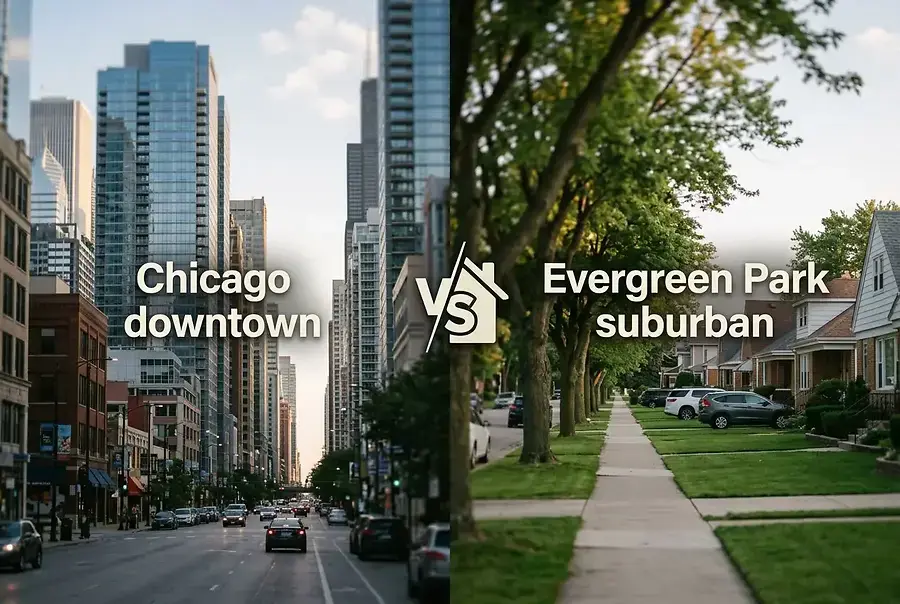
Understanding the Market Differences
When considering purchasing a home in the Chicago metropolitan area, prospective buyers face a critical decision: should they invest in the vibrant urban core of Chicago or explore the quieter, more residential appeal of suburban communities like Evergreen Park? This choice extends far beyond lifestyle preferences—it significantly impacts your financial investment. Understanding the cost differences between these two markets is essential for making an informed decision that aligns with your budget and long-term goals.
Chicago and Evergreen Park represent two distinct real estate markets with different economic drivers, demographic patterns, and investment potentials. While Chicago offers urban amenities, cultural attractions, and diverse neighborhoods, Evergreen Park provides a more suburban atmosphere with family-friendly communities and often lower price points. However, the financial implications of choosing one over the other deserve careful examination.
Pricing Trends and Property Values in Each Location
Chicago's Real Estate Market
Chicago's housing market reflects the complexity of a major metropolitan area. Property values vary dramatically depending on the neighborhood, with some areas commanding premium prices while others offer more accessible entry points. The median home price in Chicago typically ranges significantly higher than suburban alternatives, reflecting the city's status as a major economic hub.
- Urban neighborhoods like Lincoln Park, Wicker Park, and the Loop command the highest prices, often exceeding $500,000 for modest properties
- Emerging neighborhoods offer more affordable options, ranging from $300,000 to $450,000
- Market dynamics are influenced by proximity to public transportation, employment centers, and cultural attractions
- Appreciation potential in Chicago remains strong due to the city's economic diversity and population density
Evergreen Park's Real Estate Market
Evergreen Park, located approximately 15 miles south of downtown Chicago, offers a distinctly different pricing structure. As a suburban community, it attracts families seeking more space, better schools, and a quieter lifestyle at a lower cost.
- Median home prices in Evergreen Park typically range from $250,000 to $400,000, providing significant savings compared to Chicago
- Property sizes are generally larger, with more land and yard space available
- Market stability is strong, with consistent appreciation and lower volatility than urban markets
- Inventory diversity includes single-family homes, townhouses, and newer developments
Price Comparison Summary
On average, you can expect to pay 20-30% less for a comparable property in Evergreen Park than in Chicago. A home that costs $400,000 in Chicago might be available for $280,000-$320,000 in Evergreen Park, representing substantial savings for budget-conscious buyers.
Tax Implications and Closing Cost Breakdown
Property Tax Considerations
Property taxes represent one of the most significant ongoing costs of homeownership, and this is where Chicago and Evergreen Park diverge considerably.
- Chicago property taxes average around 0.8-1.2% of home value annually, though this varies by neighborhood and recent assessments
- Evergreen Park property taxes typically range from 0.9-1.3% of home value, sometimes slightly higher than Chicago due to school funding structures
- Tax assessment differences can significantly impact long-term ownership costs
- Homestead exemptions may be available in both locations for primary residences
Property taxes in Illinois are among the highest in the nation, so understanding local tax structures is crucial for budgeting your homeownership expenses.
Closing Costs Analysis
Closing costs typically range from 2-5% of the purchase price and include various fees and expenses. While the percentage remains similar between Chicago and Evergreen Park, the actual dollar amounts differ significantly due to the price differences.
- Loan origination fees: Usually 0.5-1% of the loan amount
- Appraisal fees: Typically $400-$600 in both locations
- Title insurance: Ranges from $500-$1,500 depending on property value
- Attorney fees: Illinois requires attorney involvement; expect $800-$1,500
- Home inspection: Generally $300-$500
- Property survey: $300-$500 if required
Total Cost Comparison Example
Consider a buyer with a $400,000 budget:
- In Chicago: Purchase a $400,000 home with approximately $8,000-$20,000 in closing costs
- In Evergreen Park: Purchase a $320,000 home with approximately $6,400-$16,000 in closing costs, and potentially have $80,000 remaining for renovations or savings
Additional Financial Considerations
Beyond purchase price and taxes, consider these factors:
- Homeowners insurance: May be slightly lower in suburban Evergreen Park
- Utilities: Larger suburban homes may have higher heating and cooling costs
- Maintenance: Older Chicago properties may require more frequent repairs
- HOA fees: Some Evergreen Park developments include HOA fees; Chicago varies by neighborhood
Making Your Best Choice
The decision between Chicago and Evergreen Park depends on your priorities and financial situation. Choose Chicago if: you prioritize walkability, cultural amenities, shorter commutes to downtown employment, and don't mind higher upfront and ongoing costs. Choose Evergreen Park if: you value more space, family-friendly schools, lower purchase prices, and are willing to commute for work.
Financially, Evergreen Park offers clear advantages for budget-conscious buyers, potentially saving $80,000-$120,000 on the purchase price alone. However, Chicago may offer better long-term appreciation in certain neighborhoods and provides unmatched urban lifestyle benefits.
Before making your final decision, work with a local real estate agent familiar with both markets, get pre-approved for a mortgage, and carefully calculate your total cost of ownership including taxes, insurance, and maintenance. Both Chicago and Evergreen Park offer excellent opportunities for homeowners—the best choice is the one that aligns with your lifestyle, budget, and investment goals.