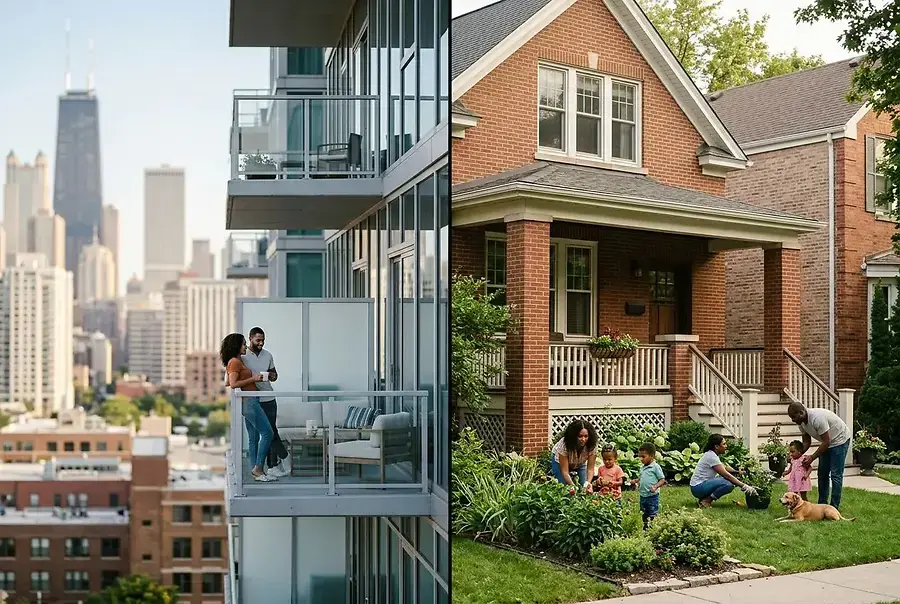
Understanding the Chicago Housing Market: Condos and Single-Family Homes
Chicago's real estate market offers homebuyers a diverse range of options, with condos and single-family homes representing two of the most popular choices. Each property type comes with distinct advantages and challenges that can significantly impact your living experience and financial investment.
Condos are individual units within larger residential buildings or complexes, where owners share common areas and building maintenance responsibilities. Single-family homes are standalone properties where you own both the structure and the land, providing complete autonomy over your property.
Understanding these fundamental differences is the first step toward making an informed decision that aligns with your personal and financial circumstances.
Cost Comparison: Purchase Price, Maintenance, and HOA Fees
Purchase Price and Down Payment
In Chicago's market, condos typically offer lower entry points compared to single-family homes. You can often find quality condos in desirable neighborhoods at prices 20-40% lower than comparable single-family homes. This makes condos an attractive option for first-time homebuyers or those with limited capital.
Single-family homes, while more expensive upfront, may appreciate faster over time due to land ownership and greater customization potential.
Maintenance and Repair Costs
One of the most significant differences between these property types involves maintenance responsibilities:
- Condos: Building maintenance, roof repairs, exterior work, and common area upkeep are typically handled by the HOA, with costs shared among residents
- Single-Family Homes: You are solely responsible for all repairs and maintenance, from roof replacement to foundation work
Single-family homeowners should budget 1-2% of their home's value annually for maintenance and unexpected repairs. This can amount to thousands of dollars per year for a $500,000 home.
HOA Fees and Additional Costs
Condo owners pay monthly HOA fees, typically ranging from $200 to $600+ depending on the building's amenities and age. These fees cover common area maintenance, insurance, property management, and building reserves.
Single-family homes generally have no HOA fees, though some neighborhoods with shared amenities may require modest assessments. This can result in significant long-term savings, though you lose the convenience of centralized maintenance coordination.
Lifestyle Factors: Community Living vs. Suburban Independence
Social Environment and Amenities
Condos often provide built-in community features that appeal to many residents:
- Fitness centers and swimming pools
- Concierge services and package handling
- Social events and community gatherings
- Enhanced security with 24-hour monitoring
- Proximity to urban amenities and public transportation
Single-family homes offer a quieter, more private living experience with the freedom to create your own outdoor spaces and host gatherings without noise restrictions.
Space and Customization
Condos typically offer less square footage and limited customization options. Most buildings restrict renovations, pet sizes, and exterior modifications. However, this means less responsibility for major upgrades.
Single-family homes provide unlimited space for expansion, renovation, and personalization. You can renovate kitchens, add rooms, install pools, or landscape according to your vision without seeking approval from a board.
Noise and Privacy Considerations
Condo living means sharing walls with neighbors, which can result in noise concerns. Single-family homes provide superior sound isolation and privacy, making them ideal for those who value quiet and seclusion.
Making Your Decision: Key Questions Every Chicago Homebuyer Should Ask
Financial Readiness
What is your budget for purchase price and ongoing costs? Calculate your total monthly expenses, including mortgage, property taxes, insurance, and maintenance. For condos, add HOA fees; for single-family homes, budget for repairs and maintenance.
How long do you plan to stay? If you're staying fewer than 5 years, a condo's lower entry price and minimal maintenance may be advantageous. Longer-term ownership favors single-family homes due to appreciation potential and equity building.
Lifestyle Preferences
Do you value community or independence? Consider whether you enjoy shared amenities and social interaction or prefer solitude and autonomy. Your answer should heavily influence your decision.
What are your space needs? Evaluate your current and future space requirements. Growing families often benefit from single-family homes' flexibility, while empty nesters may prefer condo convenience.
Practical Considerations
How involved do you want to be in home maintenance? If you prefer minimal responsibility, condos with HOA management are ideal. If you enjoy DIY projects and home improvement, a single-family home offers unlimited opportunities.
What are your neighborhood priorities? Condos often cluster in urban and downtown areas with walkable neighborhoods. Single-family homes offer more suburban options with larger lots and quieter streets.
Future Planning
What are your long-term investment goals? Single-family homes typically offer stronger long-term appreciation, especially in developing neighborhoods. Condos provide stability and lower entry costs but may appreciate more slowly.
Will you need flexibility to relocate? Condos in desirable buildings tend to sell quickly, offering exit flexibility. Single-family homes may take longer to sell, requiring more commitment to your location.
Final Thoughts
The choice between a Chicago condo and a single-family home depends on your unique circumstances, priorities, and goals. Condos excel for those seeking affordability, low maintenance, and urban convenience, while single-family homes suit those prioritizing space, customization, and long-term investment potential.
Take time to honestly assess your lifestyle preferences, financial situation, and future plans. Consider visiting multiple properties in different neighborhoods, speaking with current owners, and consulting with a real estate professional familiar with Chicago's market. Your ideal home is out there—you just need to determine which type best matches your vision for the future.