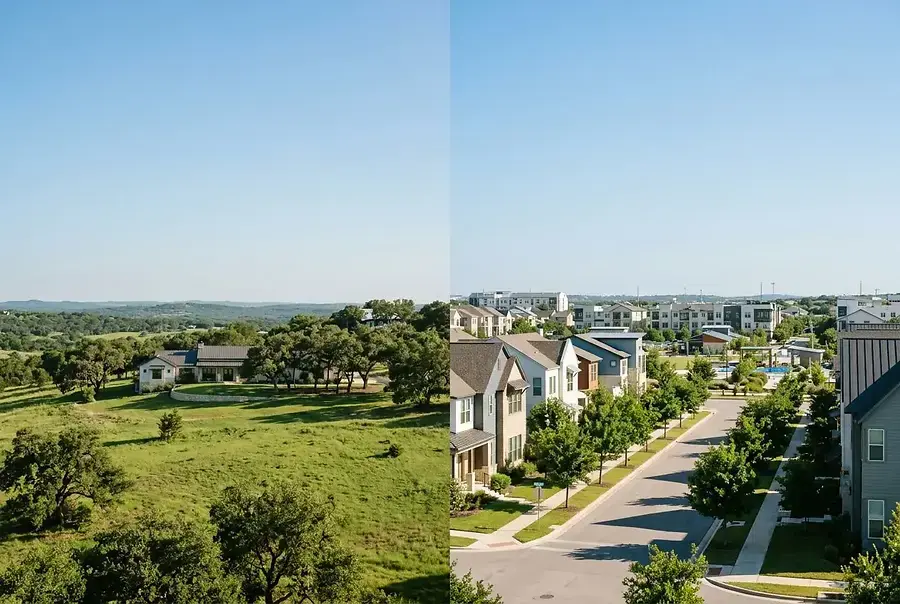
Introduction: The Central Texas Real Estate Landscape and Location Decision
Central Texas has emerged as one of the nation's most dynamic real estate markets, attracting homebuyers, investors, and families seeking a blend of opportunity and quality of life. The region offers a compelling choice between two distinct living environments: the scenic, tranquil Hill Country communities and the vibrant, fast-growing urban and suburban corridors. Understanding the differences between these options is essential for making an informed decision that aligns with your lifestyle, financial goals, and long-term vision.
The choice between Hill Country and urban living isn't simply about geography—it's about selecting a lifestyle that matches your priorities. Whether you're drawn to rolling landscapes and peaceful retreats or bustling neighborhoods with endless amenities, Central Texas delivers both experiences within a reasonable distance. This guide will help you navigate this important decision by examining what each environment offers.
Hill Country Communities: Charm, Investment Potential, and Lifestyle Benefits
The Appeal of Hill Country Living
The Hill Country, stretching west and north of Austin, represents a lifestyle choice centered on natural beauty, space, and community. This region is characterized by rolling terrain, scenic vistas, and a slower pace of life that appeals to those seeking respite from urban hustle. Communities like Dripping Springs, Wimberley, and Blanco offer residents the chance to own larger properties with stunning views and genuine privacy.
Hill Country living attracts several types of buyers:
- Retirees seeking peaceful, scenic environments with outdoor recreation
- Remote workers who value space and natural surroundings
- Families wanting larger properties and tight-knit communities
- Investors capitalizing on growing demand for weekend retreats and vacation rentals
Investment Potential in Hill Country
The Hill Country has demonstrated impressive appreciation rates over recent years. Properties in desirable communities have seen consistent value growth, driven by limited land availability, increasing demand from out-of-state buyers, and the region's reputation as a premier destination. Many investors have found success with vacation rental properties, capitalizing on the area's popularity with tourists.
Hill Country properties offer both lifestyle benefits and solid investment fundamentals, making them attractive to buyers seeking more than just a home.
Lifestyle Considerations
Hill Country living comes with trade-offs. While you gain space, privacy, and natural beauty, you may sacrifice convenience. Commutes to Austin can be 45 minutes to over an hour, depending on your location. Shopping, dining, and entertainment options are more limited than in urban areas, though this is rapidly changing as communities develop. Property maintenance on larger lots requires more time and resources, and utility costs can be higher in rural areas.
Urban and Suburban Options: Growth Corridors and Market Strength in Central Texas
The Urban Advantage
Central Texas's urban and suburban communities—including Austin, Round Rock, Cedar Park, and Pflugerville—offer convenience, walkability, and access to world-class amenities. These areas are experiencing explosive growth, driven by tech industry expansion, corporate relocations, and an influx of young professionals seeking vibrant city living.
Urban living provides immediate access to:
- Employment opportunities in diverse industries
- Excellent schools and educational institutions
- Restaurants, entertainment, and cultural venues
- Public transportation and shorter commutes
- Diverse neighborhoods with distinct personalities
Market Strength and Investment Returns
Urban and suburban Central Texas markets have shown remarkable resilience and growth. The influx of major corporations and the tech boom have created strong demand for both residential and rental properties. Suburban communities along the I-35 corridor and northwest Austin have seen particularly robust appreciation, with new developments offering modern amenities and community features.
For investors, urban and suburban properties offer:
- Strong rental demand and higher rental yields
- Consistent appreciation driven by population growth
- Easier property management and tenant acquisition
- Greater liquidity when selling
Urban Living Trade-offs
The rapid growth that makes urban Central Texas attractive also presents challenges. Housing prices have increased significantly, making entry into the market more difficult for some buyers. Traffic congestion is a growing concern, particularly during peak hours. While neighborhoods vary widely, urban living typically means smaller lots, less privacy, and higher density. Additionally, the rapid pace of change means neighborhoods can transform quickly, which some view as exciting and others find unsettling.
Conclusion: Matching Your Priorities to Your Perfect Central Texas Home
The choice between Hill Country and urban living in Central Texas ultimately depends on your personal priorities, financial situation, and life stage. Consider these key questions:
- What matters most to you? Space and nature, or convenience and community?
- What are your investment goals? Long-term appreciation, rental income, or personal use?
- How important is commute time? Can you work remotely, or do you need proximity to employment centers?
- What's your budget? Both markets offer options at various price points, but Hill Country properties typically offer more space per dollar.
- Are you seeking a primary residence or investment property? Your answer shapes which market makes more sense.
Central Texas is fortunate to offer both worlds within a relatively compact region. Many residents even split their time between Hill Country retreats and urban primary residences. Whether you choose the serene landscapes of the Hill Country or the dynamic energy of urban Central Texas, you're investing in one of America's most desirable real estate markets. Take time to explore both options, consider your lifestyle needs, and make the choice that aligns with your vision for the future.