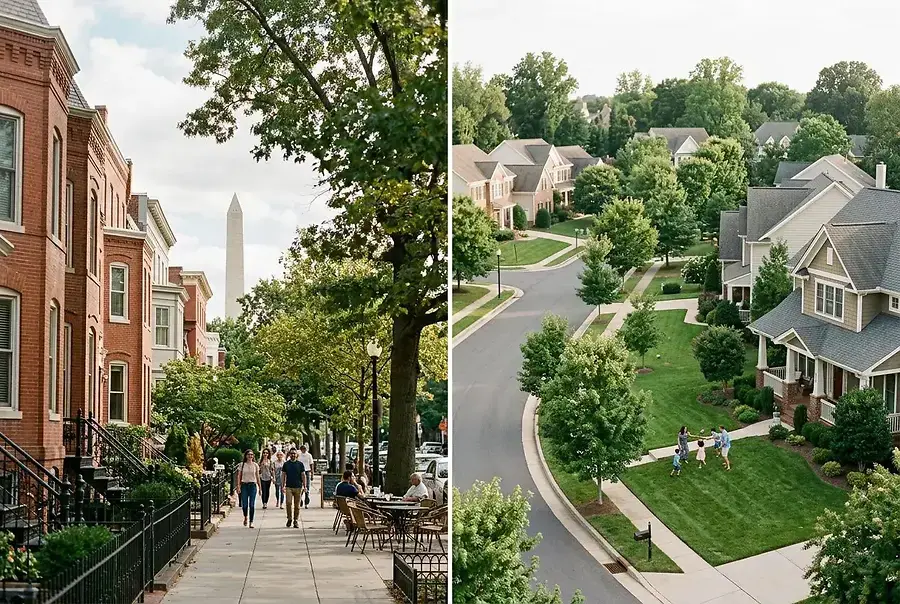
Understanding the DC vs. Northern Virginia Decision
The Washington DC metropolitan area offers two distinctly different real estate landscapes, each with compelling advantages for different buyers. Whether you're drawn to the vibrant energy of urban DC neighborhoods or the spacious tranquility of suburban Northern Virginia communities like McLean, your choice will significantly impact your lifestyle, finances, and long-term satisfaction. This decision isn't simply about location—it's about aligning your property investment with your personal priorities and future goals.
The choice between these two markets requires careful consideration of multiple factors: commute times, school quality, property values, walkability, and community atmosphere. Understanding the distinct characteristics of each region will empower you to make an informed decision that truly matches your needs.
Urban Living in Washington DC: Walkability, Amenities, and Market Dynamics
The Appeal of Urban Neighborhoods
Washington DC's urban neighborhoods offer an unparalleled lifestyle for those who thrive on convenience and cultural engagement. Neighborhoods like Capitol Hill, Logan Circle, and Dupont Circle provide residents with immediate access to world-class restaurants, galleries, theaters, and museums. The ability to walk to work, entertainment, and daily necessities is a defining characteristic of DC living that appeals to young professionals and empty nesters alike.
Market Dynamics and Investment Potential
DC's real estate market has demonstrated strong appreciation over the past decade, with certain neighborhoods experiencing particularly robust growth. Townhouses in desirable urban locations command premium prices, reflecting high demand from professionals seeking walkable, transit-accessible communities. The presence of major employers, government institutions, and a growing tech sector creates consistent demand for urban housing.
- Walkability Score: Most urban DC neighborhoods rank in the 80-95 range, making car ownership optional
- Public Transportation: The Metro system provides comprehensive coverage across the city and into Northern Virginia
- Rental Market: Strong rental demand supports investment property returns
- Property Appreciation: Historic neighborhoods continue to appreciate steadily
Considerations for Urban Living
Urban DC living comes with trade-offs. Properties are typically smaller, with limited outdoor space. Parking can be challenging and expensive. Property taxes and HOA fees in some neighborhoods are substantial. Additionally, urban living may not suit families seeking large yards, quiet streets, or top-rated school systems with abundant resources.
"Urban living in DC offers unmatched convenience and cultural access, but requires accepting smaller spaces and higher density living."
Suburban Appeal in Northern Virginia: Space, Schools, and Long-Term Value
The Suburban Lifestyle Advantage
Northern Virginia suburbs, particularly communities like McLean, Fairfax, and Arlington, offer a fundamentally different living experience. Here, families find spacious homes with substantial yards, excellent school systems, and quieter neighborhoods conducive to raising children. The suburban lifestyle emphasizes community, safety, and space—values that resonate strongly with families and those seeking a slower pace of life.
Educational Excellence and Family Considerations
Northern Virginia's school systems consistently rank among the nation's best. Fairfax County Public Schools, in particular, has earned national recognition for academic excellence and resources. For families prioritizing education, this advantage alone often justifies the suburban choice. Additionally, suburban communities typically offer more recreational facilities, parks, and youth programs.
- School Rankings: Top-rated public and private schools throughout the region
- Property Size: Homes typically range from 3,000-5,000+ square feet with substantial lots
- Outdoor Space: Large yards ideal for families, gardens, and recreation
- Community Feel: Established neighborhoods with strong community organizations
Investment and Long-Term Value
Suburban Northern Virginia real estate has proven to be a solid long-term investment. While appreciation rates may be more modest than in hot urban neighborhoods, the stability is attractive. Properties hold value well, and the strong school systems and family-friendly amenities create consistent demand. For buyers planning to stay 10+ years, suburban properties often provide better overall value.
Suburban Trade-Offs
The suburban lifestyle requires car dependency. Commutes to downtown DC can range from 30 minutes to over an hour, depending on traffic and your specific location. While the Metro extends into some areas, it doesn't serve all suburban communities equally. Additionally, suburban living may feel isolating for those accustomed to urban energy and spontaneous social opportunities.
Making Your Best Real Estate Choice Based on Your Priorities
Assess Your Lifestyle Preferences
Begin by honestly evaluating how you want to spend your time. Do you envision weekend mornings at neighborhood coffee shops and cultural events? Or do you prefer quiet weekends in your backyard with family and friends? Your daily lifestyle preferences should heavily influence your decision.
Consider Your Life Stage and Timeline
Your current life stage matters significantly. Young professionals often thrive in urban environments, while families with school-age children frequently prefer suburbs. However, these aren't absolute rules—many families successfully raise children in DC, and many retirees prefer suburban living. Consider your anticipated timeline: are you planning to stay for 5 years or 20?
Evaluate Financial Factors
Urban DC: Higher purchase prices, higher property taxes in some areas, but strong rental income potential and appreciation in prime neighborhoods.
Suburban Northern Virginia: Generally lower purchase prices, more affordable property taxes in some jurisdictions, excellent long-term stability, and strong school system funding.
Test Before You Commit
If possible, spend extended time in neighborhoods you're considering. Rent for a year if you can. Experience the commute during rush hour. Visit on weekends and weeknights. This real-world testing will reveal whether the lifestyle truly matches your expectations.
"The best real estate choice isn't about which market is objectively better—it's about which aligns with your unique priorities and vision for your life."
Conclusion: Your Ideal Property Awaits
The decision between urban DC and suburban Northern Virginia real estate ultimately reflects your personal values and life goals. Neither choice is universally superior; rather, each serves different needs and preferences exceptionally well.
Urban DC offers unmatched walkability, cultural access, and professional networking opportunities—ideal for those who prioritize convenience and urban energy. Suburban Northern Virginia provides space, excellent schools, community stability, and a family-friendly environment—perfect for those seeking a different pace of life.
Take time to honestly assess your priorities. Consider your lifestyle preferences, financial situation, family needs, and long-term vision. Visit neighborhoods multiple times. Talk to residents. Imagine yourself living there in five years. By approaching this decision thoughtfully and deliberately, you'll find the real estate choice that truly enhances your life and aligns with your investment goals.
