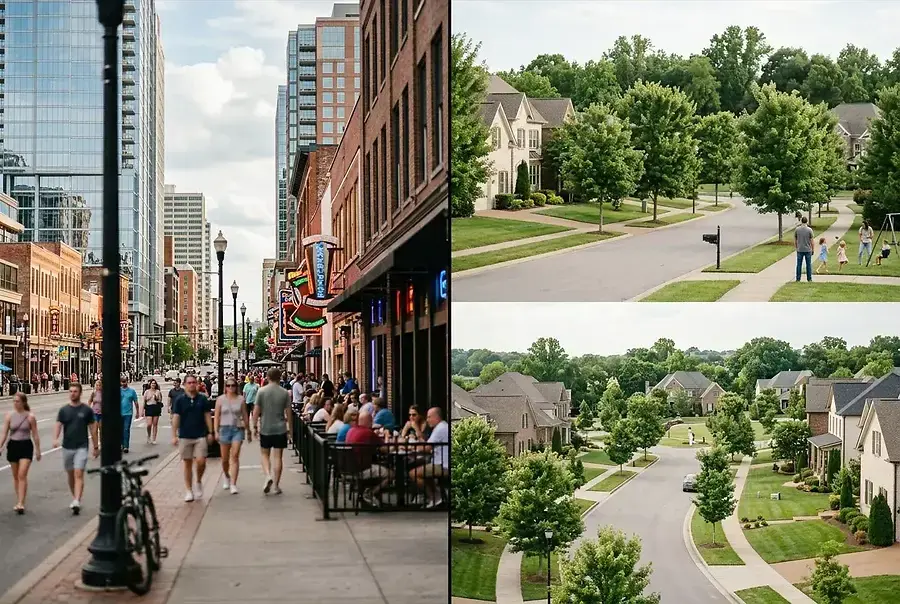
Understanding the Lifestyle Differences: City vs. Suburb
The decision between living in urban Nashville and suburban communities like Old Hickory and Hendersonville is more than just choosing a zip code—it's about selecting the lifestyle that aligns with your family's values and priorities. Each option offers distinct advantages and trade-offs that deserve careful consideration.
Urban Nashville Living
Nashville's urban core pulses with energy and opportunity. The city offers vibrant nightlife, world-class restaurants, cultural attractions, and entertainment venues that draw residents seeking constant activity and social engagement. Walking to coffee shops, galleries, and live music venues is part of the daily experience. Urban living appeals to young professionals, artists, and families who thrive on cultural diversity and spontaneous social opportunities.
However, urban living comes with trade-offs: higher noise levels, limited parking, smaller living spaces, and the constant buzz of city activity. For some, this energy is exhilarating; for others, it can feel overwhelming.
Suburban Living in Old Hickory & Hendersonville
Suburban communities offer a different rhythm. Old Hickory and Hendersonville provide spacious homes, quiet neighborhoods, family-friendly parks, and a strong sense of community. Residents enjoy larger yards, lower crime rates, and a slower pace that many families find ideal for raising children. These towns foster tight-knit communities where neighbors know each other and local events bring people together.
The trade-off is reduced walkability, fewer spontaneous entertainment options, and a longer commute to downtown Nashville for work or entertainment. Suburban living requires more intentional planning for social activities and cultural experiences.
Comparing Costs, Schools, and Community Amenities
Housing Costs
Urban Nashville properties command premium prices due to high demand and limited inventory. A modest downtown condo or bungalow can easily exceed $400,000, with prices climbing rapidly in desirable neighborhoods. Suburban communities like Old Hickory and Hendersonville offer significantly more affordable housing options, with comparable homes available at 30-50% lower prices. This cost difference can mean the distinction between stretching your budget and having financial breathing room.
The suburban advantage in housing affordability often translates to larger homes, more land, and lower property taxes—factors that matter greatly for growing families.
School Systems
Education quality varies across the greater Nashville area. Suburban schools in Hendersonville and Old Hickory often receive high ratings for academic performance and community investment. These districts typically benefit from strong parent involvement and dedicated funding. Urban Nashville schools are increasingly competitive, with several excellent options, though quality can vary significantly by neighborhood. Families prioritizing school performance should research specific districts and individual schools rather than relying on broad generalizations.
Community Amenities
Urban Nashville excels in cultural amenities:
- Museums, theaters, and concert venues
- Diverse dining and shopping options
- Professional sports teams and events
- Public transportation and walkable neighborhoods
Suburban communities offer different amenities:
- Parks, playgrounds, and recreational facilities
- Community centers and youth programs
- Local farmers markets and family events
- Peaceful natural spaces and hiking trails
The question isn't which is better, but which aligns with how you want to spend your time and money.
Transportation and Commute Considerations for Your Daily Life
Urban Commuting
Nashville's urban core offers walkability and public transportation options that reduce dependence on personal vehicles. Many urban residents walk or bike to work, saving on gas and parking costs. However, traffic congestion during peak hours can be frustrating, and parking in popular neighborhoods remains expensive and competitive.
Suburban Commuting
Suburban living typically requires a personal vehicle for daily activities. Old Hickory and Hendersonville residents generally face 30-45 minute commutes to downtown Nashville, depending on traffic and exact location. While this might seem like a drawback, many suburban commuters appreciate the quiet drive time as a mental transition between home and work. Gas costs and vehicle maintenance are higher, but parking is never a concern.
Remote Work Considerations
The rise of remote and hybrid work arrangements has shifted commute calculations significantly. If you work from home several days weekly, suburban living becomes more attractive—you gain affordable housing and space without sacrificing daily commute time. Conversely, if your job requires daily downtown presence, urban living might save you hours weekly.
Making Your Decision: Which Community is Right for You
Ask Yourself These Questions
- What's your work situation? Remote, hybrid, or daily commute? This dramatically impacts your location decision.
- What energizes you? Do you thrive on cultural stimulation and spontaneous activity, or do you prefer quiet, planned community events?
- What's your budget? Can you afford urban housing, or does suburban affordability better serve your financial goals?
- Are you raising children? Consider school quality, safety, and space for outdoor play.
- What's your lifestyle priority? Entertainment access, community connection, financial flexibility, or something else?
The Hybrid Approach
Many Nashville-area residents choose a middle path: living in suburban communities while maintaining strong connections to urban amenities. Weekend trips downtown for concerts, restaurants, and cultural events provide urban excitement without daily urban living costs and stress. This approach offers the best of both worlds for families seeking balance.
Final Thoughts
There's no universally "right" choice between urban Nashville and suburban Old Hickory or Hendersonville. The right decision depends entirely on your family's unique priorities, financial situation, and lifestyle preferences. Visit both environments at different times of day and week, talk to residents, and honestly assess what daily life would look like in each setting.
Take time to imagine your typical day in each location. Where do you see yourself thriving? The answer to that question will guide you toward the community that truly fits your family's needs and dreams for the future.
