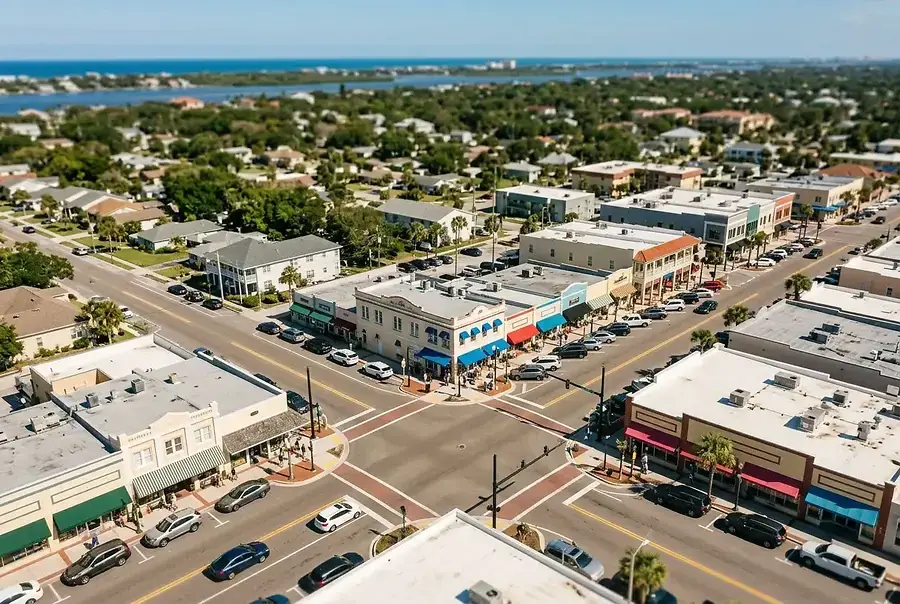
Understanding Ormond Beach's Commercial Geography and Accessibility
Ormond Beach offers a diverse commercial landscape with distinct neighborhoods and districts, each presenting unique opportunities for business owners. Understanding the geographic layout is the first step toward making an informed decision about your commercial property investment.
Major Commercial Corridors
The city's primary commercial corridors run along Beach Street, Granada Boulevard, and US Highway 1. These areas benefit from established infrastructure, consistent traffic patterns, and proximity to residential neighborhoods. Beach Street, in particular, attracts both local and tourist traffic, making it ideal for retail and hospitality businesses. Granada Boulevard serves as a major east-west connector, offering excellent visibility and accessibility for service-based businesses.
Accessibility and Transportation Networks
When evaluating a location, consider how easily customers and employees can reach your business. Properties near major intersections, with adequate parking, and close to public transportation routes tend to perform better. Proximity to Interstate 95 is a significant advantage for businesses that rely on regional customer bases or frequent deliveries.
Key accessibility factors to evaluate:
- Distance from major highways and arterial roads
- Availability of on-site and nearby parking
- Pedestrian walkability and sidewalk infrastructure
- Public transportation access points
- Traffic flow patterns during peak business hours
Key Factors That Drive Commercial Property Values and Tenant Success
Foot Traffic and Visibility
The amount of foot traffic a location receives directly impacts retail success. High-visibility properties with prominent signage opportunities command premium prices for good reason. Corner lots and properties fronting major roads typically generate more customer awareness and spontaneous visits.
Visibility extends beyond physical foot traffic—consider how easily potential customers can find your business online and through GPS navigation. Properties in established commercial districts benefit from better search engine optimization and customer familiarity.
Demographic Alignment
Understanding the demographic composition of your target area is crucial. Analyze the age, income level, education, and lifestyle preferences of residents within a one-mile radius of your potential location. A boutique fitness studio thrives in neighborhoods with higher disposable incomes, while a discount retail store may perform better in diverse, family-oriented areas.
Competition and Market Saturation
Evaluate the competitive landscape carefully. While some competition validates market demand, oversaturation can limit your growth potential. Research existing businesses in your industry within the area and assess whether there's room for another player or if you can differentiate your offering.
Lease Terms and Operating Costs
Beyond the property itself, examine lease structures, renewal options, and included services. Some landlords provide maintenance, utilities, or marketing support, while others pass all costs to tenants. Calculate your total occupancy costs, including rent, utilities, insurance, and property taxes, to ensure profitability.
How to Identify High-Performance Locations for Your Business
Conduct a Site Analysis
Visit potential locations at different times of day and days of the week. Observe customer traffic patterns, parking availability, and the overall condition of the surrounding area. Speak with existing business owners about their experiences—they can provide invaluable insights about seasonal fluctuations, customer demographics, and operational challenges.
Review Economic Indicators
Examine local economic data including employment rates, average household income, population growth trends, and commercial development plans. Areas experiencing population growth and new infrastructure investments typically offer better long-term prospects. Check with the Ormond Beach Chamber of Commerce and local planning departments for development forecasts.
Assess Property Condition and Infrastructure
The physical condition of a property affects both your initial investment and ongoing operational costs. Inspect the building's structural integrity, HVAC systems, electrical capacity, and plumbing. Ensure the property can accommodate your specific operational needs, whether that's heavy equipment, specialized utilities, or customer-facing design requirements.
Evaluate Zoning and Regulatory Environment
Verify that the property's zoning permits your intended business use. Some areas have restrictions on signage, operating hours, or business types. Review local regulations regarding parking requirements, building modifications, and environmental compliance. Understanding these constraints prevents costly surprises after you've committed to a location.
Making Your Final Decision: Location Assessment Checklist
Comprehensive Evaluation Framework
Before signing a lease, use this checklist to ensure you've thoroughly evaluated your potential location:
- Traffic Patterns: Peak hour traffic counts and directional flow analysis
- Parking: Adequate spaces for customers and employees, with convenient access
- Visibility: Prominent signage opportunities and easy identification from main roads
- Demographics: Target market alignment and population density within service radius
- Competition: Competitive analysis and market saturation assessment
- Lease Terms: Favorable rates, renewal options, and included services
- Property Condition: Structural integrity and operational readiness
- Zoning Compliance: Permitted uses and regulatory requirements
- Growth Potential: Future development plans and neighborhood trajectory
- Accessibility: Easy customer access and employee commute feasibility
Financial Projections
Create detailed financial models projecting revenue based on foot traffic estimates, average transaction values, and market penetration rates. Compare these projections against your occupancy costs to determine break-even timelines and profit margins. Conservative estimates help you avoid overcommitting to locations that may underperform.
Long-Term Vision
Consider not just your immediate needs but your business's growth trajectory. Will this location accommodate expansion? Are there opportunities for additional revenue streams? Does the neighborhood align with your brand positioning and long-term business strategy?
The right commercial location isn't just about today's foot traffic—it's about positioning your business for sustainable growth and success in a thriving community.
Final Recommendations
Take your time with this decision. The location you choose will significantly impact your business's success, customer base, and profitability. Engage commercial real estate professionals who understand Ormond Beach's market dynamics, and don't hesitate to walk away from deals that don't align with your criteria. The perfect location for your business is worth the thorough evaluation process.