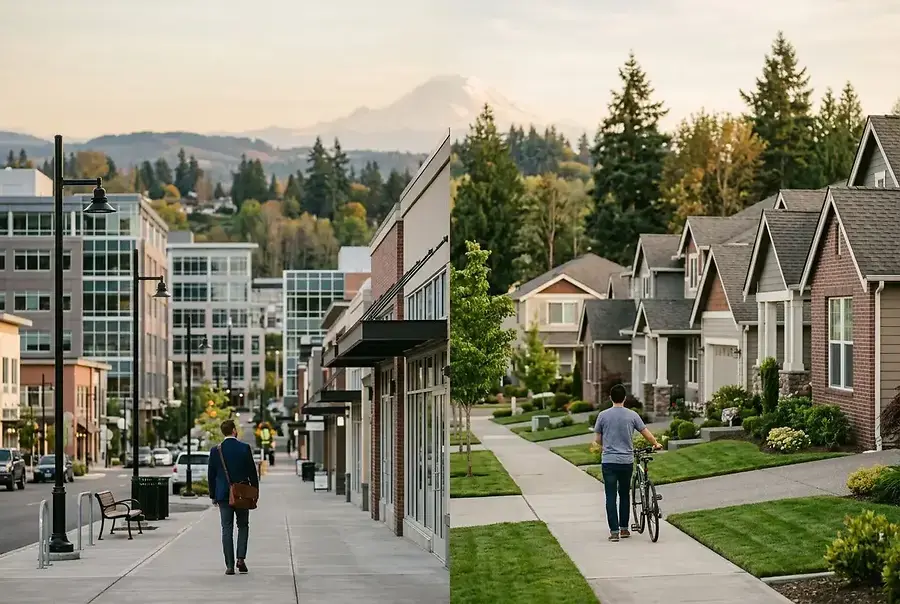
Understanding Your Investment Goals: Commercial vs. Residential Fundamentals
When building a real estate investment portfolio, one of the most critical decisions you'll face is choosing between commercial and residential properties. Each offers distinct advantages and challenges that can significantly impact your financial success. Before diving into market specifics, it's essential to understand the fundamental differences between these two investment categories.
Residential properties include single-family homes, multi-family apartments, condominiums, and townhouses. These are designed for individuals and families to live in, making them the most straightforward entry point for new investors. Commercial properties encompass office buildings, retail spaces, warehouses, and mixed-use developments. They're typically leased to businesses rather than individuals, creating a different dynamic in terms of tenant relationships and income generation.
Your choice between these two property types should align with your investment timeline, risk tolerance, available capital, and personal expertise. Are you seeking steady, predictable income streams? Do you have the bandwidth to manage complex tenant relationships? Understanding your core investment objectives will guide your decision-making process.
Market Dynamics in Pierce County Communities: What Different Property Types Offer
Residential Market Opportunities
Pierce County's residential market has experienced steady growth across its diverse neighborhoods. From the urban corridors of Tacoma to the suburban communities of Puyallup and Lakewood, residential properties continue to attract both owner-occupants and investors. The demand for housing remains consistently strong, driven by population growth and limited inventory in many areas.
Key advantages of residential investing in Pierce County include:
- Easier financing options with conventional mortgages and favorable lending terms
- Larger pool of potential tenants, reducing vacancy risks
- Simpler property management and maintenance requirements
- Strong appreciation potential in growing neighborhoods
- Tax benefits including depreciation deductions and mortgage interest write-offs
Commercial Market Opportunities
Pierce County's commercial real estate sector reflects the region's economic diversity. With growing business corridors in Tacoma, Kent, and Federal Way, commercial properties offer unique opportunities for investors willing to navigate more complex transactions.
Commercial properties provide distinct advantages:
- Higher rental income potential compared to residential units
- Longer lease terms, providing income stability and predictability
- Triple-net leases where tenants cover property taxes, insurance, and maintenance
- Professional tenant relationships with established businesses
- Potential for significant appreciation in emerging business districts
However, commercial properties also carry specific challenges. Vacancy periods can be longer and more costly, tenant turnover may require significant capital investment for improvements, and the market is more sensitive to economic downturns.
Financial Considerations: Revenue Potential, Maintenance Costs, and Long-Term Returns
Income Generation and Cash Flow
Residential properties typically generate modest but consistent monthly cash flow. A single-family home might produce $1,500 to $2,500 in monthly rental income in Pierce County, depending on location and condition. Multi-family properties offer higher absolute income but require more active management.
Commercial properties often deliver superior cash flow. A small retail space or office unit might generate $2,000 to $4,000 monthly, with larger properties producing substantially more. The key difference: commercial leases typically include expense pass-throughs, meaning tenants cover operating costs, resulting in higher net income for property owners.
Maintenance and Operating Costs
Residential properties require regular maintenance—HVAC repairs, roof replacements, plumbing issues, and general wear-and-tear. As the property owner, you're typically responsible for all maintenance costs, which can average 8-12% of gross rental income annually.
Commercial properties under triple-net leases shift many maintenance responsibilities to tenants. However, when you do bear costs, they can be substantial. Commercial HVAC systems, parking lot maintenance, and structural repairs are significantly more expensive than residential equivalents. Budget 10-15% of gross income for unexpected capital expenditures.
Long-Term Return Projections
Residential properties in Pierce County have historically appreciated 3-5% annually, with strong appreciation in desirable neighborhoods. Combined with mortgage paydown and rental income, total returns often range from 8-12% annually for well-selected properties.
Commercial properties can deliver higher returns—potentially 10-15% annually—but with greater volatility. Returns depend heavily on tenant quality, lease terms, and economic conditions. A recession can dramatically impact commercial property values and tenant stability.
Making Your Decision: How to Choose the Right Property Type for Your Situation
Assess Your Experience Level
If you're new to real estate investing, residential properties offer a gentler learning curve. Property management is straightforward, financing is accessible, and the market is transparent. As you gain experience and capital, you can explore commercial opportunities.
Evaluate Your Available Capital
Residential properties typically require 15-25% down payments and are easier to finance. Commercial properties often demand 20-30% down and involve more rigorous underwriting. If capital is limited, residential properties provide better accessibility.
Consider Your Time Commitment
Real estate investing isn't truly passive, but commercial properties with professional tenants require less hands-on management than residential properties with individual renters.
Residential properties demand more active management—tenant screening, maintenance coordination, and rent collection. If you prefer a more hands-off approach, commercial properties with established business tenants may suit you better.
Analyze Pierce County's Specific Markets
Research neighborhoods where you're considering investment. Tacoma's revitalization efforts create strong residential opportunities. Kent's industrial corridor offers commercial potential. Puyallup's suburban growth supports residential appreciation. Your choice should reflect local market dynamics.
Create a Balanced Portfolio
Many successful investors don't choose between commercial and residential—they build portfolios containing both. This diversification reduces risk and optimizes returns. A mix of residential properties for steady income and commercial properties for higher returns creates a resilient investment strategy.
The Bottom Line: Neither commercial nor residential properties are universally superior. Your ideal choice depends on your financial goals, experience level, available capital, and risk tolerance. Take time to honestly assess these factors, research Pierce County's diverse markets, and consider consulting with a real estate professional who understands local conditions. The right property type for your portfolio is the one that aligns with your unique circumstances and investment vision.