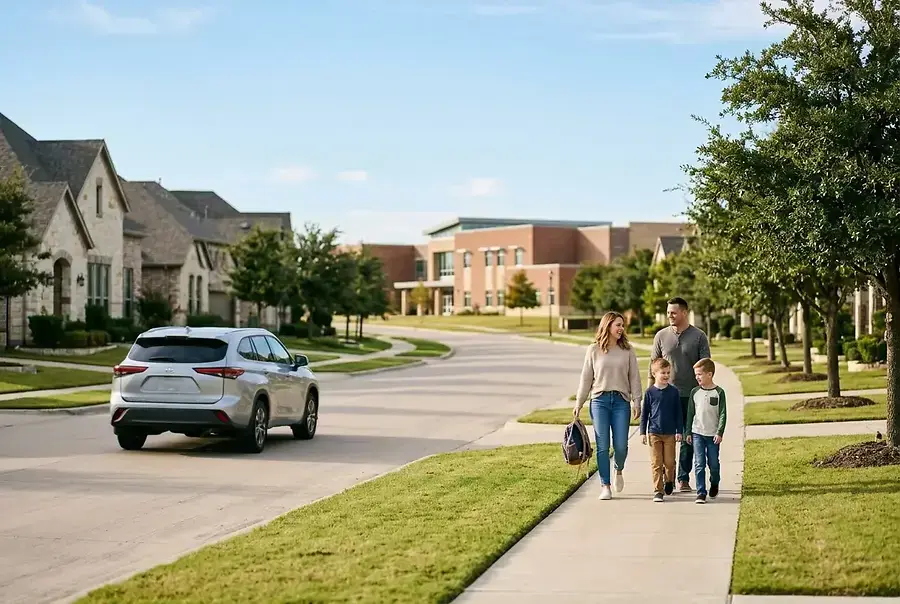
What Drives Home Value in the DFW Market
The Dallas-Fort Worth metroplex has experienced explosive growth over the past decade, attracting families and professionals from across the nation. With this expansion comes an increasingly competitive real estate market where location is everything. While square footage and home amenities matter, two factors consistently emerge as the primary drivers of property values: proximity to employment centers and access to quality schools.
Understanding these dynamics can mean the difference between finding a home that appreciates steadily and one that stagnates. Savvy homebuyers recognize that the true value of a property extends beyond its walls—it's about the lifestyle and opportunities that location provides.
The Commute Factor: Which Suburbs Offer the Best Access to Major Employment Centers
Dallas Employment Hub
Dallas remains the primary employment center for the metroplex, with major business districts in downtown, the Uptown area, and the Las Colinas corridor. Suburbs like Plano, Richardson, and Carrollton have become increasingly desirable because they offer reasonable commute times—typically 20-35 minutes—while maintaining more affordable housing prices than central Dallas.
Plano, in particular, has transformed into a tech hub, attracting major corporate headquarters and creating local employment opportunities. This shift has reduced commute times for many residents and increased property values by an average of 5-7% annually in recent years.
Fort Worth and Western Corridor
Fort Worth's growth as an employment center has revitalized western suburbs like Arlington, Grand Prairie, and Irving. These areas benefit from proximity to both Fort Worth's downtown revival and the DFW Airport corridor, which hosts numerous corporate offices and logistics centers.
Arlington's strategic location between Dallas and Fort Worth, combined with its entertainment district, has made it particularly attractive to younger professionals. Commute times to major employment centers average 25-40 minutes, depending on the specific workplace.
The Airport Corridor Advantage
The DFW Airport area has emerged as an unexpected employment powerhouse. Suburbs like Coppell, Farmers Branch, and Lewisville offer quick access to airport-adjacent corporate parks and logistics hubs. For those working in aviation, hospitality, or distribution, these locations can reduce commute times to just 10-20 minutes.
Key Insight: Homes within a 30-minute commute to major employment centers typically command 8-12% higher prices than comparable properties further away, making location strategy crucial for long-term investment returns.
School District Quality and Its Impact on Residential Demand and Pricing
The School District Premium
School district quality is the second most influential factor in DFW home purchasing decisions, particularly for families with children. Properties in top-rated school districts consistently sell faster and command premium prices—often 15-25% higher than comparable homes in lower-rated districts.
This premium reflects both the immediate value of educational quality and the long-term investment potential. Homes in excellent school districts appreciate more steadily and maintain their value better during market downturns.
Top-Performing Districts Across the Metroplex
Several school districts have earned regional and national recognition:
- Plano ISD: Consistently ranked among the top districts in Texas, known for advanced academics and STEM programs. Properties here command some of the highest premiums in the metroplex.
- Frisco ISD: Rapid growth and excellent schools have made Frisco one of the most desirable suburbs. Homes here appreciate quickly, though prices are correspondingly higher.
- Coppell ISD: Offers excellent academics with slightly more affordable entry points than Plano or Frisco, making it attractive to value-conscious families.
- Southlake Carroll ISD: Serves one of the most affluent areas in the metroplex, with exceptional schools and strong property values.
- Lewisville ISD: Provides quality education at more moderate price points, appealing to middle-income families seeking good schools without premium pricing.
The Intersection of Commute and Schools
The most valuable properties in the DFW market sit at the intersection of two advantages: reasonable commute times and excellent schools. Suburbs like Plano, Coppell, and Frisco exemplify this combination, which explains their sustained popularity and appreciation rates.
Conversely, areas with excellent schools but longer commutes, or convenient commutes but weaker schools, typically see slower appreciation and less buyer demand. This creates opportunities for investors willing to accept one trade-off in exchange for better pricing.
School District Trends and Future Value
Emerging school districts in rapidly developing areas like McKinney, Prosper, and Celina represent the next frontier. As these districts mature and build their reputations, properties in their boundaries often experience significant appreciation. Early buyers in these areas can capture substantial gains as the districts gain recognition.
Using Location Intelligence to Guide Your DFW Home Purchase
Making Data-Driven Decisions
Successful home buying in the DFW market requires balancing multiple factors. Consider your specific employment location, family needs, and investment timeline. A 30-minute commute might be acceptable if it means access to a top-rated school district and better long-term appreciation potential.
Questions to Ask Before Buying
When evaluating a property, research:
- Average commute times to your primary workplace during peak hours
- School district ratings and trajectory (improving or declining?)
- Historical appreciation rates in the specific neighborhood
- Future development plans that might affect commute times or school capacity
- Proximity to employment centers that might create future job opportunities
The Long-Term Perspective
Real estate in the DFW metroplex has proven to be a solid long-term investment, particularly when location strategy is thoughtful. Properties in areas offering both reasonable commutes and quality schools have historically appreciated 4-6% annually, significantly outpacing inflation.
Whether you're a first-time homebuyer or an experienced investor, understanding how commute times and school districts influence property values puts you in a stronger position to make decisions that align with both your lifestyle needs and financial goals. The DFW market rewards informed buyers who take the time to evaluate location intelligence before making their purchase.