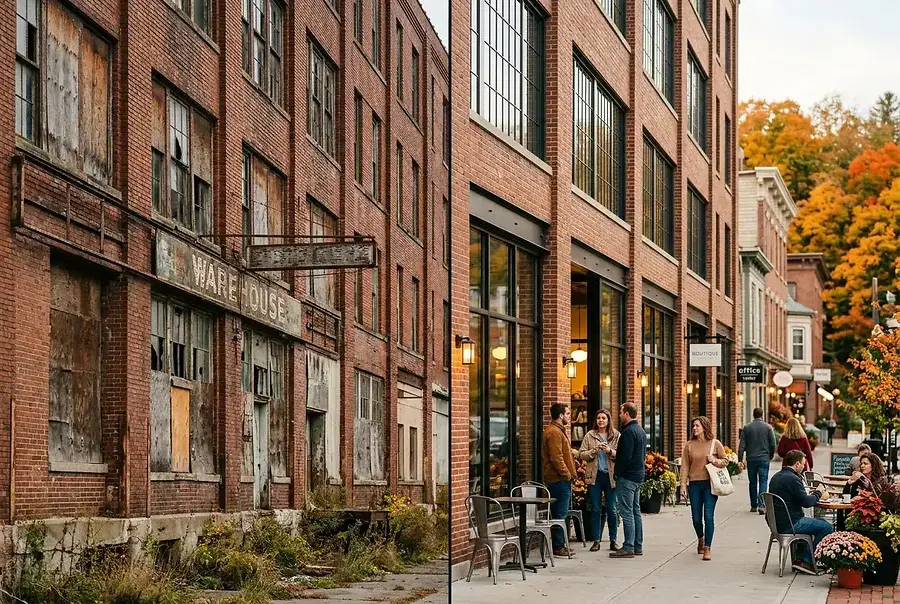
Introduction: The Commercial Real Estate Opportunity in Upstate New York
Upstate New York is experiencing a quiet revolution in commercial real estate. Across cities like Newburgh, Albany, Schenectady, and Troy, property owners are discovering that obsolete buildings—once considered liabilities—can become goldmines when strategically converted into modern commercial spaces. This trend represents more than just real estate development; it's a renaissance that's revitalizing entire neighborhoods while generating substantial returns for investors.
The opportunity is clear: Upstate New York has an abundance of vacant or underutilized structures, many built during the region's industrial heyday. With lower acquisition costs compared to major metropolitan areas and growing demand for flexible commercial spaces, the time to act is now. Property owners who understand the conversion process can capitalize on this market shift and position themselves for significant financial success.
Identifying Properties with Conversion Potential Across Newburgh, Albany, Schenectady, and Troy
What Makes a Building Conversion-Ready?
Not every vacant building is a good candidate for conversion. Successful investors look for specific characteristics that indicate conversion potential:
- Structural Integrity: The building's bones must be sound. A thorough structural assessment is essential before committing capital.
- Location Value: Proximity to transportation, foot traffic, and community amenities significantly impacts commercial viability.
- Ceiling Height and Floor Plans: Open layouts and adequate ceiling heights are crucial for modern retail and office spaces.
- Existing Infrastructure: Buildings with functional electrical, plumbing, and HVAC systems reduce conversion costs substantially.
- Parking and Accessibility: Adequate parking and ADA compliance are non-negotiable for commercial success.
Market-Specific Opportunities
Newburgh offers waterfront properties with tremendous potential, attracting retailers and restaurants seeking scenic locations. Albany presents opportunities near government and institutional anchors, ideal for office conversions. Schenectady features historic industrial buildings perfect for mixed-use developments combining retail, office, and residential components. Troy has emerged as a creative hub, with artists and entrepreneurs seeking affordable, character-filled spaces.
Each city presents unique advantages. Investors should conduct thorough market analysis to understand local demand, demographic trends, and economic drivers specific to their target location.
Navigating Zoning, Permits, and Financing for Commercial Conversions
Understanding Zoning and Regulatory Requirements
Zoning regulations are the foundation of any successful conversion project. Before purchasing a property, investors must verify that their intended use aligns with local zoning ordinances. Many Upstate NY municipalities have modernized their zoning codes to encourage adaptive reuse, but requirements vary significantly.
Key steps include:
- Consulting with local planning departments early in the process
- Obtaining a zoning verification letter confirming permitted uses
- Understanding setback, height, and parking requirements
- Identifying any historic preservation restrictions that may apply
Permits and Approvals
Converting a building requires multiple permits and approvals. The process typically includes building permits, electrical permits, plumbing permits, and occupancy permits. In some cases, variances or special permits may be necessary. Working with experienced architects and contractors familiar with local requirements can streamline this process and prevent costly delays.
Pro tip: Budget 3-6 months for the permitting process and maintain regular communication with municipal officials to identify potential issues early.
Financing Your Conversion Project
Financing is often the most challenging aspect of building conversions. Traditional lenders may be hesitant to fund projects involving older buildings. However, several financing options exist:
- Historic Tax Credits: Federal and state tax credits can offset 20-40% of rehabilitation costs for qualifying historic properties.
- New Markets Tax Credits: Available in economically distressed areas, these credits attract institutional investors.
- SBA Loans: Small Business Administration loans often have favorable terms for commercial real estate projects.
- Commercial Mortgages: Specialized lenders understand conversion projects and offer competitive rates.
- Equity Partnerships: Partnering with experienced investors can provide capital while sharing risk and expertise.
Lenders will scrutinize your business plan, market analysis, and financial projections. Demonstrating strong demand for your proposed use and realistic revenue projections is essential for securing favorable financing terms.
Cost Considerations and ROI
Conversion costs vary dramatically based on the building's condition and your intended use. A rough estimate for commercial conversion ranges from $100-$300 per square foot, though historic properties with significant structural issues can exceed this range.
Smart investors focus not just on acquisition and conversion costs, but on the long-term revenue potential. A property that costs more to convert but generates significantly higher rental income will deliver superior returns over time.
Calculate your projected return on investment by estimating:
- Acquisition price
- Conversion and renovation costs
- Projected rental income based on comparable properties
- Operating expenses and vacancy rates
- Exit strategy and timeline
Conclusion: Positioning Your Conversion Project for Maximum Return on Investment
Converting obsolete buildings into profitable commercial spaces requires vision, expertise, and persistence. Property owners in Upstate New York who master this process position themselves to capture significant value while revitalizing their communities.
Success requires:
- Thorough due diligence in property selection
- Early engagement with local officials and professionals
- Realistic financial projections and adequate capitalization
- Flexibility to adapt to market conditions and regulatory requirements
- Long-term vision focused on sustainable, profitable operations
The buildings that once symbolized Upstate New York's industrial past are being reborn as vibrant commercial destinations. For investors willing to navigate the complexities of conversion projects, the opportunity to generate substantial returns while contributing to community revitalization has never been stronger. The question isn't whether these conversions are possible—it's whether you're ready to seize the opportunity.