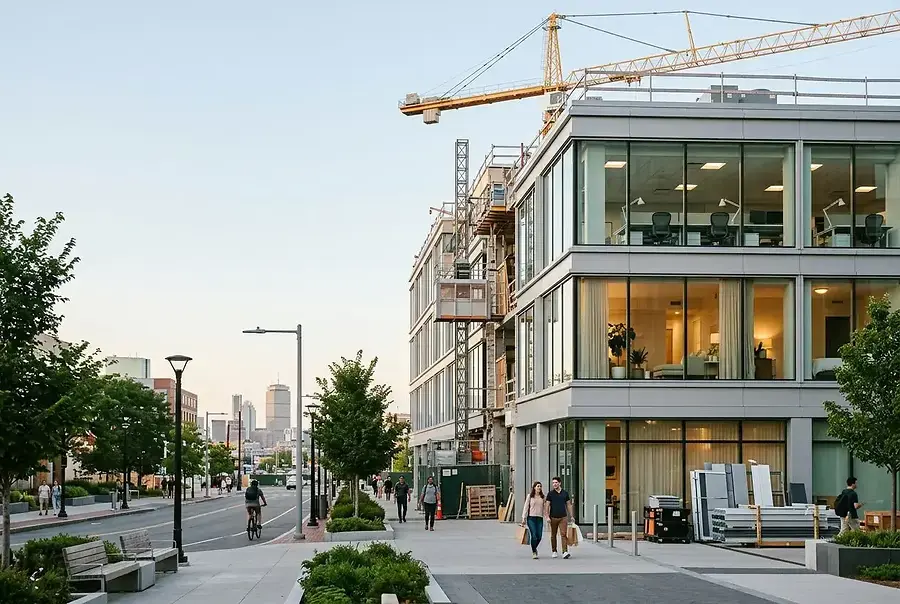
Introduction: The Commercial-to-Residential Shift in Urban Markets
The commercial real estate landscape has undergone a dramatic transformation in recent years. With remote work becoming increasingly normalized and office occupancy rates declining, property owners are facing a critical decision: adapt or struggle. One of the most promising solutions is converting underutilized office spaces into residential units—a trend that's reshaping urban markets across the country.
Boston and Quincy stand at the forefront of this conversion movement. These vibrant metropolitan areas are experiencing unprecedented demand for housing, driven by young professionals, families, and remote workers seeking urban living. For commercial property owners, this shift represents a golden opportunity to unlock significant value from properties that may otherwise sit vacant or underperforming.
Market Opportunity: Why Boston and Quincy Are Prime Conversion Markets
Strong Housing Demand
The Greater Boston area faces a critical housing shortage. Population growth, combined with limited new construction, has created a supply-demand imbalance that continues to drive rental and purchase prices upward. Residential units—whether for rent or sale—command premium prices in this market, making conversion projects financially attractive.
Quincy, in particular, has emerged as a secondary hub with lower conversion costs than downtown Boston, yet still offering excellent access to employment centers, public transportation, and amenities. This makes it an ideal location for developers and property owners looking to maximize returns on conversion investments.
Favorable Economic Conditions
Several factors make this an ideal time for conversions:
- Tax incentives: Both Massachusetts state and local municipalities offer tax credits and abatements for residential development projects.
- Financing availability: Lenders increasingly recognize the viability of office-to-residential conversions and offer competitive financing options.
- Rising property values: Residential properties in Boston and Quincy appreciate faster than commercial office space, improving long-term investment returns.
- Rental market strength: Strong rental demand ensures consistent cash flow for converted residential properties.
Demographic Trends
Millennials and Gen Z professionals prioritize urban living, walkability, and proximity to employment. Boston and Quincy offer exactly what these demographics seek: vibrant neighborhoods, cultural amenities, and robust public transportation networks. This demographic shift virtually guarantees sustained demand for residential units in these markets.
Conversion Process: Zoning, Permits, and Renovation Considerations
Zoning and Regulatory Requirements
Before breaking ground on any conversion project, property owners must navigate zoning regulations. Boston and Quincy have different zoning codes, so understanding local requirements is essential.
- Zoning verification: Confirm that your property is in a zone that permits residential use or can be rezoned through variance applications.
- Inclusionary housing requirements: Many municipalities require a percentage of units to be affordable, which can impact project economics.
- Parking regulations: Residential conversions often require more parking than office spaces, which can be a significant cost factor.
- Building code compliance: Residential units must meet stricter building codes than commercial spaces, including fire safety, egress, and accessibility standards.
Permitting and Approvals
The permitting process requires patience and expertise. Property owners should expect to work with:
- Local planning and zoning boards
- Building departments for construction permits
- Environmental agencies for contamination assessments
- Historic preservation commissions (if applicable)
- Neighborhood associations and community groups
Tip: Hiring experienced architects and consultants familiar with Boston and Quincy's regulatory environment can significantly streamline this process and reduce delays.
Renovation and Construction Considerations
Converting office space to residential involves substantial physical transformation:
- HVAC systems: Residential units require individual climate control, unlike centralized office systems.
- Plumbing and utilities: Adding kitchens and bathrooms to office spaces requires significant infrastructure upgrades.
- Soundproofing: Residential units need better acoustic insulation than typical office spaces.
- Natural light and windows: Building codes require adequate windows for residential units, which may necessitate structural modifications.
- Ceiling heights: Many older office buildings have lower ceilings than modern residential standards prefer, affecting unit appeal.
Financial Planning
Successful conversions require careful financial modeling. Budget considerations include:
- Acquisition and holding costs
- Permitting and professional fees
- Hard construction costs (typically $150-$300 per square foot for conversions)
- Soft costs (design, engineering, legal)
- Contingency reserves (typically 15-20% of total project cost)
- Carrying costs during construction and lease-up periods
Pro tip: Work with lenders and financial advisors who specialize in conversion projects to ensure realistic projections and adequate financing.
Conclusion: Positioning Yourself for Success in the Conversion Market
Converting office space to residential represents one of the most compelling real estate opportunities in Boston and Quincy. The combination of strong housing demand, favorable market conditions, and available incentives creates an ideal environment for property owners willing to navigate the conversion process.
Success requires:
- Thorough market research and financial analysis
- Early engagement with local regulatory agencies
- Assembly of experienced development and design teams
- Realistic budgeting and timeline expectations
- Flexibility to adapt to local market preferences and regulatory requirements
The commercial real estate market has fundamentally changed, but this shift creates opportunity for forward-thinking property owners. By converting underutilized office space into much-needed residential units, you're not just making a smart financial investment—you're also addressing a critical housing shortage in one of America's most dynamic metropolitan areas.
The future of urban real estate belongs to those who can adapt. Office-to-residential conversion isn't just a trend; it's the evolution of how we use urban space.