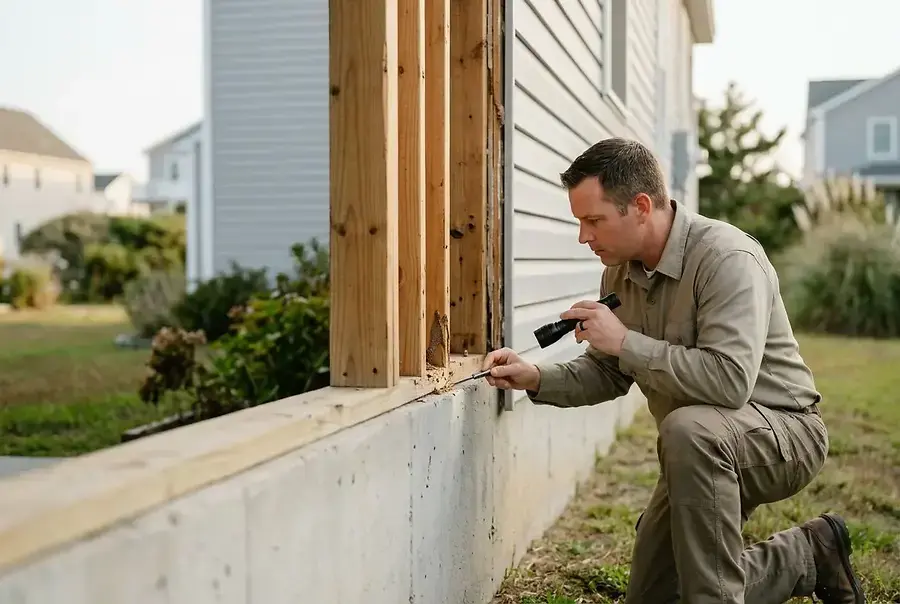
The Importance of Checking for Termites
Termites are one of the most destructive pests a homeowner can face because they often cause extensive damage before they're ever discovered. During home inspections, termite activity is frequently found in areas homeowners rarely examine, leaving many surprised by the cost of repairs. Since termites work quietly behind walls, beneath floors, and inside wooden structures, recognizing the early warning signs can make a significant difference in preventing costly structural damage.
Routine inspections allow homeowners to identify potential problems before infestations become severe. Whether you've recently purchased a home or have lived in the same property for years, understanding what to look for during a termite inspection can help protect your home's structural integrity and reduce long-term maintenance expenses.
Common Signs of Termite Activity
Inspect Wood Around the Home
Termites feed on wood from the inside out, making damage difficult to detect during casual observation. Look for wood that sounds hollow when tapped, appears blistered, feels soft, or shows unexplained cracks. Window frames, door frames, decks, crawl spaces, and exposed structural lumber are common areas where termite damage may first appear.
Look for Mud Tubes and Discarded Wings
Subterranean termites build narrow mud tubes along foundations, walls, support piers, and crawl spaces to travel safely between the soil and their food source. You may also notice small piles of discarded wings near windows, doors, or light fixtures after a termite swarm. Both are strong indicators that termites may be active on the property.
Watch for Changes Inside the Home
Doors and windows that suddenly become difficult to open or close, sagging floors, bubbling paint, or small holes in drywall can sometimes indicate hidden termite damage. Although these symptoms may have other causes, they should be investigated promptly to rule out an active infestation before additional damage occurs.
Conditions That Attract Termites
Excess Moisture Around the Property
Termites thrive in damp environments. Leaking plumbing, clogged gutters, poor drainage, and wood that remains in contact with moist soil all create favorable conditions for infestation. Correcting moisture problems is one of the most effective ways to reduce the likelihood of termite activity.
Wood-to-Soil Contact
Firewood stacks, untreated fence posts, mulch placed against the home's foundation, and wooden siding that extends below ground level can provide termites with easy access to the structure. Maintaining proper clearance between wood materials and soil helps reduce the risk of infestation.
Delayed Maintenance
Small maintenance issues that go unaddressed can create ideal conditions for termites over time. Repairing leaks, replacing damaged wood, sealing foundation cracks, and scheduling regular inspections all help minimize opportunities for termites to establish a colony.
Why Regular Termite Inspections Matter
Prevent Expensive Repairs
Early detection is the key to limiting termite damage. A routine inspection can uncover signs of activity before termites compromise structural framing, flooring, or support beams. Addressing an infestation early is typically far less expensive than repairing widespread structural damage.
Protect Your Home's Value
A well-maintained, termite-free home is more attractive to buyers and helps support stronger resale value. Documentation of routine termite inspections and preventative maintenance can provide additional confidence during real estate transactions.
Gain Peace of Mind
Regular termite inspections provide reassurance that hidden damage is not developing behind walls or beneath your home. Knowing that your property is being monitored allows homeowners to address problems proactively instead of facing unexpected repair bills.
Protecting Your Home Year-Round
Termites can remain hidden for months or even years while causing significant structural damage. By learning what to look for, monitoring areas that are most vulnerable, and scheduling regular professional inspections, homeowners can greatly reduce the risk of costly repairs and preserve the long-term value of their property.
The best approach is to make termite inspections part of your regular home maintenance routine. A few simple checks throughout the year, combined with professional evaluations when needed, can help identify problems early and keep your home protected for years to come.