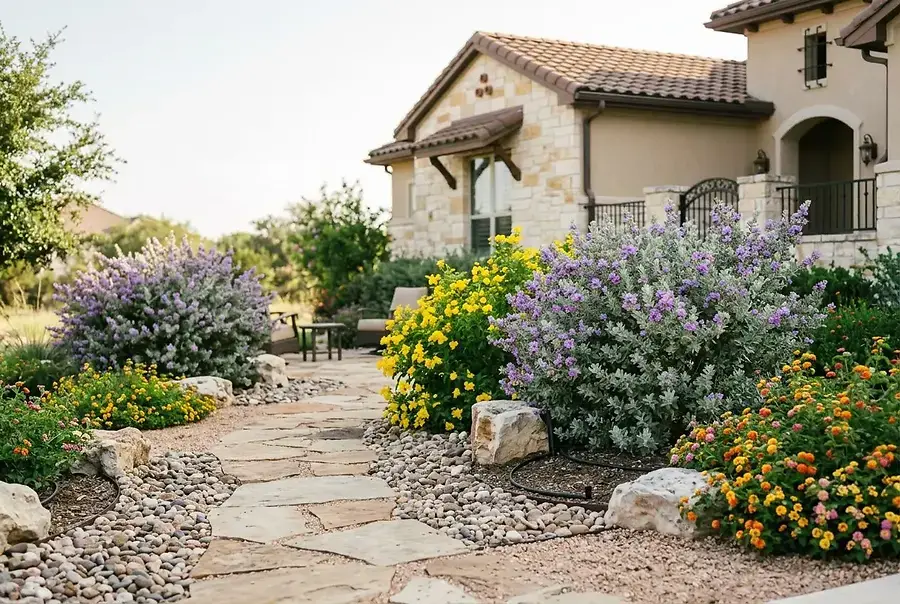
Why Water-Efficient Landscaping Matters in San Antonio
San Antonio's hot, arid climate presents unique challenges for homeowners looking to maintain beautiful outdoor spaces. With water restrictions becoming increasingly common and utility costs rising, traditional green lawns are no longer the most practical or economical choice. Drought-resistant landscaping offers a smart solution that addresses these concerns while simultaneously boosting your home's curb appeal and market value.
Water-efficient landscaping isn't just an environmental choice—it's a financial investment. Homes with sustainable outdoor spaces attract environmentally conscious buyers and demonstrate responsible property management. Studies show that well-designed xeriscaping can increase property values by up to 15%, while reducing water consumption by 50% or more compared to traditional lawns.
Beyond the financial benefits, drought-resistant landscaping requires significantly less maintenance. You'll spend fewer hours watering, mowing, and treating your yard, giving you more time to enjoy your outdoor space rather than maintain it.
Native Plants and Xeriscaping: The Best Options for Texas Homes
Why Native Plants Thrive in San Antonio
Native plants are naturally adapted to San Antonio's climate, requiring minimal water once established and thriving in the region's soil conditions. These plants have evolved to withstand the area's intense heat, occasional droughts, and seasonal rainfall patterns, making them the ideal foundation for any water-smart landscape.
Top Native Plants for San Antonio Landscaping
- Texas Sage (Salvia greggii) – A stunning flowering shrub that attracts hummingbirds and requires minimal water once established
- Esperanza (Tecoma stans) – Known for its vibrant yellow flowers and ability to thrive in full sun with minimal irrigation
- Desert Marigold – A hardy perennial that blooms year-round and adds cheerful color to any landscape
- Agarito (Mahonia trifoliolata) – An attractive native shrub with fragrant flowers and berries that wildlife enjoys
- Rosemary – Both beautiful and functional, this Mediterranean native thrives in San Antonio's climate and serves culinary purposes
- Lantana – A colorful, low-maintenance plant that attracts butterflies and requires minimal water
Implementing Xeriscaping Principles
Xeriscaping is a landscaping approach designed to reduce water usage through thoughtful plant selection and design. The key principles include:
- Soil improvement – Amend your soil with compost to improve water retention and nutrient content
- Proper spacing – Plant appropriately to allow for mature growth without overcrowding
- Mulching – Apply 2-3 inches of mulch to reduce evaporation and regulate soil temperature
- Grouping by water needs – Plant species with similar water requirements together for efficient irrigation
- Reducing turf areas – Replace water-hungry grass with native plants, hardscaping, or ground covers
Hardscaping and Irrigation Solutions That Boost Home Value
Strategic Hardscaping Elements
Hardscaping—the use of non-plant materials like stone, pavers, and gravel—plays a crucial role in creating an attractive, low-maintenance landscape. Well-designed hardscaping not only reduces water needs but also adds visual interest and functionality to your outdoor space.
- Permeable pavers – Allow water to drain naturally while creating attractive pathways and patios
- Decorative gravel and rock – Provide texture and color while reducing the need for water-intensive plantings
- Stone features – Incorporate boulders, retaining walls, and rock gardens for visual appeal and erosion control
- Raised garden beds – Create defined planting areas that are easier to maintain and irrigate efficiently
Smart Irrigation Systems
Even with drought-resistant plants, proper irrigation is essential for establishment and occasional supplemental watering. Modern irrigation solutions can significantly reduce water waste while keeping your landscape healthy:
- Drip irrigation systems – Deliver water directly to plant roots, reducing evaporation and runoff by up to 50%
- Smart controllers – Adjust watering schedules based on weather conditions, soil moisture, and seasonal needs
- Soaker hoses – An affordable alternative for smaller areas that provides efficient, targeted watering
- Mulch layers – Work in conjunction with irrigation to retain soil moisture and reduce watering frequency
A well-designed irrigation system paired with native plants can reduce outdoor water usage by 50-75% while maintaining a beautiful, thriving landscape.
Design Considerations for Maximum Impact
To maximize your home's value, focus on creating a cohesive landscape design that balances aesthetics with functionality. Consider the following:
- Create focal points with specimen plants or hardscaping features
- Use layering to add depth and visual interest
- Incorporate pathways that guide visitors through your outdoor space
- Choose a color palette that complements your home's architecture
- Ensure proper sight lines and safety considerations
Creating a Sustainable and Attractive Outdoor Space
Transforming your San Antonio home's landscape into a drought-resistant oasis is an investment that pays dividends in multiple ways. You'll enjoy lower water bills, reduced maintenance requirements, and increased property value, all while creating a beautiful outdoor space that reflects your commitment to sustainability.
The key to success is starting with a solid plan. Consider consulting with a local landscape designer who understands San Antonio's unique climate and soil conditions. They can help you select the right combination of native plants, hardscaping elements, and irrigation solutions tailored to your specific property and preferences.
Whether you're planning a complete landscape overhaul or making gradual improvements, every step toward water-efficient landscaping brings you closer to a more valuable, sustainable home. In San Antonio's climate, drought-resistant landscaping isn't just a trend—it's a smart, practical choice that benefits your wallet, your property, and the environment.