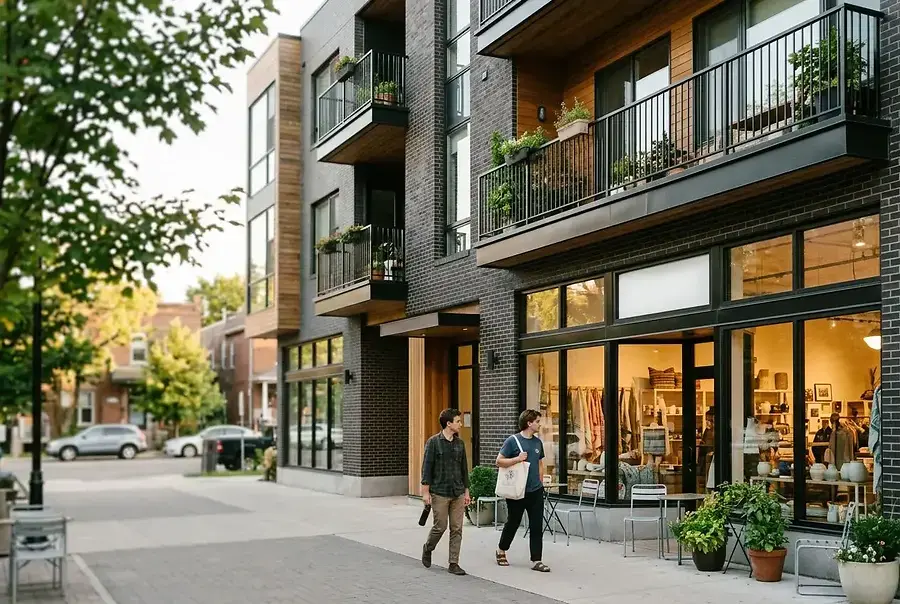
Understanding Baldwin Place's Mixed-Use Real Estate Landscape
Baldwin Place has emerged as one of the most dynamic real estate markets in the region, offering unprecedented opportunities for investors interested in dual-use properties. The community's strategic location, combined with evolving zoning regulations and increasing demand for flexible spaces, creates an ideal environment for property conversions.
The market has experienced significant growth in recent years, with property values appreciating steadily. What makes Baldwin Place particularly attractive is the diverse demographic composition and the presence of both residential neighborhoods and commercial corridors. This unique blend creates natural opportunities for properties that can serve multiple purposes.
Market Trends and Opportunities
The shift toward remote work and flexible business arrangements has fundamentally changed how properties are utilized. Investors are capitalizing on this trend by converting traditional residential spaces into mixed-use properties that accommodate both living and working arrangements. Additionally, the demand for ground-floor retail with residential units above has never been stronger.
- Rising property values in Baldwin Place
- Increased demand for flexible workspace solutions
- Growing population density supporting mixed-use development
- Favorable local government support for strategic conversions
Key Conversion Strategies for Residential-to-Commercial Properties
Successfully converting properties requires careful planning and strategic execution. The most profitable conversions align with market demand while respecting the existing character of Baldwin Place's neighborhoods.
Identifying High-Potential Properties
Not all properties are suitable for conversion. Look for properties with corner locations, high foot traffic, and proximity to commercial districts. Properties with separate entrances or existing commercial infrastructure are particularly valuable, as they require fewer modifications and lower conversion costs.
Consider properties near transit hubs, schools, or shopping centers. These locations naturally attract both residential and commercial interest, making them ideal candidates for dual-use development.
Renovation and Design Considerations
The key to successful conversions lies in thoughtful design that maximizes both residential comfort and commercial functionality. Separate HVAC systems, independent utilities, and distinct entrances are essential features that allow properties to operate efficiently as dual-use spaces.
- Install separate electrical and plumbing systems for commercial and residential areas
- Create distinct entrances to maintain privacy and operational independence
- Incorporate soundproofing between commercial and residential spaces
- Design flexible layouts that can adapt to changing market demands
- Ensure adequate parking for both residential tenants and commercial clients
Tenant Mix and Lease Strategies
The profitability of dual-use properties depends heavily on selecting the right tenants. Complementary businesses and residential tenants create harmonious communities that benefit all parties involved. Avoid tenant combinations that create conflicts, such as late-night entertainment venues adjacent to residential units.
Develop lease agreements that clearly outline responsibilities for maintenance, utilities, and common areas. Staggered lease terms can provide flexibility and reduce vacancy risks across your property.
Financing and Zoning Considerations for Dual-Use Properties
Understanding the financial and regulatory landscape is crucial for successful dual-use investments in Baldwin Place.
Navigating Zoning Requirements
Baldwin Place's zoning ordinances have become increasingly flexible regarding mixed-use development. However, thorough research and early engagement with local planning departments are essential. Many properties fall within zones that permit dual-use development, but specific requirements vary by location.
"The key to successful conversion is understanding your local zoning code before you commit to a property. A single zoning variance can make or break your investment."
Common zoning considerations include:
- Commercial use percentage limitations
- Parking requirements for mixed-use properties
- Building height and setback regulations
- Signage restrictions for commercial tenants
- Noise and operating hour restrictions
Financing Dual-Use Properties
Financing mixed-use properties can be more complex than traditional residential or commercial mortgages. Many lenders offer specialized loan products designed for dual-use investments, often with favorable terms due to the reduced risk profile of diversified income streams.
Hybrid financing approaches that combine residential and commercial loan components can provide better rates and terms. Work with lenders experienced in mixed-use development to structure financing that reflects the property's unique income potential.
Tax Implications and Incentives
Dual-use properties may qualify for various tax benefits and incentives. Depreciation deductions, opportunity zone benefits, and local economic development incentives can significantly improve your investment returns. Consult with a tax professional familiar with Baldwin Place's specific incentive programs.
Measuring Success: ROI Metrics for Mixed-Use Investments
Evaluating the performance of dual-use properties requires a comprehensive approach that considers multiple revenue streams and cost factors.
Key Performance Indicators
Track these essential metrics to assess your investment's success:
- Cap Rate: Calculate based on net operating income divided by property value
- Occupancy Rate: Monitor separately for residential and commercial spaces
- Rent Growth: Compare year-over-year increases for both property types
- Tenant Retention: Measure satisfaction and renewal rates
- Operating Expense Ratio: Track maintenance, utilities, and management costs
Long-Term Value Appreciation
Beyond annual cash flow, dual-use properties in Baldwin Place have demonstrated strong appreciation potential. The combination of residential and commercial income streams, coupled with strategic location advantages, creates compelling long-term wealth-building opportunities.
Properties that successfully balance both uses typically command premium valuations in the market. This appreciation, combined with consistent cash flow from dual income streams, positions dual-use investments as one of the most profitable real estate strategies available in Baldwin Place.
Risk Management and Contingency Planning
Diversified income streams provide natural protection against market fluctuations. If commercial tenants face challenges, residential income continues. Conversely, residential vacancies are offset by commercial revenue. This built-in resilience makes dual-use properties particularly attractive during uncertain economic times.
Maintain adequate reserves for unexpected repairs, vacancy periods, and market downturns. A well-managed dual-use property with strong fundamentals will weather economic challenges more effectively than single-use properties.