The Shifting Real Estate Landscape in Atlanta's Outer Ring Communities
Atlanta's real estate market has undergone a significant transformation in recent years, with savvy investors increasingly turning their attention to the outer ring suburbs. While traditional inner-ring communities continue to attract buyers, the emerging markets on Atlanta's periphery are experiencing unprecedented growth and appreciation. This shift represents a fundamental change in how residential investors approach wealth building in the region.
The migration outward is driven by several compelling factors: affordable entry prices, new infrastructure development, and strong population growth. Communities that were once considered distant bedroom communities are now becoming vibrant residential hubs with their own commercial centers, employment opportunities, and amenities. For investors with a long-term perspective, these emerging markets present exceptional opportunities for substantial home value appreciation.
Market Analysis: Comparing Home Value Trends Across Eight Key Suburban Markets
The Top Performers
McDonough and Lawrenceville have emerged as the clear leaders in appreciation potential. McDonough, located approximately 30 miles south of downtown Atlanta, has seen consistent double-digit appreciation rates. The community benefits from its proximity to major employment centers and the ongoing development of retail and dining options that appeal to young families.
Lawrenceville, situated northeast of the city, offers similar advantages with the added benefit of established infrastructure and a thriving downtown district. The community's investment in revitalization projects has attracted both residential buyers and commercial development, creating a virtuous cycle of appreciation.
Emerging Contenders
Beyond the top two, several other suburban markets deserve investor attention:
- Marietta: Offering a blend of established neighborhoods and new development opportunities
- Kennesaw: Benefiting from university presence and growing commercial corridors
- Acworth: Attracting families seeking affordable homes with modern amenities
- Woodstock: Experiencing renewed interest from buyers seeking suburban tranquility with urban convenience
- Duluth: Positioned as a growing tech and business hub with strong employment growth
- Alpharetta: Maintaining momentum as a premium suburban destination with diverse economic drivers
Key Market Metrics
Analysis of these eight markets reveals compelling trends. Average home prices have increased by 15-22% over the past three years, significantly outpacing inflation. Days on market have compressed, indicating strong buyer demand, while inventory levels remain tight—a classic recipe for continued appreciation.
The demographic profile of these communities shows a strong influx of young professionals and growing families, typically the most reliable long-term homeowners. This demographic stability suggests that appreciation gains will be sustained rather than temporary.
Strategic Investment Opportunities: Where Residential Appreciation Is Accelerating
Infrastructure as an Appreciation Driver
One of the most reliable indicators of future appreciation is infrastructure investment. Communities receiving new highway improvements, public transportation enhancements, or major commercial development projects tend to see accelerated home value growth. McDonough's expansion of retail corridors and Lawrenceville's downtown revitalization are prime examples of infrastructure-driven appreciation.
The New Development Advantage
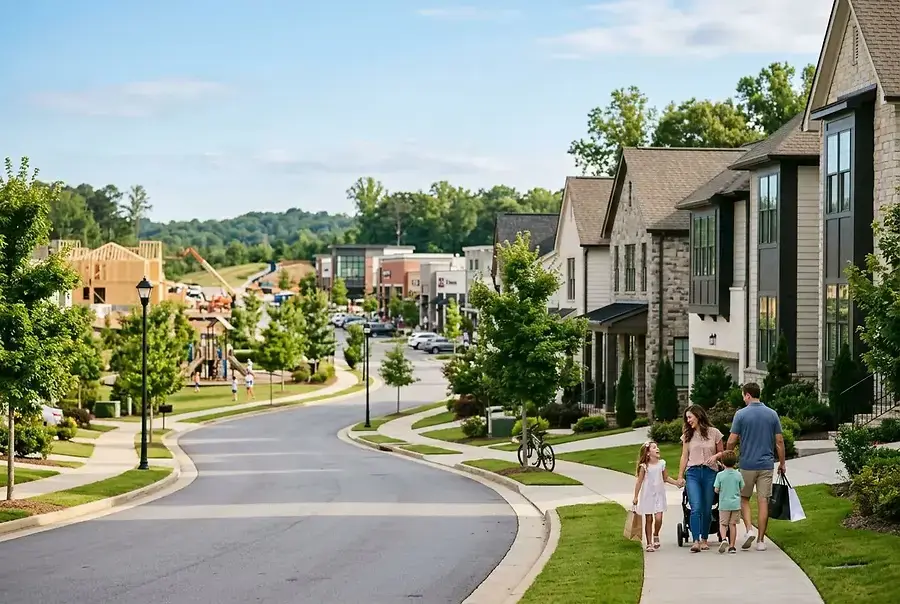
New residential developments in these outer ring communities are attracting significant attention. Master-planned communities with modern amenities, energy-efficient homes, and contemporary designs appeal to today's buyers. Investors who purchase in these emerging developments early often benefit from the appreciation that follows as the community matures and becomes fully built out.
Employment Growth and Economic Diversification
The strongest suburban markets are those developing diverse employment bases. Rather than relying solely on commuters to downtown Atlanta, these communities are attracting corporate offices, tech companies, and service sector employers. This economic diversification reduces vulnerability to economic downturns and supports sustained population growth.
"The suburban markets experiencing the strongest appreciation are those that have successfully transitioned from bedroom communities to complete residential destinations with their own economic engines."
Investment Strategy Recommendations
For residential investors seeking to capitalize on these opportunities, consider the following approach:
- Focus on emerging neighborhoods within these communities where new development is occurring
- Prioritize properties near planned infrastructure improvements that will enhance accessibility and appeal
- Look for communities with strong school systems, as education quality drives family migration and home values
- Consider properties with renovation potential in established neighborhoods undergoing revitalization
- Monitor employment growth trends to identify communities with strengthening economic fundamentals
Positioning Your Clients for Long-Term Suburban Wealth Building
The emerging suburban markets of Atlanta's outer ring represent a compelling opportunity for residential investors with a long-term perspective. Unlike speculative investments that depend on short-term market fluctuations, these communities offer the fundamental drivers of sustained appreciation: population growth, infrastructure development, economic diversification, and demographic stability.
The window of opportunity in these markets remains open, but it is gradually closing as more investors recognize the potential. Communities like McDonough and Lawrenceville have already attracted significant attention, though appreciation potential remains strong. The secondary markets—Acworth, Woodstock, and others—may offer even greater upside for investors willing to look slightly further afield.
Success in these markets requires patience and a commitment to long-term holding periods. The strongest appreciation typically occurs over 5-10 year horizons, allowing demographic trends and infrastructure improvements to fully materialize. Investors who position their clients in these emerging communities today are likely to benefit from substantial wealth creation as these suburbs continue their transformation from peripheral communities to thriving residential destinations.
The suburban real estate landscape is shifting, and the opportunities are significant for those who act strategically and with conviction.
