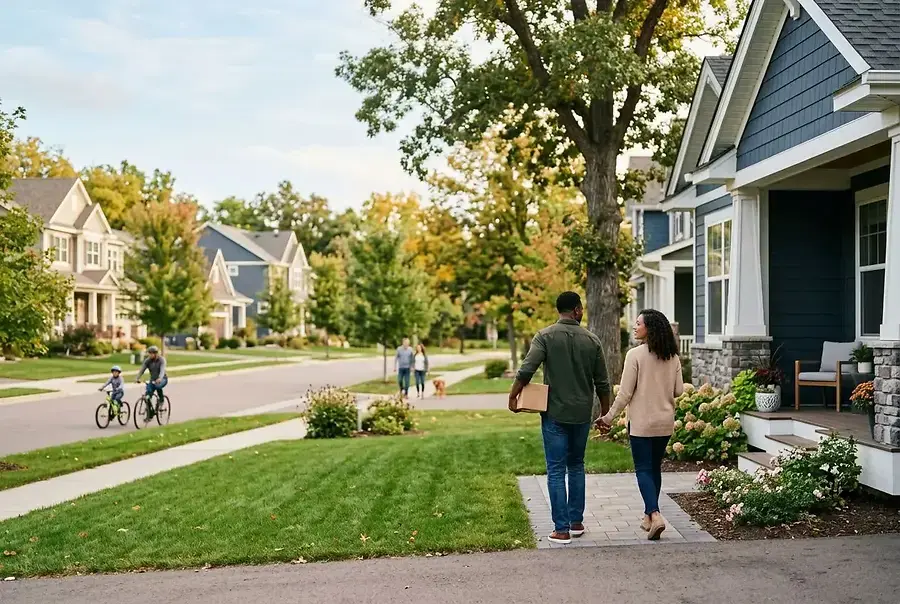
Understanding the Twin Cities Residential Market
The Twin Cities metropolitan area offers an exceptional opportunity for first-time home buyers seeking diverse neighborhoods and affordable options. Spanning from the urban cores of Minneapolis and Saint Paul to the expanding suburbs of Apple Valley, Bloomington, and beyond, the region encompasses 18 distinct communities, each with unique characteristics and market dynamics.
The suburban landscape has evolved significantly, with outer communities like Apple Valley, Lakeville, and Carver experiencing substantial growth. Meanwhile, closer suburbs such as Edina, Wayzata, and Saint Louis Park maintain established neighborhoods with strong property values. Understanding this geographic diversity is crucial for identifying where your investment aligns with your lifestyle and financial goals.
Market Overview: The Twin Cities suburbs offer competitive pricing compared to national averages, with inventory ranging from starter homes to luxury properties. First-time buyers benefit from a balanced market that rewards informed decision-making.
Key Factors for First-Time Buyers
School Districts
School quality significantly impacts property values and long-term satisfaction. The Twin Cities suburbs feature some of Minnesota's top-rated school districts, including:
- Wayzata Public Schools—consistently ranked among state leaders
- Edina Public Schools—known for academic excellence and community engagement
- Minnetonka Public Schools—offering comprehensive programs and strong outcomes
- Lakeville Area Schools—rapidly improving with excellent facilities
Research school ratings, test scores, and community involvement before selecting a neighborhood. Properties in top-rated districts command premium prices but offer excellent resale value.
Commute Times
Your daily commute impacts quality of life and transportation costs. Consider these commute patterns:
- Inner suburbs (Edina, Saint Louis Park, Bloomington)—15-25 minutes to downtown Minneapolis
- Mid-ring suburbs (Wayzata, Minnetonka, Roseville)—20-35 minutes to downtown
- Outer suburbs (Apple Valley, Lakeville, Carver)—30-45 minutes to downtown
Evaluate your workplace location and consider future career changes. Remote work flexibility has transformed commute considerations, making outer suburbs increasingly attractive.
Neighborhood Amenities
Quality of life extends beyond your home. Evaluate parks, recreation centers, shopping, dining, and entertainment options. Inner suburbs typically offer walkable neighborhoods with established amenities, while outer suburbs provide newer facilities and family-oriented communities.
Comparing Neighborhoods
Urban Centers: Minneapolis and Saint Paul
The urban cores offer vibrant cultural scenes, diverse dining, and walkable neighborhoods. However, prices are higher, and properties tend to be older. First-time buyers here often purchase condos or townhomes rather than single-family homes.
Advantages: Shorter commutes, cultural amenities, established neighborhoods
Considerations: Higher prices, older properties, smaller lot sizes
Inner Suburbs
Communities like Edina, Wayzata, and Bloomington balance suburban living with urban convenience. These established neighborhoods feature mature trees, quality schools, and strong community infrastructure.
Advantages: Moderate commutes, excellent schools, stable property values, established communities
Considerations: Higher prices, limited new construction, competitive markets
Mid-Ring Suburbs
Areas like Minnetonka, Roseville, and Saint Louis Park offer excellent value with good amenities. These communities are experiencing revitalization and attract young families.
Advantages: Better pricing than inner suburbs, quality schools, growing amenities, reasonable commutes
Considerations: Slightly longer commutes, mixed property ages
Outer Suburbs
Apple Valley, Lakeville, and Carver represent the frontier of suburban expansion. New construction dominates, offering modern homes with contemporary features at competitive prices.
Advantages: Most affordable pricing, new construction, larger lots, family-friendly communities
Considerations: Longer commutes, developing infrastructure, newer communities with less history
Getting Started: Your Action Plan
Step 1: Get Pre-Approved
Before house hunting, obtain mortgage pre-approval from a lender. This process involves:
- Reviewing your credit score and financial history
- Verifying income and employment
- Determining your borrowing capacity
- Receiving a pre-approval letter for negotiations
Pro Tip: Pre-approval strengthens your offers and demonstrates serious intent to sellers.
Step 2: Develop a Down Payment Strategy
First-time buyers have multiple options:
- Conventional loans—typically require 10-20% down
- FHA loans—allow as little as 3.5% down with mortgage insurance
- VA loans—available to veterans with no down payment requirement
- Minnesota first-time buyer programs—offer down payment assistance and favorable terms
Research state and federal programs designed to help first-time buyers. Many communities offer grants or favorable financing for qualified applicants.
Step 3: Build Your Team
Successful home buying requires professional guidance:
- Real Estate Agent—specializing in your target communities
- Mortgage Lender—offering competitive rates and personalized service
- Home Inspector—providing detailed property assessments
- Title Company—ensuring clear property ownership
Step 4: Start Your Search
With pre-approval and team in place, begin exploring neighborhoods that match your criteria. Attend open houses, drive neighborhoods at different times, and talk to residents. Take time to understand each community's character and long-term trajectory.
Step 5: Make an Offer and Close
When you find the right property, your agent will help craft a competitive offer. The process includes inspection, appraisal, final underwriting, and closing. Expect this phase to take 30-45 days.
Final Thoughts
Buying your first home in the Twin Cities suburbs is an exciting milestone. By understanding the market, evaluating key factors, and following a structured approach, you'll make a confident decision that aligns with your lifestyle and financial goals. Whether you choose the vibrant urban centers, established inner suburbs, or growing outer communities, the Twin Cities region offers exceptional opportunities for first-time home buyers ready to invest in their future.