Introduction: Why Home Staging Matters in Competitive Markets
In today's competitive real estate landscape, first impressions are everything. Whether you're selling in the charming neighborhoods of Maplewood or the vibrant communities of St. Louis, home staging has become an essential tool for sellers who want to stand out from the competition. Properly staged homes sell faster and often command higher prices than unstaged properties, making the investment in staging well worth the effort.
Home staging is the art of preparing your home for sale by highlighting its best features and creating an emotional connection with potential buyers. It's not about deceiving buyers—it's about presenting your home in its absolute best light, allowing buyers to envision themselves living in the space.
Essential Staging Strategies for Maximum Buyer Appeal
Declutter and Depersonalize
The first step in staging your home is removing excess clutter and personal items. Buyers need to see themselves in your space, not your family photos and memorabilia. Remove approximately 30-50% of your belongings, focusing on:
- Personal photographs and family mementos
- Excessive furniture that makes rooms feel cramped
- Kitchen countertop appliances and gadgets
- Bathroom counter items and toiletries
- Closet overflow and visible storage clutter
Create Neutral, Inviting Spaces
Paint walls in neutral colors like soft whites, warm grays, and beiges. These colors appeal to the widest range of buyers and allow them to imagine their own décor in the space. Avoid bold colors and strong patterns that might distract from your home's architectural features.
Enhance Curb Appeal
Your home's exterior is the first thing buyers see. Invest in:
- Fresh landscaping and manicured lawns
- A clean, welcoming front entrance
- New house numbers and hardware
- Pressure-washed driveway and walkways
- Fresh paint on the front door
Optimize Lighting
Bright, well-lit homes feel more welcoming and spacious. Open all curtains and blinds during showings, replace dim light bulbs with brighter alternatives, and consider adding additional lighting fixtures in darker areas. Natural light is a major selling point, so make sure windows are clean and unobstructed.
Room-by-Room Staging Guide for St. Louis Homes
Living Room
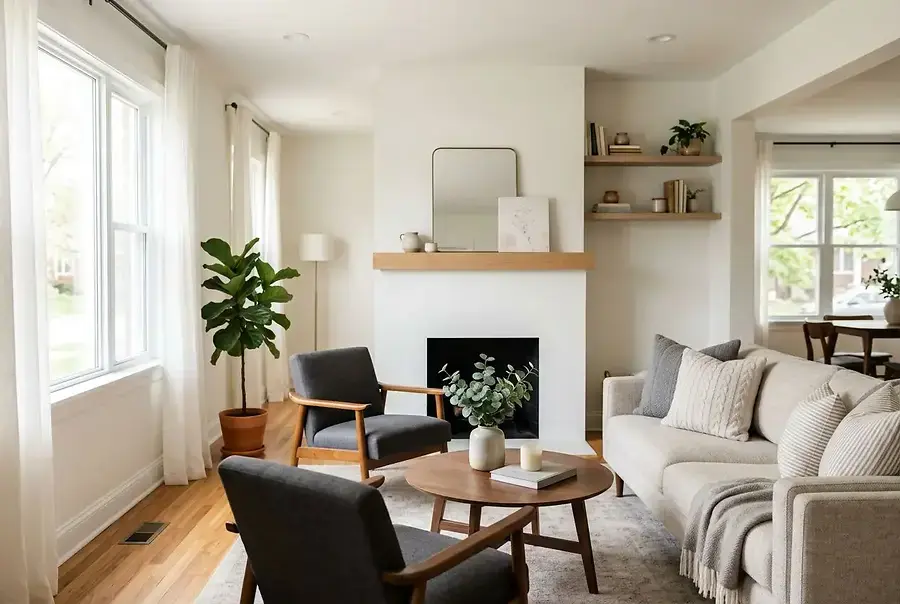
The living room should feel warm and inviting. Arrange furniture to create conversation areas and highlight the room's focal point, whether it's a fireplace or window view. Add a few tasteful accessories like throw pillows and a neutral area rug, but keep surfaces mostly clear. Less is more when it comes to décor.
Kitchen
Kitchens are deal-makers or deal-breakers for many buyers. Clean and organize your kitchen thoroughly:
- Remove items from countertops except for a few decorative pieces
- Organize cabinets and drawers neatly
- Ensure appliances are spotless and in working order
- Add fresh flowers or a bowl of fresh fruit for color
- Update hardware and fixtures if they look dated
Bedrooms
Master bedrooms should feel like a peaceful retreat. Keep the space simple with a well-made bed as the focal point. Remove excess furniture and personal items. Soft, neutral bedding and minimal accessories create a spa-like atmosphere that appeals to buyers seeking relaxation and comfort.
Bathrooms
Bathrooms must be impeccably clean and organized. Stock fresh, fluffy towels, add a small plant or flowers, and ensure all fixtures shine. Remove personal items from counters and organize under-sink storage. A clean bathroom signals that the entire home has been well-maintained.
Home Office or Bonus Rooms
If you have a home office or bonus room, stage it to showcase its versatility. Demonstrate how the space can be used—whether as a workout room, creative studio, or guest bedroom. This helps buyers envision the possibilities and increases the perceived value of your home.
Conclusion: Staging as Your Competitive Advantage
In the Maplewood and St. Louis real estate markets, home staging is not a luxury—it's a necessity. Properly staged homes attract more qualified buyers, generate more showings, and ultimately sell faster at higher prices. By following these essential staging strategies and paying attention to room-by-room details, you'll position your home as the standout property in your neighborhood.
Remember, staging is an investment in your home's marketability. The cost of staging is typically recovered through the increased sale price and faster closing timeline. Whether you choose to stage your home yourself or hire a professional stager, the effort you invest today will pay dividends when it comes time to sell.
Your home is one of your most valuable assets. Present it with the care and attention it deserves, and buyers will respond accordingly.