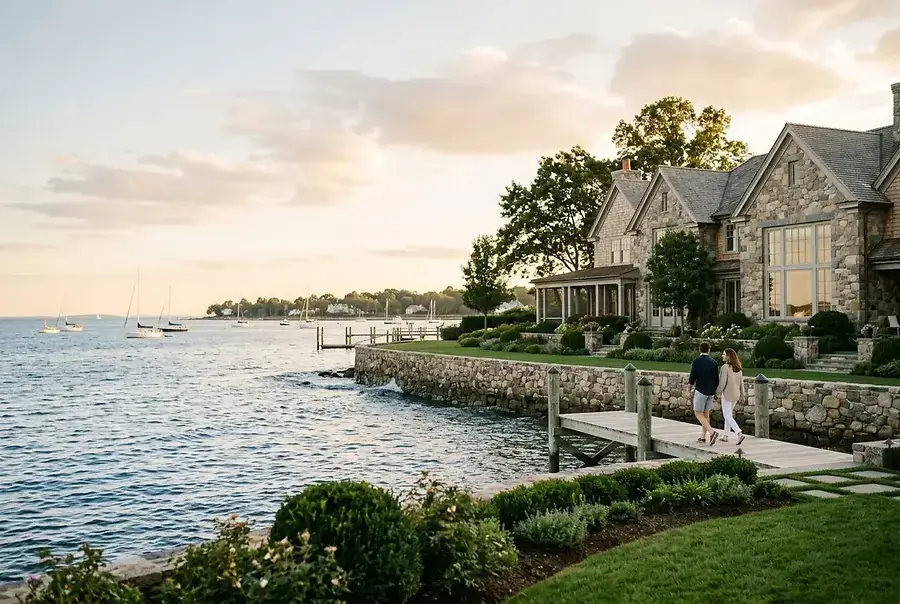
The Appeal and Complexity of Waterfront Living in Greenwich
Greenwich's waterfront properties represent some of the most coveted real estate in Connecticut, offering stunning views, exclusive access to the coast, and a lifestyle that few can experience. The allure of waking up to the sound of waves and enjoying sunsets over the water is undeniable. However, purchasing a waterfront home in Greenwich is far more complex than buying a traditional residential property.
The waterfront market in Greenwich combines luxury living with significant financial and legal considerations. Prospective buyers must navigate a unique landscape that includes tidal regulations, environmental protections, and specialized maintenance requirements. Understanding these factors is essential before making one of the largest investments of your life.
Whether you're drawn to Greenwich for its prestigious reputation, excellent schools, or the promise of coastal living, waterfront properties demand a thorough evaluation process. This guide will help you understand the key aspects of purchasing waterfront real estate in this exclusive community.
Understanding Waterfront Property Values and Market Dynamics
Market Trends and Pricing Factors
Greenwich's waterfront market operates differently from inland properties. Values are influenced by several unique factors that don't apply to traditional homes:
- Waterfront frontage length: Properties with more direct water access command premium prices
- Water views and orientation: South-facing properties with unobstructed views are particularly desirable
- Proximity to amenities: Distance to yacht clubs, marinas, and beach clubs affects property value
- Historical flood data: Properties in flood zones may have lower values and higher insurance costs
- Tidal access: Year-round navigable water access increases property desirability
Investment Potential and Long-Term Value
Waterfront properties in Greenwich have historically appreciated well, though market conditions fluctuate. The key to maximizing your investment is understanding both the current market and long-term trends. Properties with protected water access, minimal environmental restrictions, and excellent maintenance records tend to hold their value better.
It's important to work with a real estate agent who specializes in waterfront properties and understands Greenwich's specific market dynamics. They can provide comparable sales data and help you identify properties with strong appreciation potential.
Key Considerations: Environmental Factors, Permits, and Maintenance Costs
Environmental Assessments and Regulations
Before purchasing any waterfront property, a comprehensive environmental assessment is crucial. Connecticut's Department of Energy and Environmental Protection (DEEP) enforces strict regulations regarding coastal properties. These include:
- Wetland protection zones that may restrict development or modifications
- Coastal Area Management (CAM) permits required for certain improvements
- Water quality standards and pollution prevention requirements
- Wildlife habitat protections that may limit landscaping or construction
Never skip the environmental assessment phase. Hidden environmental issues can become expensive liabilities. Professional environmental consultants can identify potential problems before you commit to a purchase.
Permits and Legal Requirements
Waterfront properties require multiple permits that inland properties don't need. Understanding these requirements is essential:
- Coastal Area Management (CAM) permits: Required for any work within 150 feet of tidal wetlands
- Inland Wetlands permits: Necessary if your property contains freshwater wetlands
- Flood zone certification: Determines if flood insurance is required
- Dock and pier permits: Essential if you plan to install or modify water structures
- Septic system approvals: Waterfront properties often have unique septic requirements
These permits can take months to obtain and may involve significant costs. Budget accordingly and factor permit timelines into your purchase timeline.
Maintenance Costs and Ongoing Expenses
Waterfront living comes with substantially higher maintenance costs than traditional homes. Salt water, moisture, and weather exposure accelerate deterioration:
Waterfront property owners should expect to spend 20-30% more on maintenance compared to inland properties of similar size.
Common waterfront maintenance expenses include:
- Seawall and bulkhead repairs: These structures require regular inspection and maintenance, with repairs costing $10,000-$50,000+
- Dock and pier maintenance: Annual upkeep, seasonal repairs, and eventual replacement
- Flood insurance: Often mandatory and significantly more expensive than standard homeowners insurance
- Exterior maintenance: Frequent repainting, corrosion prevention, and weather-related repairs
- Drainage systems: Specialized systems to manage water runoff and prevent erosion
- Landscaping: Salt-tolerant plants and specialized care requirements
When evaluating a property, have a marine contractor inspect all water-related structures. This inspection can reveal costly issues that might not be apparent to the untrained eye.
Insurance and Risk Management
Waterfront properties typically require specialized insurance coverage. Standard homeowners policies often exclude water-related damage. You'll likely need:
- Flood insurance through the National Flood Insurance Program (NFIP) or private carriers
- Enhanced coverage for wind and storm damage
- Separate coverage for docks, piers, and water structures
Request insurance quotes before finalizing your purchase to understand the true cost of ownership.
Making an Informed Waterfront Investment Decision
Purchasing a waterfront property in Greenwich is an exciting opportunity, but it requires careful consideration and due diligence. Take your time with the evaluation process and don't let the appeal of waterfront living cloud your judgment about practical considerations.
Start by working with professionals who understand Greenwich's waterfront market: experienced real estate agents, environmental consultants, marine contractors, and insurance specialists. Their expertise will help you identify properties with strong fundamentals and avoid costly mistakes.
Ask detailed questions about the property's history, previous repairs, permit status, and maintenance records. Request copies of all environmental assessments, permits, and insurance documents. The more information you gather, the better equipped you'll be to make a confident decision.
Remember that the most expensive waterfront property isn't always the best investment. Focus on finding a property that aligns with your lifestyle goals, financial situation, and long-term plans. With proper evaluation and professional guidance, a Greenwich waterfront property can provide decades of enjoyment and serve as a sound financial investment.