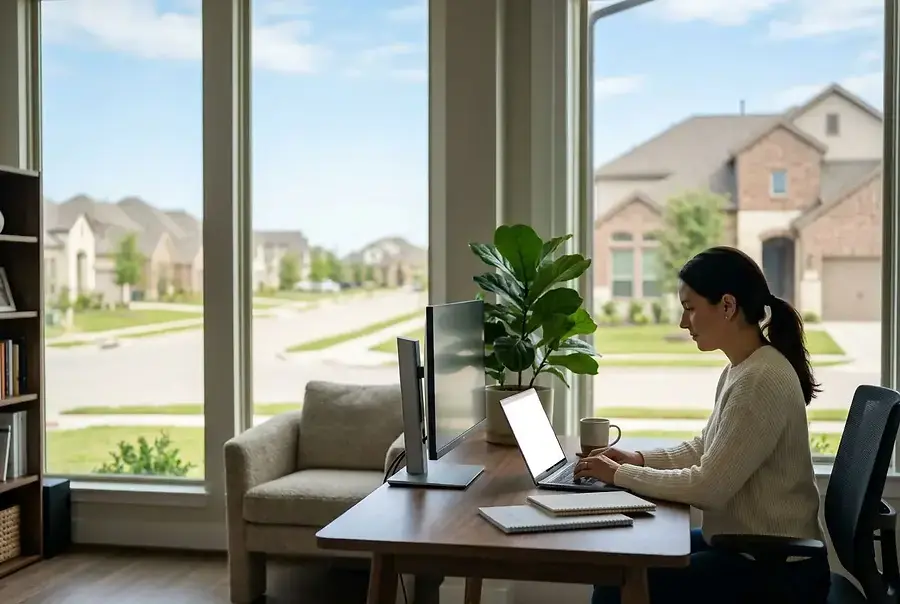
The Remote Work Revolution and Texas Housing Demand
The shift toward remote and hybrid work arrangements has fundamentally transformed the way Texans approach homeownership. No longer tethered to office locations, professionals are rethinking where they want to live, work, and raise their families. This geographic freedom has created unprecedented demand across Texas residential markets, particularly in major metropolitan areas like Austin, Houston, and Dallas-Fort Worth (DFW).
The impact has been substantial. Remote work has decoupled housing decisions from traditional commute patterns, allowing buyers to prioritize lifestyle, community amenities, and quality of life over proximity to downtown office buildings. This shift has opened new neighborhoods and suburbs to homebuyers who previously would have been limited by commute considerations.
Texas, with its diverse communities, affordable housing options compared to coastal markets, and strong economic fundamentals, has become increasingly attractive to remote workers relocating from other states. The combination of no state income tax, reasonable cost of living, and vibrant urban centers has made the Lone Star State a magnet for talent seeking flexibility and opportunity.
Geographic Flexibility and Neighborhood Selection Trends
Expanding Beyond Traditional Urban Centers
Remote work has enabled a significant expansion of residential demand beyond traditional urban cores. In Austin, neighborhoods that were once considered too far from downtown are now thriving as remote workers discover their charm and affordability. Similarly, Houston's sprawling suburbs and DFW's outer ring communities are experiencing renewed interest from buyers who no longer need to minimize commute times.
Key trends shaping neighborhood selection include:
- Preference for homes with dedicated office spaces or flex rooms
- Increased demand for neighborhoods with strong internet infrastructure
- Growing interest in communities with parks, trails, and outdoor amenities
- Selection based on school quality and family-friendly features rather than commute distance
- Attraction to areas with vibrant local dining and entertainment options
The Rise of Suburban and Secondary Markets
Suburbs surrounding Austin, Houston, and Dallas are experiencing unprecedented growth. Communities like Dripping Springs and Lakeway near Austin, The Woodlands and Sugar Land near Houston, and Frisco and McKinney in the DFW area are seeing strong demand from remote workers seeking more space, larger lots, and a different lifestyle than urban living offers.
These secondary markets offer significant advantages for remote workers: more affordable housing, newer construction, family-oriented amenities, and a sense of community that appeals to those no longer bound by office location requirements.
Affordability Shifts and Emerging Residential Hotspots
Redefining Value in Texas Markets
Remote work has fundamentally altered affordability dynamics across Texas. While popular urban neighborhoods have seen price appreciation, emerging hotspots in secondary markets and smaller communities are offering better value for homebuyers. This has created a more diverse real estate landscape where buyers can find quality homes at various price points.
Emerging hotspots include:
- Austin Metro: Pflugerville, Round Rock, and Cedar Park are attracting remote workers seeking more affordable alternatives to central Austin
- Houston Area: Pearland, Katy, and Conroe are experiencing strong growth from remote professionals
- DFW Region: Lewisville, Arlington, and Fort Worth neighborhoods are becoming increasingly popular with remote workers
The Home Office Premium
Properties with dedicated home offices, flex spaces, or rooms suitable for conversion have become increasingly valuable. Buyers are willing to pay premiums for homes that accommodate their work-from-home needs, including features like:
- Separate office rooms with doors for privacy and focus
- High-speed internet infrastructure
- Quiet, distraction-free spaces
- Natural lighting and ergonomic layouts
This trend has created opportunities for sellers to highlight and upgrade these features, potentially increasing property values and appeal to the growing remote workforce.
Affordability Across the State
While some neighborhoods have appreciated significantly, Texas still offers relative affordability compared to other major tech hubs. Remote workers relocating from California, New York, or other high-cost states often find Texas offers exceptional value, allowing them to purchase larger homes, more land, and better amenities at lower price points.
Remote work has democratized Texas real estate, allowing professionals to live where they want rather than where they must. This flexibility is reshaping communities and creating opportunities across the entire state.
Positioning Your Home for Modern Remote-Capable Buyers
Key Selling Points for Today's Market
If you're selling a home in Texas, understanding what remote workers value is essential. Successful sellers are highlighting features that appeal to this demographic:
- Emphasize reliable, high-speed internet availability and infrastructure
- Showcase dedicated office spaces or rooms suitable for conversion
- Highlight neighborhood amenities like parks, trails, and community centers
- Feature outdoor spaces that enhance work-life balance
- Emphasize proximity to quality schools and family-friendly attractions
- Showcase the flexibility and lifestyle benefits of the location
Preparing Your Property
To attract remote-capable buyers, consider strategic improvements:
- Upgrade internet infrastructure and ensure connectivity is excellent
- Create or enhance a dedicated home office space
- Improve outdoor living areas with patios, decks, or landscaping
- Ensure quiet, peaceful environments away from major traffic
- Highlight natural light and ergonomic workspace layouts
The Future of Texas Real Estate
Remote work has permanently altered Texas residential real estate markets. The flexibility it provides has created a more dynamic, diverse housing landscape where buyers have unprecedented choice in where and how they live. Communities across Austin, Houston, and DFW are benefiting from this shift, with emerging neighborhoods and secondary markets experiencing renewed vitality.
For buyers, this means more options and greater flexibility. For sellers, it means understanding and appealing to a new generation of homebuyers who prioritize lifestyle, community, and work-life balance alongside traditional home features. As remote work continues to evolve, Texas real estate will continue to adapt, offering opportunities for those who understand these changing dynamics.
The remote work revolution isn't just changing how we work—it's fundamentally reshaping where and how we live across Texas.