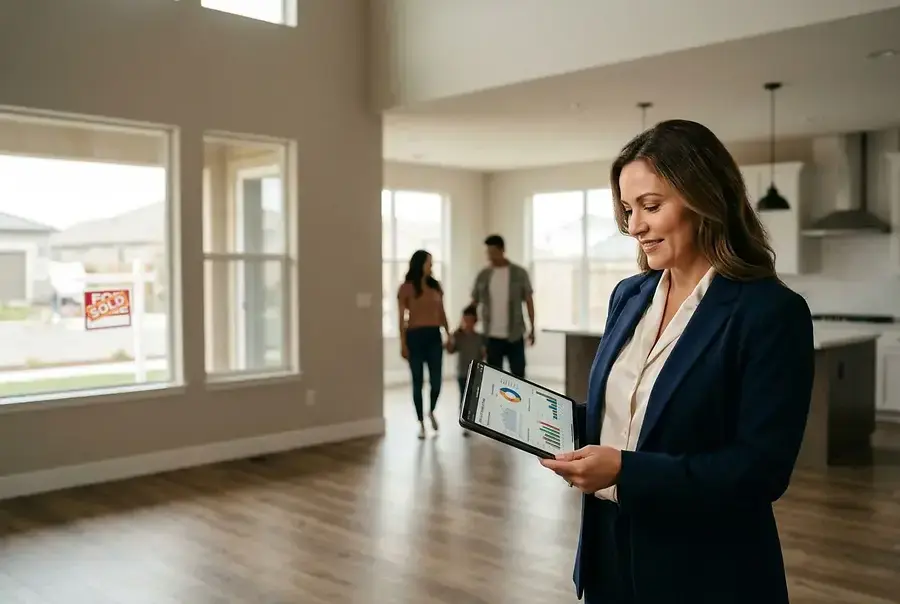
Understanding Clovis Market Fundamentals: Recent Sales Data and Trends
The Clovis real estate market continues to show resilience and opportunity for sellers willing to understand the underlying dynamics. Recent market data reveals that homes in Clovis are experiencing steady demand, with average days on market ranging from 25 to 45 days depending on neighborhood and price point. This makes pricing strategy more critical than ever.
The market has shifted from the seller-dominant conditions of previous years. Today's buyers are more educated, more selective, and more price-conscious. They have access to the same data you do, which means overpricing your home can quickly eliminate qualified buyers. Conversely, strategic pricing attracts multiple offers and creates competitive bidding situations.
Key Market Indicators
Several factors influence Clovis home values:
- Inventory Levels: Current inventory affects pricing power. Lower inventory typically supports higher prices, while higher inventory requires more competitive pricing.
- Interest Rates: Mortgage rates directly impact buyer purchasing power. Even small rate changes can shift the market dynamics significantly.
- Neighborhood Appreciation: Different Clovis neighborhoods appreciate at different rates. North Clovis, downtown areas, and newer developments each have distinct market characteristics.
- School Districts: Properties in top-rated school districts command premium prices and sell faster.
Comparative Market Analysis: Finding Your Home's True Value
A Comparative Market Analysis (CMA) is the foundation of intelligent pricing. This data-driven approach compares your home to recently sold properties with similar characteristics in your area.
What Makes a Good Comparable
The best comparables share these characteristics with your home:
- Sold within the last 90 days
- Located in the same neighborhood or similar area
- Similar square footage (within 10-15%)
- Same number of bedrooms and bathrooms
- Similar condition and age
- Comparable lot size
Adjusting for Differences
No two homes are identical. Professional agents adjust comparable prices based on differences. For example, if a comparable sold for $450,000 but has an updated kitchen while yours needs work, you might adjust down by $15,000-$25,000. These adjustments require expertise and market knowledge.
"The difference between a home that sells in 30 days and one that sits for 90 days often comes down to pricing accuracy in the first two weeks on market."
Using Multiple Data Sources
Smart sellers don't rely on a single valuation method. Cross-reference your CMA with:
- Zillow and Redfin estimates (though these can be inaccurate)
- County assessor records
- Recent appraisals if available
- Local MLS data and sold listings
When these sources align within a 5-10% range, you've likely identified your home's true market value.
Pricing Psychology and Buyer Expectations in Clovis Neighborhoods
Beyond data, psychology plays a significant role in pricing decisions. Understanding how buyers think helps you position your home strategically.
The Power of Price Points
Buyers often search within specific price ranges. A home priced at $449,900 reaches buyers searching for homes under $450,000. This psychological threshold can dramatically increase your exposure. Similarly, pricing at $399,900 instead of $410,000 opens your home to a much larger buyer pool.
Neighborhood-Specific Expectations
Different Clovis neighborhoods have distinct buyer profiles and price expectations:
- Downtown Clovis: Attracts first-time buyers and young professionals seeking walkability and community. Competitive pricing is essential here.
- North Clovis: Draws families seeking newer construction and larger lots. These buyers expect premium pricing for newer homes.
- East Clovis: Offers a mix of established neighborhoods with strong schools. Pricing should reflect the neighborhood's stability and desirability.
- West Clovis: Features diverse properties and price points. Accurate positioning within the neighborhood is crucial.
The First Two Weeks Matter Most
Pricing mistakes are most costly in your home's first two weeks on market. This is when you receive the most showings and have the best chance at multiple offers. Overpricing during this critical window means missing serious buyers who won't return if the price drops later.
Conversely, strategic pricing attracts more buyers initially, generates more feedback, and creates urgency. If your home is priced right, you'll know within the first week through buyer interest and showing traffic.
The Price Reduction Penalty
Homes that are reduced in price often sell for less than if they'd been priced correctly initially. Buyers wonder why the price dropped—was there an inspection issue? Is the market rejecting the home? Strategic initial pricing avoids this perception problem entirely.
Conclusion: Setting the Right Price to Sell Faster
Pricing your Clovis home competitively requires balancing data, psychology, and market knowledge. The winning formula combines:
- Accurate CMA analysis using recent comparable sales
- Understanding of neighborhood dynamics and buyer expectations
- Strategic price positioning at psychological thresholds
- Timing awareness of the critical first two weeks
The goal isn't to price your home as high as possible—it's to price it where it will sell fastest to a qualified buyer. In today's market, that strategy generates better results than holding out for a higher price that may never materialize.
Working with a local real estate agent who understands Clovis market data and has access to current MLS information is invaluable. They can provide the comparative analysis, neighborhood insights, and pricing expertise that turns your home into a competitive listing that attracts serious buyers quickly.
Remember: the best price is the one that sells your home in the shortest timeframe to the most qualified buyer. That's the true measure of pricing success in today's Clovis real estate market.