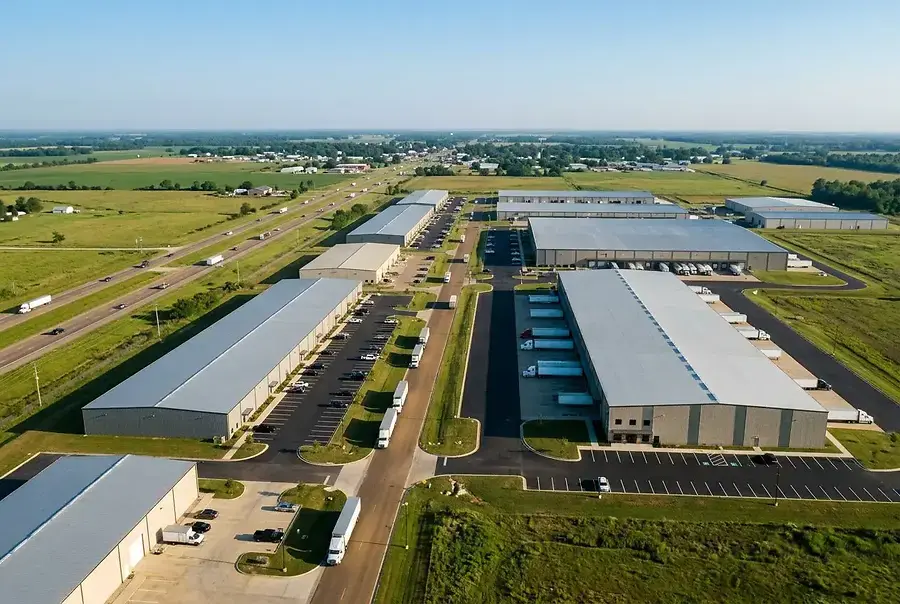
Understanding the Industrial Real Estate Market in Indianola and Inverness
The industrial real estate landscape in Mississippi is experiencing a significant transformation, with Indianola and Inverness emerging as prime locations for warehouse and logistics investments. These markets have historically been overlooked by major investors, creating a unique window of opportunity for those willing to look beyond traditional commercial hubs.
Mississippi's strategic location in the heart of the American South, combined with competitive land costs and favorable business regulations, makes these communities increasingly attractive to logistics operators and distribution companies. The region benefits from proximity to major transportation corridors, including highways and rail networks that connect to larger metropolitan areas.
Market Dynamics and Growth Drivers
Several factors are driving industrial real estate demand in Indianola and Inverness:
- E-commerce Expansion: The continued growth of online retail has created unprecedented demand for warehouse and fulfillment centers in secondary markets.
- Supply Chain Diversification: Companies are increasingly moving away from congested coastal ports and establishing distribution hubs in inland locations.
- Labor Availability: These communities offer a growing workforce at competitive wage rates compared to major metropolitan areas.
- Lower Operating Costs: Real estate prices, utilities, and operational expenses remain significantly lower than in established industrial centers.
The convergence of these factors has created an ideal environment for industrial real estate investment, with properties appreciating faster than historical averages.
Key Logistics and Warehouse Properties Available Now
Current Inventory and Property Types
The current market in Indianola and Inverness features a diverse range of industrial properties suited to various business models and investment strategies. Available properties include:
- Multi-tenant Warehouse Facilities: Smaller units ranging from 5,000 to 25,000 square feet, ideal for diversified tenant portfolios and reduced vacancy risk.
- Single-tenant Industrial Buildings: Larger facilities of 50,000+ square feet designed for major logistics operators and distribution companies.
- Land for Development: Raw industrial-zoned land available for build-to-suit projects with long-term lease agreements.
- Flex Industrial Spaces: Hybrid properties combining warehouse, office, and light manufacturing capabilities.
Strategic Location Advantages
Properties in these markets benefit from exceptional accessibility and connectivity. Most available facilities are situated within minutes of major highways, reducing transportation costs and delivery times. The proximity to regional distribution networks makes these locations particularly attractive to third-party logistics providers and regional retailers seeking to expand their operational footprint.
Investors should prioritize properties with clear ingress and egress, adequate parking for commercial vehicles, and room for future expansion.
Investment Returns and Growth Potential for Industrial Assets
Financial Performance Metrics
Industrial real estate in Indianola and Inverness demonstrates compelling financial fundamentals. Current market conditions support:
- Cap Rates: Properties in these markets typically offer cap rates of 6-8%, significantly higher than established industrial markets.
- Rental Growth: Annual rent increases averaging 3-4% as demand continues to outpace supply.
- Occupancy Rates: Strong occupancy levels of 85-92%, reflecting healthy tenant demand and limited available inventory.
- Appreciation Potential: Property values expected to appreciate 4-6% annually as the markets mature and attract larger institutional investors.
Long-term Value Creation
Beyond immediate cash flow, industrial properties in these emerging markets offer substantial long-term appreciation potential. As Mississippi's industrial sector continues to develop, early investors are positioned to benefit from significant equity gains. The combination of steady rental income and property appreciation creates a compelling total return profile.
Smart investors recognize that emerging markets offer the highest risk-adjusted returns, particularly when fundamentals support long-term growth.
Additionally, industrial properties provide excellent inflation hedging characteristics, with rental rates typically tied to inflation indices or market conditions that naturally adjust upward during inflationary periods.
How to Position Yourself as a Buyer in This Competitive Market
Due Diligence and Market Research
Success in this market requires thorough preparation and strategic positioning. Begin by conducting comprehensive market analysis, including:
- Tenant demand studies and industry growth projections
- Competitive property analysis and rental rate benchmarking
- Local economic indicators and employment trends
- Infrastructure development plans and future accessibility improvements
Building Your Investment Strategy
Develop a clear investment thesis before entering the market. Determine whether you're seeking stabilized income properties, value-add opportunities, or development potential. Understanding your investment objectives will guide property selection and help you negotiate more effectively with sellers.
Consider partnering with local real estate professionals who understand the nuances of Indianola and Inverness markets. These relationships provide access to off-market deals and valuable insights into emerging opportunities before they become widely known.
Financing and Capital Strategies
Secure financing commitments before making offers. Industrial properties in emerging markets may require slightly different lending approaches than established markets. Work with lenders experienced in secondary market industrial real estate to ensure favorable terms and smooth closing processes.
Consider the following capital strategies:
- Traditional bank financing for stabilized properties with strong tenant profiles
- Portfolio lenders for value-add opportunities requiring renovation or repositioning
- Joint ventures or syndication for larger development projects
- Seller financing for properties where traditional lending may be challenging
Negotiation and Closing Tactics
In emerging markets, sellers may have limited comparable sales data, creating opportunities for skilled negotiators. Present compelling market research and financial projections to support your offers. Be prepared to move quickly on quality properties, as competition is increasing as more investors recognize these opportunities.
Ensure all due diligence is thorough, including environmental assessments, structural inspections, and tenant lease reviews. These steps protect your investment and provide leverage in final negotiations.
The industrial real estate opportunities in Indianola and Inverness represent a rare convergence of favorable market conditions, strong fundamentals, and significant growth potential. By conducting thorough research, developing a clear strategy, and positioning yourself as a serious buyer, you can capitalize on these emerging markets before they reach maturity and valuations normalize.