Understanding the Investment Landscape in Greater Sacramento
The Greater Sacramento region has emerged as one of California's most dynamic real estate markets, attracting investors seeking strong returns and sustainable growth. Unlike more saturated coastal markets, the Sacramento metropolitan area offers a compelling combination of affordability, demographic growth, and economic diversification that creates exceptional opportunities for residential investors.
The region's appeal stems from several fundamental factors. Population growth continues to outpace the state average, driven by remote work flexibility, corporate relocations, and families seeking more affordable housing options. Major employers including state government, healthcare systems, technology companies, and manufacturing operations provide stable employment foundations that support housing demand.
Market Fundamentals Driving Growth
Several key indicators demonstrate why Greater Sacramento represents a compelling investment thesis:
- Demographic Tailwinds: Millennials and Gen Z homebuyers are increasingly priced out of coastal markets, creating migration patterns toward inland regions with better value propositions.
- Economic Diversification: The region's economy extends far beyond government employment, with growing sectors in healthcare, technology, logistics, and renewable energy.
- Infrastructure Development: Ongoing investments in transportation, utilities, and commercial infrastructure enhance livability and support long-term appreciation.
- Affordability Premium: Median home prices remain significantly below comparable California markets, providing entry points for investors at various capital levels.
The competitive advantage of investing in Greater Sacramento lies in the timing and positioning within emerging communities before they reach full market maturity.
Evaluating Growth Potential and Market Fundamentals
Roseville: Premium Growth Corridor
Roseville has established itself as the region's premier residential destination, combining suburban comfort with urban amenities. The city's strategic location along major transportation corridors, combined with excellent schools and planned community development, creates sustained demand from both owner-occupants and investors.
Key investment considerations for Roseville:
- Consistent population growth exceeding regional averages
- Strong school district ratings attracting family demographics
- Planned community expansions with modern infrastructure
- Commercial development supporting local employment
- Premium pricing reflecting market maturity and desirability
Investors should focus on emerging neighborhoods within Roseville that offer better entry valuations while maintaining exposure to the city's growth trajectory.
Rocklin: Emerging Value Opportunity
Rocklin represents an earlier-stage growth opportunity compared to Roseville, offering investors the potential to capture appreciation as the community develops. Located along the I-80 corridor, Rocklin benefits from excellent connectivity while maintaining more affordable pricing than established competitors.
The city's investment appeal includes:
- Significant undeveloped land available for residential expansion
- Improving school infrastructure and ratings
- Growing commercial and retail development
- Strong employment centers nearby in Roseville and Placer County
- Lower entry prices compared to mature communities
Rocklin investors benefit from the "growth capture" opportunity—purchasing before major appreciation cycles fully materialize, similar to how Roseville appreciated over the past decade.
Folsom: Tech-Driven Growth Engine
Folsom's proximity to technology corridors and its position as a regional employment hub create unique investment dynamics. The city attracts both corporate headquarters and remote workers seeking quality-of-life amenities, supporting diverse buyer demographics.
Investment highlights for Folsom:
- Technology sector employment concentration
- Historic downtown revitalization attracting younger demographics
- Outdoor recreation and lifestyle amenities
- Strong school performance metrics
- Balanced growth between established and emerging neighborhoods
Strategic Positioning for Long-Term Residential Investment Success
Identifying High-Potential Neighborhoods
Successful investors focus on neighborhoods exhibiting specific characteristics that predict strong appreciation. Look for communities with planned infrastructure improvements, new school construction or expansion, and commercial development announcements. These indicators suggest imminent growth cycles that drive residential demand and property values.
Emerging neighborhoods often feature:
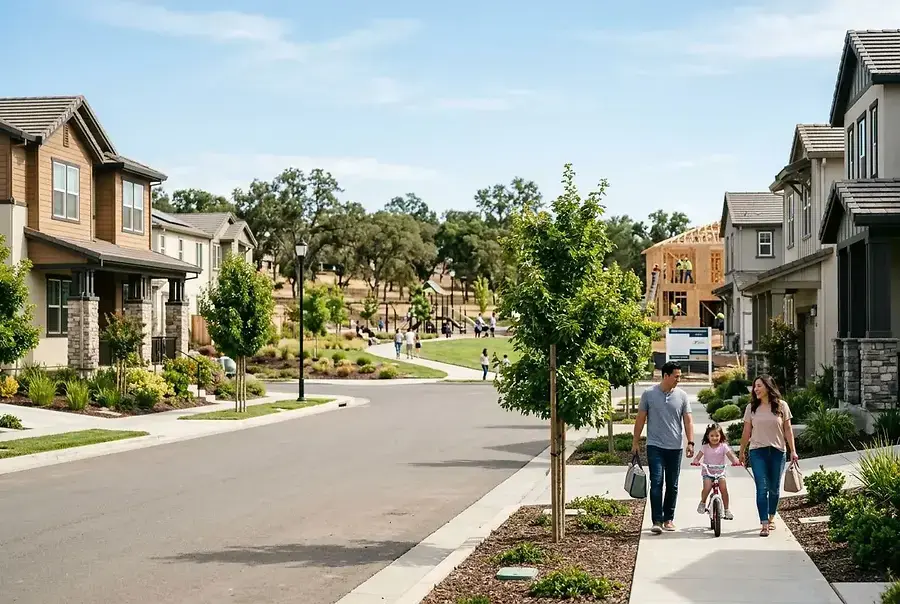
- New construction activity and builder presence
- Improving school ratings and facility investments
- Public infrastructure projects and planning announcements
- Demographic alignment with regional migration patterns
- Reasonable pricing relative to comparable established areas
Risk Mitigation and Due Diligence
While Greater Sacramento's fundamentals remain strong, prudent investors conduct thorough due diligence before committing capital. Evaluate local zoning regulations, master-planned community timelines, and municipal fiscal health to ensure sustainable growth rather than speculative bubbles.
Key due diligence steps include:
- Analyzing municipal budgets and infrastructure funding
- Reviewing master-planned community development timelines
- Assessing school district financial health and expansion plans
- Understanding zoning regulations and future development potential
- Evaluating employment center proximity and job growth trends
Portfolio Strategy Recommendations
The most successful investors in emerging markets balance exposure across multiple communities and neighborhoods, reducing concentration risk while maximizing growth capture opportunities.
Consider a diversified approach that includes:
- Core Holdings: Established neighborhoods in Roseville providing stability and consistent appreciation
- Growth Positions: Emerging areas in Rocklin and Folsom offering higher appreciation potential
- Value Plays: Overlooked neighborhoods in secondary communities with improving fundamentals
- Timing Flexibility: Capital reserves for opportunistic purchases when market dislocations create value
Long-term residential investment success in Greater Sacramento requires patience, research, and strategic positioning. The region's fundamental growth drivers—population migration, economic diversification, and affordability—support sustained appreciation across multiple market cycles. Investors who identify emerging communities before mainstream recognition can capture significant returns while building stable, income-producing assets.
The window for entry-level pricing in high-growth communities remains open, but narrowing as awareness spreads. Strategic action today positions investors to benefit from Greater Sacramento's continued evolution as California's premier inland residential market.