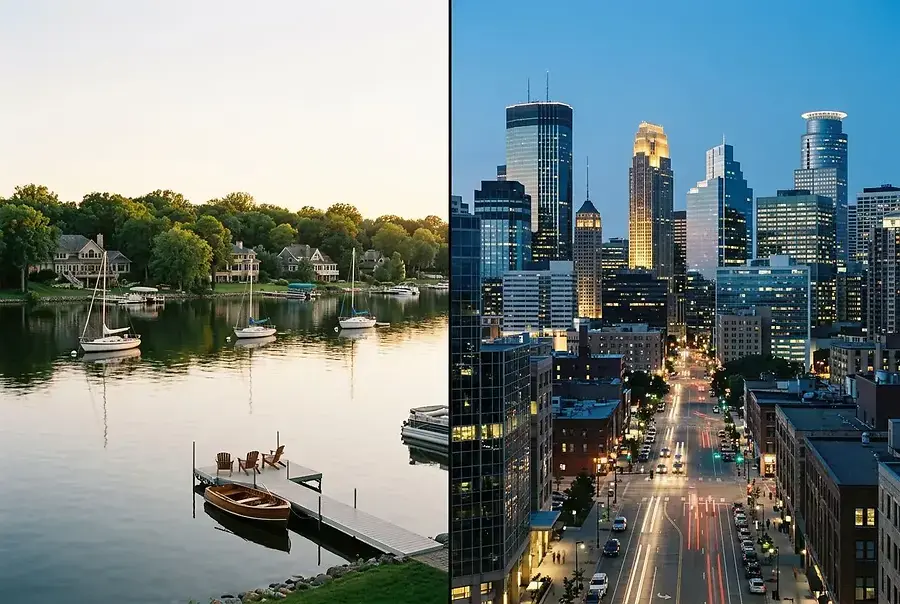
Introduction: Understanding Twin Cities Real Estate Diversity
The Twin Cities metropolitan area offers a remarkable spectrum of real estate opportunities, each with distinct characteristics and investment potential. Whether you're drawn to the serene charm of waterfront communities or the vibrant energy of urban centers, the Minneapolis-St. Paul region provides options for every buyer type. Understanding the differences between lakeside living and urban markets is essential for making an informed decision that aligns with your lifestyle preferences and financial objectives.
The choice between lake communities and urban centers isn't simply about aesthetics—it's about understanding market dynamics, property appreciation potential, lifestyle amenities, and long-term investment returns. This guide explores both sides of the Twin Cities real estate landscape to help you navigate your options.
Lakeside Living: What Wayzata, Excelsior, Long Lake, and Hopkins Offer
The Appeal of Waterfront Communities
Lake communities around the Twin Cities represent some of the region's most desirable residential destinations. Wayzata, Excelsior, Long Lake, and Hopkins each offer unique waterfront experiences combined with strong community values and excellent schools. These communities attract families, retirees, and professionals seeking a slower pace of life without sacrificing urban conveniences.
Wayzata: Premium Waterfront Living
Wayzata stands as one of the Twin Cities' most prestigious lake communities, situated on the shores of Lake Minnetonka. The community features:
- Luxury residential properties with waterfront access and premium pricing
- Excellent schools and family-oriented amenities
- Vibrant downtown with boutique shopping, dining, and entertainment
- Strong property appreciation driven by limited waterfront inventory
- Active recreational opportunities including boating, swimming, and water sports
Properties in Wayzata command premium prices, typically ranging significantly higher than comparable urban properties. However, the investment potential remains strong due to consistent demand and limited supply of waterfront homes.
Excelsior and Long Lake: Balanced Community Living
Excelsior and Long Lake offer more accessible entry points to lake living while maintaining the community charm and recreational benefits. These communities provide:
- Diverse housing options at various price points
- Strong sense of community with active local organizations
- Quality schools and family services
- Waterfront parks and public access to lakes
- Growing commercial districts with local businesses
These communities attract buyers seeking the lake lifestyle without the premium pricing of exclusive waterfront properties, making them excellent for first-time homebuyers and growing families.
Hopkins: Urban Convenience Meets Lake Living
Hopkins uniquely bridges lake community charm with urban accessibility. Located near the Chain of Lakes, Hopkins offers residents the best of both worlds: waterfront recreation and proximity to Minneapolis employment centers. The community has experienced revitalization with new development and improved commercial corridors.
Urban Markets: Residential and Commercial Opportunities in Minneapolis and St. Paul
Minneapolis: Dynamic Growth and Innovation
Minneapolis represents the Twin Cities' most dynamic real estate market, characterized by rapid development, diverse neighborhoods, and strong commercial activity. The city attracts young professionals, entrepreneurs, and investors seeking urban energy and cultural amenities.
Residential opportunities in Minneapolis include:
- Trendy neighborhoods like Northeast, Uptown, and North Loop with converted lofts and new construction
- Diverse price points accommodating various buyer budgets
- Walkable communities with restaurants, shops, and entertainment
- Strong rental markets for investment properties
- Rapid appreciation in emerging neighborhoods
Commercial real estate in Minneapolis offers substantial opportunities, with downtown office space, retail corridors, and mixed-use developments attracting major corporations and startups. The city's business-friendly environment and growing tech sector create strong commercial investment potential.
St. Paul: Historic Charm with Modern Growth
St. Paul complements Minneapolis with its own distinct character, offering historic neighborhoods, government institutions, and cultural attractions. The capital city provides a slightly more conservative real estate market with strong fundamentals.
St. Paul's real estate advantages include:
- Historic neighborhoods with architectural character and established communities
- Government and institutional stability providing economic anchors
- Cultural attractions including museums, theaters, and festivals
- Competitive pricing compared to Minneapolis in many neighborhoods
- Strong school systems and family-friendly communities
Commercial opportunities in St. Paul include office space near government centers, retail development along major corridors, and mixed-use projects in revitalized neighborhoods.
Making Your Choice: Location-Based Investment Strategies for Every Buyer Type
For Families Seeking Stability
Families prioritizing excellent schools, safe neighborhoods, and community engagement should consider lake communities like Wayzata, Excelsior, or Long Lake. These areas offer established school systems, family activities, and strong neighborhood cohesion. While property prices are higher, the investment in quality of life and educational opportunities often justifies the expense.
For Young Professionals and Investors
Young professionals seeking walkable urban environments, diverse dining and entertainment, and proximity to employment centers should explore Minneapolis neighborhoods like Northeast, Uptown, or North Loop. These areas offer rental investment potential, appreciation opportunities, and vibrant lifestyle amenities. Urban properties often provide better rental yields for investment-focused buyers.
For Commercial Investors
Minneapolis and St. Paul offer superior commercial real estate opportunities. Downtown office space, retail corridors, and mixed-use developments provide diversified investment options. The urban centers' economic diversity and business activity create more robust commercial markets than lake communities.
For Retirees and Lifestyle-Focused Buyers
Retirees valuing recreational opportunities, community engagement, and a slower pace should prioritize lake communities. The waterfront lifestyle, established social networks, and recreational amenities align with retirement goals. Properties may appreciate more slowly than urban markets, but the lifestyle value often compensates.
For Balanced Living
Buyers seeking compromise between urban convenience and lake living should consider Hopkins or communities on the urban fringe. These locations provide lake access and community feel while maintaining reasonable commutes to employment centers and urban amenities.
Investment Considerations
Lake communities typically appreciate more slowly but offer stability and lifestyle value. Property appreciation depends on limited waterfront inventory and consistent demand from affluent buyers.
Urban markets offer faster appreciation potential, especially in emerging neighborhoods, but involve higher volatility and more active management for rental properties. Commercial real estate in urban centers provides diversification and stronger income potential.
The best choice depends on your priorities: lifestyle preferences, investment timeline, financial capacity, and personal goals. Both lake communities and urban centers represent solid real estate investments within the Twin Cities market, each serving different buyer needs and investment strategies.