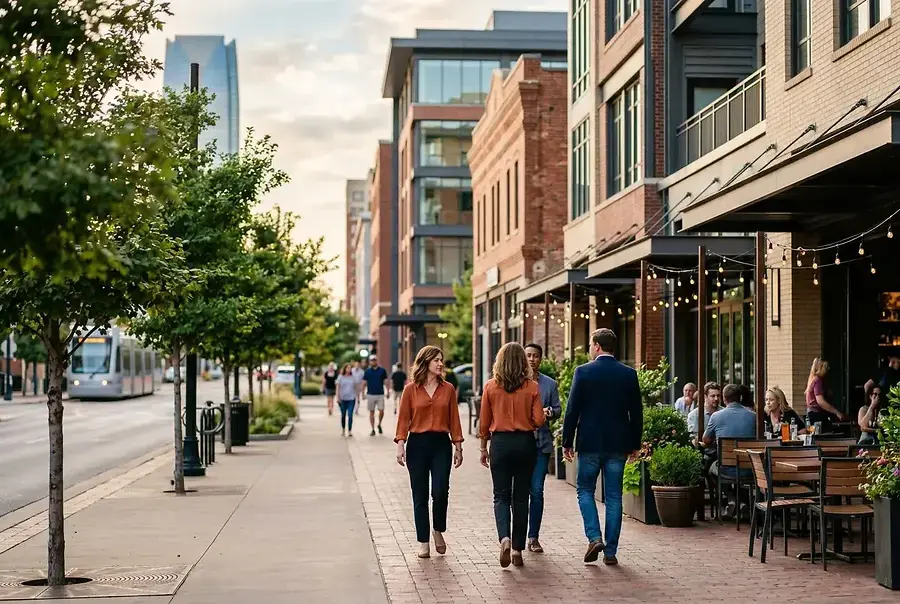
The Rise of Mixed-Use Commercial Properties in Oklahoma
Oklahoma's commercial real estate landscape is undergoing a significant transformation. Mixed-use developments—properties that combine residential, retail, office, and entertainment spaces—are reshaping how investors approach commercial real estate in the state. This shift represents more than just a trend; it reflects fundamental changes in consumer preferences and urban development patterns.
The appeal of mixed-use properties lies in their versatility and revenue-generating potential. Rather than relying on a single tenant or use case, these developments create vibrant communities where multiple income streams converge. Investors are recognizing that diversified properties offer greater resilience and higher long-term returns compared to single-purpose commercial buildings.
Oklahoma's major metropolitan areas—particularly Tulsa and Oklahoma City—are leading this charge. These cities offer affordable land, growing populations, and supportive municipal policies that make mixed-use development both feasible and profitable.
Market Demand: Why Mixed-Use Developments Are Thriving in Tulsa, Oklahoma City, and Surrounding Areas
Population Growth and Urban Migration
Oklahoma's urban centers are experiencing steady population growth as people seek affordable alternatives to coastal and mountain markets. This influx creates immediate demand for diverse housing options, retail experiences, and office spaces. Mixed-use developments perfectly address this demand by offering everything residents and workers need in one location.
Changing Consumer Preferences
Modern consumers increasingly prefer walkable neighborhoods where they can live, work, and play without relying heavily on automobiles. This lifestyle preference drives demand for mixed-use properties that integrate residential units above ground-floor retail and restaurants. Tulsa and Oklahoma City are responding to this shift with strategic development initiatives.
Economic Diversification
Both cities are actively diversifying their economies beyond traditional industries. Tech startups, creative industries, and professional services are establishing roots in Oklahoma, creating demand for modern office spaces. Mixed-use developments provide the contemporary work environments these companies seek while generating residential and retail revenue simultaneously.
Competitive Advantages
Oklahoma offers several competitive advantages for mixed-use development:
- Affordable land costs compared to national averages
- Lower construction expenses that improve project economics
- Tax incentives available through state and local programs
- Reduced regulatory barriers relative to other states
- Growing workforce supporting business expansion
Investment Strategies: Evaluating Mixed-Use Properties for Maximum Returns in Key Markets
Location Analysis and Market Selection
Successful mixed-use investments begin with rigorous location analysis. Focus on neighborhoods with strong fundamentals: proximity to employment centers, existing retail density, public transportation access, and demographic trends favoring younger, urban-oriented residents. Tulsa's Midtown and Oklahoma City's Bricktown districts exemplify locations where mixed-use developments thrive.
Financial Modeling and Feasibility Studies
Before committing capital, conduct comprehensive financial analysis. Model revenue from each component—residential units, retail tenants, office space, and parking—separately. Account for vacancy rates, operating expenses, and capital reserves. Conservative assumptions protect your investment and reveal whether a project can deliver target returns.
Tenant Mix Optimization
The success of mixed-use properties depends heavily on tenant selection. Prioritize:
- Anchor tenants with strong credit ratings and long lease terms
- Complementary retail and food service that drive foot traffic
- Office tenants in growth industries with expansion potential
- Residential units priced to attract the target demographic
A balanced tenant mix reduces risk by ensuring that weakness in one sector doesn't devastate overall performance.
Adaptive Reuse Opportunities
Oklahoma's historic commercial buildings present exceptional opportunities for adaptive reuse. Converting old warehouses, factories, or office buildings into mixed-use developments often costs less than new construction while preserving neighborhood character. These projects frequently qualify for historic tax credits, further improving returns.
Financing Strategies
Mixed-use developments typically require creative financing approaches. Consider:
- Construction loans with permanent financing commitments
- Partnerships with institutional investors seeking long-term holds
- Tax increment financing (TIF) districts available in many Oklahoma municipalities
- New Market Tax Credits for developments in underserved areas
Risk Management
Mixed-use developments offer diversification, but they also introduce complexity. Successful investors implement strong property management, maintain adequate reserves, and build flexibility into lease structures to adapt to market changes.
Diversification across multiple revenue streams provides natural hedging. If retail underperforms, residential and office income can offset losses. This resilience makes mixed-use properties attractive during economic uncertainty.
Positioning Your Portfolio for Success in Oklahoma's Mixed-Use Commercial Sector
Oklahoma's mixed-use development sector represents a compelling opportunity for investors seeking strong returns with manageable risk. The state's affordable fundamentals, growing urban centers, and supportive policy environment create ideal conditions for these projects.
Key takeaways for success:
- Prioritize locations with demonstrated population growth and economic diversification
- Conduct thorough financial analysis before committing capital
- Build tenant rosters that complement each other and drive foot traffic
- Explore adaptive reuse opportunities that reduce development costs
- Implement professional property management to maximize operational efficiency
- Maintain financial flexibility to capitalize on market opportunities
As Oklahoma's major markets continue evolving, mixed-use developments will play an increasingly central role in urban growth. Investors who understand market dynamics, execute disciplined financial analysis, and maintain long-term perspectives are well-positioned to capture substantial returns. The time to evaluate mixed-use opportunities in Oklahoma's top markets is now, before competition intensifies and land costs rise further.