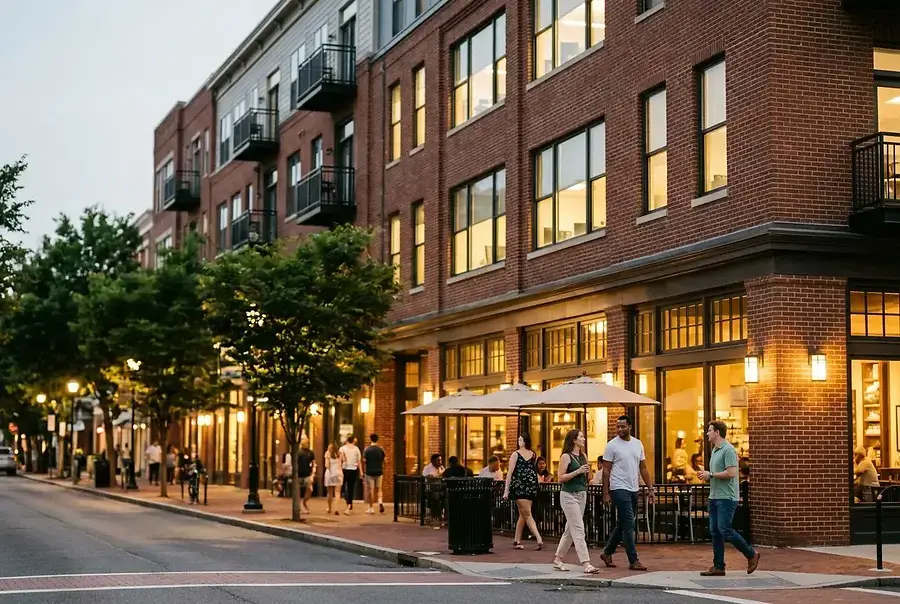
The Evolution of Mixed-Use Development in the Delaware Valley
The Delaware Valley region—encompassing New Castle, Wilmington, and Philadelphia—is experiencing a profound transformation in its commercial real estate landscape. Mixed-use developments have emerged as the defining trend of modern urban revitalization, fundamentally changing how communities approach real estate investment and development. These projects seamlessly blend residential, retail, office, and entertainment spaces into cohesive, walkable environments that cater to contemporary lifestyle preferences.
The shift toward mixed-use development represents more than just a trend; it reflects a deeper understanding of what modern consumers and businesses truly value. Rather than isolated commercial zones separated from residential areas, today's developers are creating vibrant neighborhoods where people can live, work, shop, and dine without relying heavily on automobiles. This paradigm shift has proven particularly successful in the Delaware Valley, where historic architecture and established infrastructure provide ideal foundations for adaptive reuse projects.
Market Drivers: Why Mixed-Use Projects Are Thriving in DE and PA
Economic Resilience and Diversification
Mixed-use developments offer economic resilience that single-purpose properties cannot match. By combining multiple revenue streams—residential leases, retail tenants, office space, and hospitality services—these projects create diversified income portfolios that weather economic fluctuations more effectively. In the Delaware Valley, this diversification has proven invaluable as the region navigates changing market conditions.
Urban Revitalization and Community Demand
Communities throughout the Delaware Valley are increasingly demanding walkable, vibrant neighborhoods. Mixed-use developments directly address this demand by transforming underutilized properties and vacant industrial spaces into thriving urban centers. Adaptive reuse projects, in particular, preserve architectural heritage while meeting contemporary needs—a combination that resonates deeply with both residents and investors.
Workforce Attraction and Retention
Companies seeking to attract and retain top talent recognize that employees value proximity to amenities, dining, entertainment, and residential options. Mixed-use developments provide exactly this environment, making them increasingly attractive to corporate tenants. The Delaware Valley's position as a major employment hub amplifies this advantage, as businesses compete for skilled workers in a competitive market.
Regulatory Support and Tax Incentives
Both Delaware and Pennsylvania have implemented favorable policies supporting mixed-use development. Historic preservation tax credits, opportunity zone designations, and streamlined permitting processes have significantly reduced development barriers. These incentives have catalyzed investment in projects that might otherwise face financial hurdles.
Case Studies: Successful Mixed-Use Developments and Investment Returns
Philadelphia's Historic District Transformations
Philadelphia has become a national leader in adaptive reuse, with numerous warehouse and industrial buildings converted into mixed-use spaces. These projects typically feature ground-floor retail and restaurants, mid-level office space, and upper-floor residential units. Investors in these developments have realized returns exceeding 15-20% annually, driven by strong tenant demand and property appreciation. The city's rich architectural heritage provides authentic character that new construction cannot replicate, commanding premium rents across all use categories.
Wilmington's Waterfront Renaissance
Wilmington's waterfront district has emerged as a premier mixed-use destination, combining office space, residential lofts, restaurants, and entertainment venues. Strategic positioning near major employers and transportation corridors has driven consistent occupancy rates above 90%. Developers have capitalized on the area's natural amenities and historic character, creating spaces that attract both corporate tenants and residential renters willing to pay premium rates for location and lifestyle.
New Castle's Emerging Opportunities
New Castle represents the frontier of mixed-use development in the Delaware Valley. Several adaptive reuse projects have recently launched, converting historic commercial buildings into vibrant mixed-use spaces. Early investors have positioned themselves advantageously, acquiring properties at favorable valuations before market recognition drives prices higher. These projects demonstrate the significant upside potential available in emerging markets within the region.
Positioning Yourself as an Expert in Mixed-Use Commercial Real Estate
Key Metrics and Performance Indicators
Understanding mixed-use development requires mastery of specific metrics. Net Operating Income (NOI) per square foot varies significantly across use categories, requiring sophisticated analysis. Blended cap rates typically range from 4-6% for stabilized mixed-use properties, reflecting lower risk profiles compared to single-use assets. Tenant mix optimization directly impacts property value—the ideal combination of uses varies by location and market conditions.
Risk Mitigation Strategies
Successful mixed-use investors employ several risk management approaches:
- Diversified tenant base: Avoid over-reliance on any single tenant or use category
- Long-term leases: Secure multi-year commitments from anchor tenants
- Professional management: Employ experienced property managers familiar with mixed-use operations
- Market research: Conduct thorough analysis of local demand for each use category
- Adaptive flexibility: Design spaces that can accommodate evolving tenant needs
Emerging Opportunities
The Delaware Valley continues to present compelling opportunities for informed investors. Undervalued adaptive reuse candidates remain available in secondary markets throughout the region. Properties with strong bones but requiring capital investment often trade at significant discounts, offering substantial upside potential. Additionally, ground-floor retail activation in residential-heavy neighborhoods represents an underexploited opportunity, as many properties lack the vibrant street-level experiences that drive foot traffic and tenant demand.
The convergence of favorable market conditions, regulatory support, and demonstrated investment returns makes the Delaware Valley an exceptional environment for mixed-use development. By understanding market drivers, learning from successful case studies, and implementing proven risk mitigation strategies, investors can position themselves to capitalize on this transformative trend. The future of commercial real estate in the Delaware Valley belongs to those who recognize that the most valuable properties are those that serve multiple purposes and create genuine community value.
