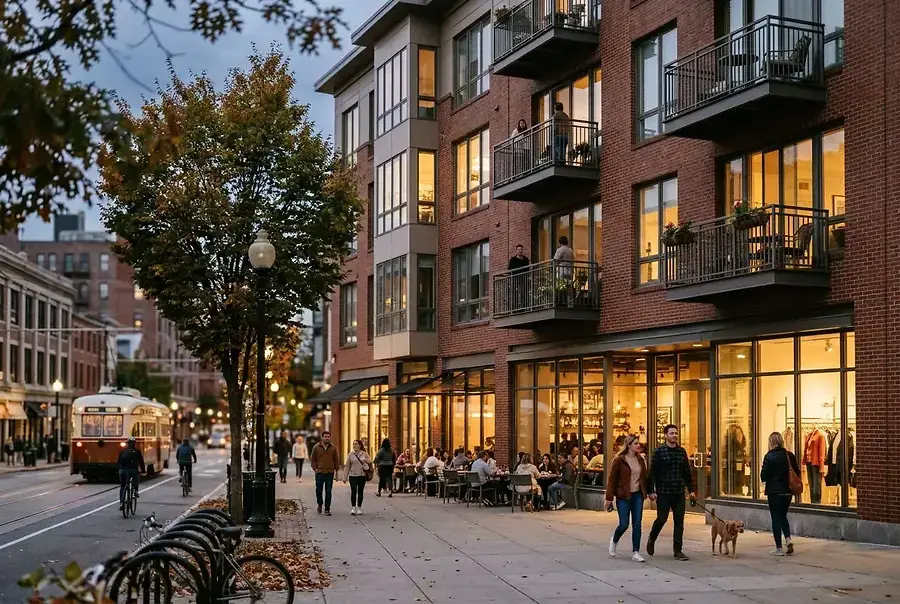
The Rise of Mixed-Use Properties in the Boston Metro Area
The Boston metropolitan area is experiencing a significant shift in real estate investment trends. Mixed-use properties—buildings that combine residential units with commercial spaces—have become increasingly attractive to investors seeking diversified income streams and flexible property management options. This hybrid approach to real estate development is reshaping neighborhoods and creating new opportunities for savvy investors.
The demand for mixed-use properties stems from changing consumer preferences and evolving urban development patterns. Residents increasingly value walkable neighborhoods where they can live, work, and shop without extensive commuting. Commercial tenants, meanwhile, seek affordable spaces in vibrant communities with built-in customer bases. This convergence of interests has made mixed-use properties a compelling investment vehicle across the Boston region.
Residential-Commercial Hybrid Benefits: Income, Flexibility, and Market Demand
Multiple Revenue Streams
One of the primary advantages of mixed-use properties is the ability to generate income from multiple sources. Property owners can collect residential rent from apartment units while simultaneously leasing commercial space to retail shops, offices, restaurants, or service providers. This diversification reduces dependency on a single tenant or market segment, providing greater financial stability and resilience during economic fluctuations.
Enhanced Property Value and Appreciation
Mixed-use properties typically appreciate faster than single-use buildings because they serve broader market demands. The combination of residential and commercial components creates a more attractive asset profile for future buyers and investors. Additionally, successful mixed-use developments often become neighborhood anchors, driving surrounding property values upward and creating long-term wealth accumulation opportunities.
Operational Flexibility
Investors in mixed-use properties enjoy greater flexibility in property management and tenant selection. If residential demand weakens, commercial leasing can be prioritized, and vice versa. This adaptability allows property owners to respond quickly to market changes and optimize their investment returns. Furthermore, mixed-use properties can be repositioned or reconfigured to meet evolving neighborhood needs.
Strong Market Demand
The Boston metro area's robust economy, diverse population, and thriving business sectors create sustained demand for mixed-use properties. Tech companies, healthcare organizations, educational institutions, and service businesses all seek accessible commercial spaces in residential neighborhoods. This consistent demand translates to lower vacancy rates and more reliable rental income for property owners.
Top Mixed-Use Markets: Comparing Somerville, Cambridge, Hingham, and Cohasset Investment Potential
Somerville: The Emerging Powerhouse
Somerville has transformed into one of the Boston area's most dynamic mixed-use markets. The neighborhood's proximity to Cambridge and Boston, combined with affordable property prices relative to neighboring communities, makes it attractive for investors. Union Square and Assembly Row represent successful mixed-use developments that have revitalized the area. Properties in Somerville offer excellent potential for investors seeking strong returns with room for appreciation.
- Advantages: Growing job market, improving transit access, younger demographic, lower entry costs
- Considerations: Rapid development may lead to market saturation; property values rising quickly
Cambridge: The Premium Market
Cambridge represents the premium segment of Boston's mixed-use market. Home to Harvard University, MIT, and numerous biotech and tech companies, Cambridge offers unparalleled commercial tenant quality and stability. Mixed-use properties here command higher prices but generate substantial rental income from both residential and commercial tenants. The educated, affluent population supports high-end retail and service businesses.
- Advantages: Strong tenant quality, high rental rates, excellent walkability, prestigious location
- Considerations: High acquisition costs, competitive market, limited inventory
Hingham: The Suburban Opportunity
Hingham offers a different investment profile—a more suburban setting with strong community character and waterfront appeal. The downtown area has seen renewed interest in mixed-use development, with properties combining residential units above retail and dining establishments. Hingham attracts affluent residents and successful small businesses, creating a stable tenant base with strong payment histories.
- Advantages: Strong community demographics, waterfront proximity, growing downtown revitalization, family-oriented market
- Considerations: Smaller commercial market, seasonal fluctuations, limited transit access
Cohasset: The Upscale Coastal Market
Cohasset represents the luxury end of the mixed-use spectrum. This affluent coastal community attracts high-income residents and upscale commercial tenants. Mixed-use properties here typically feature premium finishes and cater to discerning clientele. While entry costs are substantial, the quality of tenants and rental rates justify the investment for those seeking stability and prestige.
- Advantages: Wealthy demographic, premium rental rates, strong property values, exclusive market positioning
- Considerations: Very high acquisition costs, limited inventory, exclusive market may limit tenant pool
Comparative Analysis
For growth-focused investors: Somerville and Cambridge offer the strongest appreciation potential, though Cambridge requires significant capital. For income-focused investors: Hingham and Cohasset provide stable, predictable returns from quality tenants. For balanced portfolios: Cambridge offers the best of both worlds, combining growth potential with strong income generation.
Positioning Yourself as a Mixed-Use Real Estate Expert
Success in mixed-use real estate investing requires understanding both residential and commercial markets. Investors should develop expertise in tenant screening, lease negotiation, property management coordination, and market analysis. Building relationships with commercial brokers, residential property managers, and local business owners creates valuable networks that identify opportunities before they reach the broader market.
Due diligence is critical when evaluating mixed-use properties. Analyze the commercial tenant mix, lease terms, and renewal rates alongside residential occupancy and rental rates. Consider the neighborhood's trajectory, upcoming developments, and demographic trends. Understanding zoning regulations and local development plans helps identify properties positioned for future growth.
The Boston metro area's mixed-use real estate market presents compelling opportunities for investors willing to master this specialized niche. Whether you're drawn to Somerville's emerging potential, Cambridge's premium market, Hingham's suburban appeal, or Cohasset's luxury positioning, mixed-use properties offer the income diversification, flexibility, and appreciation potential that sophisticated investors seek. By understanding each market's unique characteristics and developing expertise in mixed-use property management, you can build a profitable real estate portfolio that thrives across economic cycles.