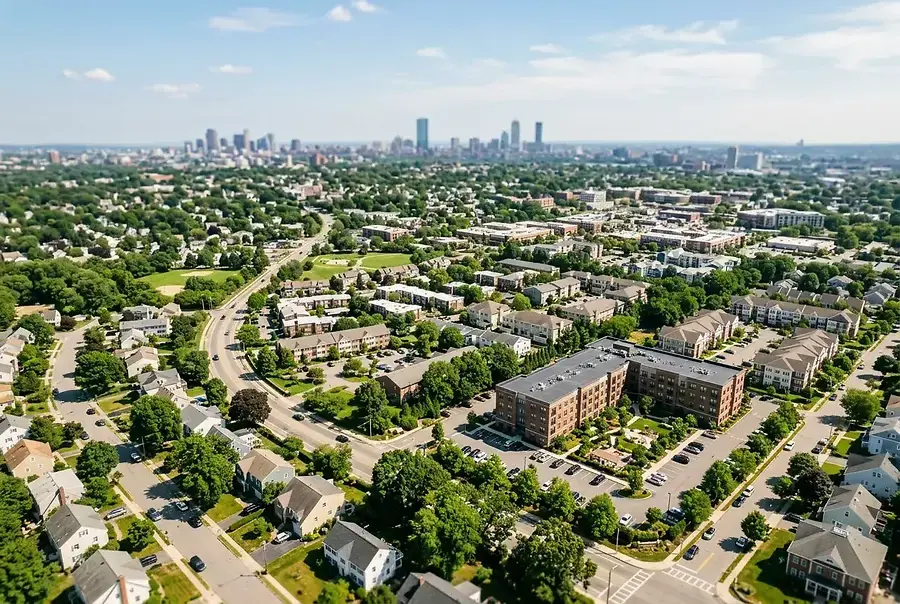
The Multi-Family Investment Boom in Greater Boston
The Greater Boston area has emerged as one of the most dynamic real estate markets in the Northeast, with suburban communities experiencing unprecedented growth in multi-family investment opportunities. From residential apartment complexes to mixed-use commercial properties, the Boston metro suburbs are attracting investors seeking stable cash flow and long-term appreciation potential.
This investment surge is driven by several compelling factors: a strong regional economy anchored by world-class universities and healthcare institutions, a highly educated workforce, and consistent population growth. Investors who understand the nuances of this market are positioning themselves to capitalize on opportunities that offer both immediate returns and substantial long-term wealth building.
Why Boston Suburbs Are Attracting Residential and Commercial Investors
Economic Stability and Growth
The Boston metropolitan area boasts one of the most resilient economies in the nation. Major employers including Harvard University, MIT, Boston Medical Center, and numerous Fortune 500 companies create a stable job market that supports strong rental demand. This economic foundation makes multi-family properties in suburban communities exceptionally attractive for investors seeking predictable income streams.
Population Trends and Housing Demand
Suburban communities surrounding Boston continue to experience steady population growth as professionals and families seek more affordable alternatives to urban living while maintaining proximity to employment centers. This demographic shift has created sustained demand for rental housing, particularly in the multi-family sector.
- Young professionals seeking flexible housing arrangements
- Growing families looking for space and community amenities
- Empty nesters downsizing from single-family homes
- International professionals relocating to the region
Favorable Investment Returns
Multi-family properties in Boston suburbs typically offer cap rates ranging from 4.5% to 6.5%, depending on location and property condition. Combined with appreciation potential and tax advantages, these investments provide compelling risk-adjusted returns compared to other asset classes.
Mixed-Use Development Opportunities
Forward-thinking investors are capitalizing on mixed-use developments that combine residential units with ground-floor retail or office space. These properties generate revenue from multiple sources while meeting the evolving needs of suburban communities seeking vibrant, walkable neighborhoods.
Key Markets from Marshfield to Newton: Property Types and Growth Potential
Marshfield: Coastal Appeal and Steady Growth
Located south of Boston, Marshfield offers investors a unique combination of coastal charm and suburban convenience. Multi-family properties here attract tenants seeking beach proximity and a strong sense of community. The market shows steady appreciation with solid rental demand, making it ideal for investors with a medium to long-term horizon.
Brookline: Premium Market with Strong Fundamentals
As one of Boston's most desirable suburbs, Brookline commands premium rents and attracts quality tenants. Multi-family investments here typically feature:
- Higher rental rates reflecting strong demand
- Excellent schools and community amenities
- Strong property appreciation history
- Proximity to major employment centers
While entry costs are higher, the stability and appreciation potential make Brookline an excellent choice for experienced investors.
Somerville: Emerging Market with Explosive Potential
Somerville has transformed into one of the region's hottest investment markets. Young professionals and families are drawn to its vibrant neighborhoods, excellent public transportation access, and thriving cultural scene. Multi-family properties here offer exceptional growth potential, though investors should act quickly as the market continues to appreciate rapidly.
Watertown and Waltham: Value and Accessibility
These communities offer investors an excellent balance of affordability and growth potential. With strong employment centers nearby and improving infrastructure, multi-family properties in Watertown and Waltham provide solid returns without the premium pricing of more established markets. These markets are particularly attractive for first-time multi-family investors.
Newton: Established Wealth and Stability
Newton represents the premium end of the suburban market, attracting affluent tenants and offering exceptional stability. Multi-family investments here may include luxury apartment complexes and high-end rental communities. While appreciation may be slower than emerging markets, the consistent cash flow and low vacancy rates make Newton ideal for income-focused investors.
Property Types Across the Market
Smart investors recognize that diversification across property types and locations maximizes returns while minimizing risk.
- Garden-style apartments: 4-12 unit complexes with moderate capital requirements
- Mid-rise residential: 20-50 unit buildings offering economies of scale
- Mixed-use developments: Combining residential with retail or office space
- Adaptive reuse projects: Converting historic buildings into modern apartments
- Senior housing: Growing demand for age-restricted communities
Building Your Investment Portfolio in the Boston Metro Area
Strategic Considerations for Success
Successful multi-family investing in Boston suburbs requires careful analysis and strategic planning. Consider these key factors:
- Location analysis: Proximity to employment centers, public transportation, and amenities
- Market timing: Understanding local market cycles and growth trajectories
- Property condition: Evaluating renovation needs and capital expenditure requirements
- Tenant demographics: Matching property features to target renter profiles
- Financing options: Exploring conventional loans, portfolio lenders, and alternative financing
The Path Forward
The Boston metro suburbs represent a compelling investment landscape for those willing to conduct thorough due diligence and develop a strategic approach. Whether you're seeking steady income from established markets like Newton and Brookline, or growth potential from emerging markets like Somerville, opportunities abound.
The key to success lies in understanding local market dynamics, identifying undervalued properties with strong fundamentals, and positioning your portfolio to benefit from the region's continued economic growth and population trends. With careful planning and expert guidance, multi-family investments in Boston's suburbs can form the cornerstone of a robust real estate portfolio.
The time to act is now—as more investors recognize the value of Boston's suburban markets, competition for quality properties will only intensify. Begin your investment journey today and position yourself to capture the substantial returns this dynamic market offers.