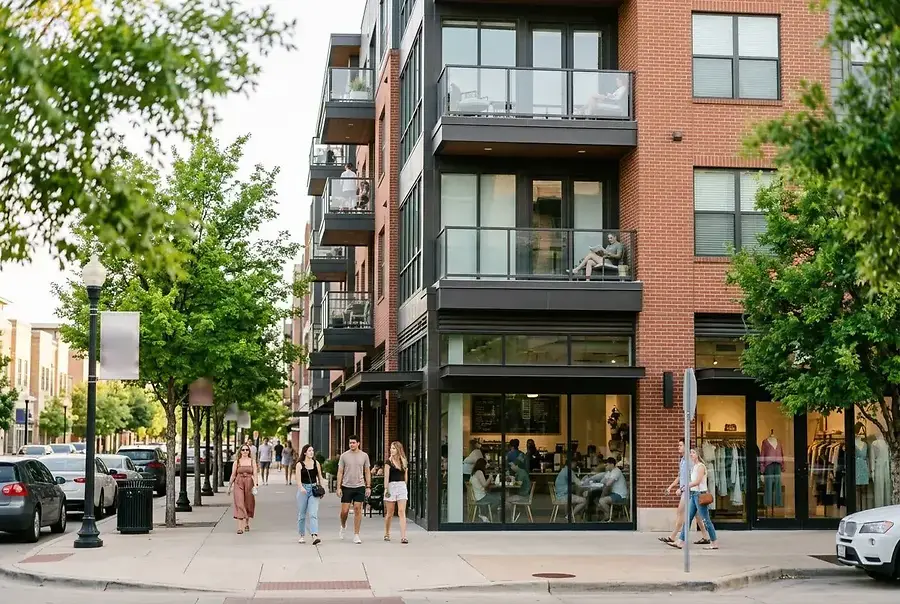
Understanding Residential-Commercial Property Types and Their Market Appeal
The North Texas real estate market has experienced tremendous growth, creating unique opportunities for investors interested in dual-purpose properties. These hybrid properties combine residential and commercial spaces, offering flexibility and diversified income streams that traditional single-use properties cannot match.
Dual-purpose properties in the DFW Metroplex typically include:
- Mixed-use buildings with ground-floor retail or office space and residential units above
- Live-work properties designed for entrepreneurs and professionals seeking home-based businesses
- Multi-family commercial complexes featuring both rental apartments and commercial tenants
- Converted historic properties adapted for both residential and business use
The appeal of these properties lies in their ability to generate revenue from multiple sources. A property owner can collect residential rent from tenants while simultaneously leasing commercial space to businesses, creating a more resilient investment portfolio. This diversification helps offset vacancy risks and provides stability during market fluctuations.
Financing and Valuation Differences for Dual-Purpose Properties in North Texas
Financing dual-purpose properties requires a different approach than traditional residential or commercial mortgages. Lenders view these properties as higher-risk investments due to their complexity and mixed-use nature, which can affect loan terms and interest rates.
Key Financing Considerations
Loan Structure: Most lenders require portfolio loans or commercial mortgages for dual-purpose properties rather than standard residential loans. These typically demand larger down payments, ranging from 20-30%, compared to 10-20% for traditional residential properties.
Valuation Challenges: Appraisers must assess both residential and commercial components separately, making the valuation process more complex. The final property value depends on:
- Income generated from both residential and commercial tenants
- Market comparables for mixed-use properties in the specific DFW area
- The condition and age of both property sections
- Local zoning regulations and permitted uses
Working with lenders experienced in North Texas mixed-use properties is essential. They understand the regional market dynamics and can provide more favorable terms than lenders unfamiliar with dual-purpose investments.
Zoning, Permits, and Legal Considerations Across DFW Communities
Zoning regulations vary significantly across the DFW Metroplex, and understanding local requirements is crucial before purchasing a dual-purpose property. Each city and county maintains distinct zoning codes that determine which properties can legally operate as mixed-use.
Zoning Classifications
North Texas communities typically use zoning designations such as:
- Mixed-Use (MU) zones explicitly designed for residential-commercial combinations
- Commercial (C) zones that may permit residential components with conditional use permits
- Residential (R) zones that rarely allow commercial operations
Permit Requirements: Before converting or purchasing a dual-purpose property, verify that the property has proper permits for both uses. Some properties operate illegally without appropriate commercial licenses or residential certifications. Obtaining the correct permits involves:
- Submitting detailed site plans showing both residential and commercial areas
- Obtaining approval from local planning departments
- Securing separate business licenses for commercial tenants
- Ensuring compliance with building codes for both uses
Legal Protections and Liability
Insurance Requirements: Dual-purpose properties require specialized insurance covering both residential and commercial liability. Standard homeowner policies won't suffice, and commercial-only policies may not cover residential tenants. Work with insurance brokers familiar with mixed-use properties to ensure adequate coverage.
Lease Agreements: Separate lease agreements for residential and commercial tenants are essential. Commercial leases differ significantly from residential leases in terms of maintenance responsibilities, liability, and lease duration. Consult with a real estate attorney to draft appropriate agreements protecting your interests.
Investment Returns and Tenant Management Strategies for Mixed-Use Properties
Successfully managing dual-purpose properties requires balancing the needs of different tenant types while maximizing overall returns.
Maximizing Investment Returns
Dual-purpose properties typically generate higher returns than single-use properties due to multiple income streams. However, success depends on proper management and strategic pricing:
- Diversified Income: Residential rents provide stable, predictable income while commercial leases often command higher per-square-foot rates
- Operational Efficiency: Shared utilities and maintenance costs can be distributed across multiple tenants, improving profit margins
- Market Positioning: Properties in high-demand DFW areas with strong commercial and residential markets command premium prices
Properties that successfully balance residential comfort with commercial viability can achieve 15-25% higher returns compared to single-use properties in similar locations.
Tenant Management Best Practices
Separate Management Approaches: Residential and commercial tenants require different management strategies. Residential tenants need responsive maintenance and clear lease terms regarding quiet enjoyment, while commercial tenants focus on business operations and foot traffic.
Conflict Resolution: Mixed-use properties can experience tension between residential tenants seeking quiet environments and commercial operations generating noise or traffic. Establish clear rules regarding operating hours, noise levels, and parking to minimize conflicts.
Maintenance Coordination: Develop a maintenance schedule that accommodates both residential and commercial needs. Commercial spaces may require different maintenance standards than residential units, and scheduling must prevent disruption to either tenant group.
Tenant Screening: Thoroughly vet both residential and commercial applicants. For commercial tenants, verify business licenses, check references from previous landlords, and assess whether their business aligns with the property's character and other tenants' needs.
Building Community and Long-Term Value
The most successful dual-purpose properties foster a sense of community among diverse tenants. Ground-floor commercial spaces can enhance the residential experience by providing convenient services, while residential tenants support local businesses. This synergy increases property value and tenant retention rates.
Investing in dual-purpose properties across North Texas offers significant opportunities for savvy investors willing to navigate the complexities of mixed-use real estate. By understanding financing requirements, zoning regulations, and effective management strategies, you can build a profitable portfolio that thrives in the dynamic DFW market.