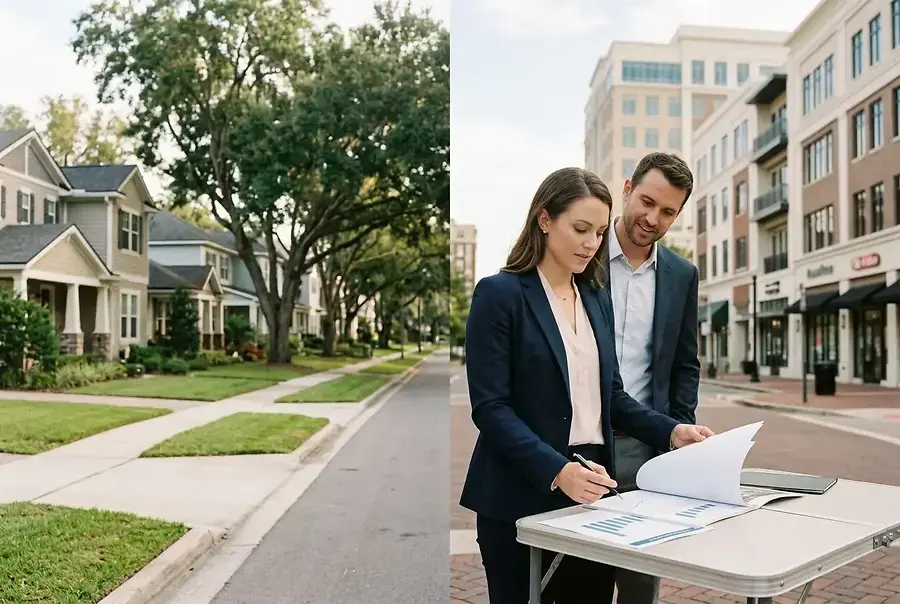
Understanding Tallahassee's Residential and Commercial Market Dynamics
Tallahassee's real estate market presents a unique opportunity for investors willing to explore both residential and commercial properties. As Florida's capital city, Tallahassee benefits from a stable economy driven by government employment, education, and a growing tech sector. This diverse economic foundation creates distinct opportunities for different types of investors.
The residential market in Tallahassee has experienced steady growth, fueled by families relocating to the area and young professionals seeking affordable housing compared to other Florida markets. Meanwhile, the commercial sector continues to evolve, with increasing demand for office spaces, retail locations, and mixed-use developments. Understanding these parallel markets is essential for investors looking to maximize their returns.
The Residential Market Landscape
Tallahassee's residential market offers several advantages for investors. Single-family homes remain the most popular property type, with consistent demand from both owner-occupants and rental investors. The rental market is particularly strong due to the presence of Florida State University and Florida A&M University, creating a reliable tenant base for residential properties.
Property values in residential neighborhoods range significantly depending on location and amenities. Established neighborhoods near downtown command premium prices, while emerging areas offer opportunities for value-add investments. The residential market typically experiences lower vacancy rates and more predictable cash flows compared to commercial properties.
The Commercial Market Opportunity
Tallahassee's commercial real estate market is experiencing renewed interest from investors and businesses. The downtown revitalization efforts have attracted new retailers, restaurants, and service providers. Office spaces continue to be in demand, particularly for government contractors and professional services firms that benefit from proximity to state offices.
Commercial properties generally offer higher income potential through larger lease agreements and longer lease terms. However, they require more sophisticated management and carry different risk profiles than residential investments. The commercial market in Tallahassee is less saturated than in larger Florida cities, presenting opportunities for early movers.
Key Differences in Financing, Zoning, and Investment Returns Between Property Types
Financing Considerations
Residential and commercial properties require different financing approaches. Residential mortgages are typically easier to obtain, with more favorable terms and lower interest rates. Most lenders offer standardized residential loan products with 15 to 30-year amortization periods.
Commercial financing is more complex and often requires:
- Larger down payments (typically 20-30% versus 10-20% for residential)
- Shorter loan terms (5-10 years with balloon payments)
- Proof of business experience and financial stability
- Detailed business plans and market analysis
- Higher interest rates reflecting increased risk
Understanding these financing differences is crucial when planning your investment strategy and cash flow projections.
Zoning and Regulatory Environment
Tallahassee's zoning regulations significantly impact investment decisions. Residential properties are subject to residential zoning codes that protect neighborhood character and limit density. Commercial properties operate under different zoning classifications that determine permitted uses, building heights, and parking requirements.
Before investing, thoroughly research zoning regulations and future development plans. Tallahassee's comprehensive plan includes designated growth corridors and revitalization zones that may affect property values and development potential. Some properties offer flexibility for mixed-use development, combining residential and commercial elements.
Investment Returns and Cash Flow
Residential Properties typically offer:
- Steady monthly rental income with lower vacancy rates
- Appreciation potential in growing neighborhoods
- Tax benefits through depreciation deductions
- Lower management complexity
- Average cap rates of 5-7% in Tallahassee
Commercial Properties typically offer:
- Higher rental income per square foot
- Longer lease terms providing income stability
- Tenant-paid operating expenses (triple-net leases)
- Greater appreciation potential in revitalized areas
- Average cap rates of 7-10% in Tallahassee
The choice between residential and commercial depends on your risk tolerance, available capital, and management preferences.
Building a Diversified Portfolio: When to Buy Residential vs. Commercial Properties
Starting Your Investment Journey
New investors often begin with residential properties due to easier financing and simpler management. A single-family home or small multi-unit residential building provides valuable experience while generating consistent cash flow. This foundation builds equity and confidence for future investments.
Scaling to Commercial Properties
As your portfolio grows and capital increases, commercial properties become attractive. Consider transitioning to commercial investments when you have:
- Established credit and financial history
- Sufficient capital for larger down payments
- Experience managing rental properties
- Understanding of commercial lease structures
- Time to manage more complex properties
Portfolio Diversification Strategy
The optimal approach for many Tallahassee investors involves holding both residential and commercial properties. This diversification strategy offers several advantages:
Risk Mitigation: Different property types respond differently to economic cycles. When residential markets soften, commercial properties may remain stable, and vice versa.
Income Stability: Residential properties provide consistent monthly income, while commercial properties offer higher returns with longer lease commitments.
Tax Efficiency: Different property types offer varying depreciation schedules and expense deductions, allowing sophisticated tax planning.
Growth Potential: Combining appreciation from both sectors maximizes long-term wealth building.
Market Timing Considerations
Successful investors monitor market indicators to time their purchases strategically. In Tallahassee, watch for:
- University enrollment trends affecting residential demand
- Government employment changes impacting commercial demand
- Interest rate movements affecting financing costs
- Development announcements signaling future growth areas
- Vacancy rates indicating market strength
Conclusion: Maximizing Returns by Playing Both Sides of the Tallahassee Real Estate Market
Tallahassee's dual real estate market offers sophisticated investors the opportunity to build substantial wealth through strategic diversification. Rather than choosing between residential and commercial properties, the most successful investors leverage both to create resilient, income-generating portfolios.
The key to success lies in understanding each market's unique characteristics, financing requirements, and return potential. Start with residential investments to build experience and capital, then strategically expand into commercial properties as your expertise and resources grow. Monitor market dynamics, stay informed about zoning and development plans, and remain flexible in your approach.
By playing both sides of Tallahassee's real estate market, you position yourself to weather economic cycles, maximize cash flow, and achieve superior long-term returns. The opportunities are there for investors willing to do their homework and execute a thoughtful, diversified strategy.