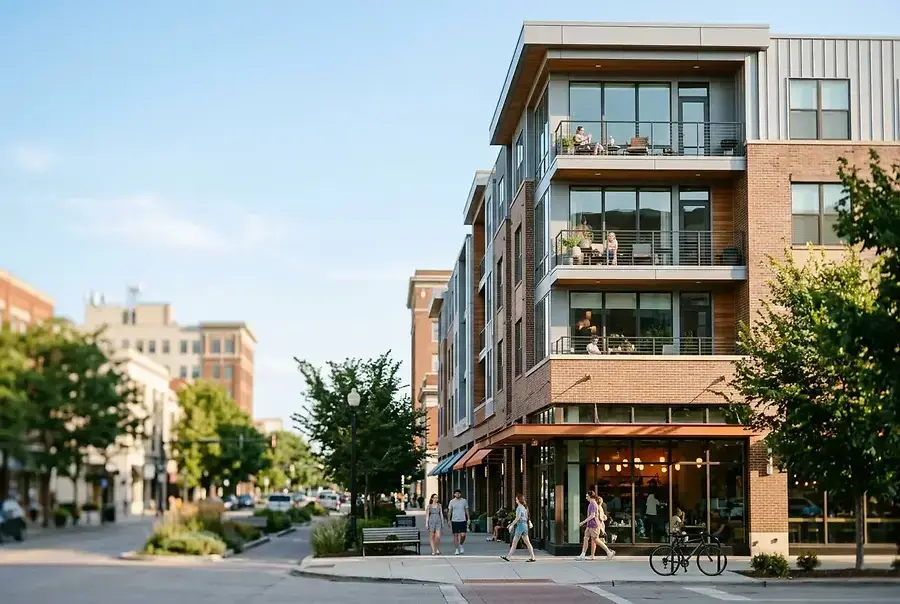
Understanding Delaware's Unique Residential-Commercial Market Dynamics
Delaware's real estate market presents a distinctive opportunity for investors seeking to diversify their portfolios through residential-commercial properties. Unlike traditional single-use investments, dual-use properties combine both residential and commercial elements, offering enhanced revenue streams and operational flexibility. The state's strategic location along the Northeast Corridor, combined with favorable business regulations and tax incentives, creates an ideal environment for this type of investment.
The Delaware residential-commercial market has experienced steady growth, driven by increasing demand for mixed-use developments and the state's appeal to both businesses and residents. Properties that blend living spaces with retail, office, or service-oriented businesses have become increasingly attractive to investors seeking stability and growth potential. Understanding these market dynamics is essential for making informed investment decisions.
Identifying High-Potential Residential-Commercial Properties Across Delaware Cities
Wilmington's Urban Revitalization Opportunities
Wilmington, Delaware's largest city, stands at the forefront of urban revitalization efforts. The downtown area has seen significant investment in mixed-use developments, making it an attractive location for residential-commercial properties. Key neighborhoods to monitor include:
- Riverfront District: Waterfront properties with residential units above retail and dining establishments
- Historic District: Restored Victorian buildings converted into apartments with ground-floor commercial spaces
- Midtown: Emerging neighborhood with affordable entry points and strong growth potential
Newark's College-Town Appeal
Home to the University of Delaware, Newark offers unique investment opportunities driven by student housing demand and local business needs. Properties near the university campus command premium rents, particularly those offering:
- Student-friendly residential units with commercial spaces for tutoring services or tech startups
- Mixed-use buildings catering to both academic and professional communities
- Properties positioned to benefit from the university's continued expansion
Coastal Markets: Rehoboth Beach and Bethany Beach
Delaware's coastal communities present seasonal and year-round investment opportunities. These markets attract both tourists and permanent residents, creating demand for properties that serve dual purposes:
- Seasonal Rentals: Residential units that function as vacation properties with commercial service businesses
- Year-Round Operations: Properties serving both tourist and local populations
- Hospitality Integration: Residential spaces above restaurants, boutiques, or service providers
Financial Strategies and Return on Investment for Dual-Use Properties
Maximizing Revenue Streams
One of the primary advantages of residential-commercial properties is the ability to generate income from multiple sources. Effective financial management involves:
- Residential rental income from apartments or condominiums
- Commercial lease revenue from retail, office, or service businesses
- Potential appreciation of the property value over time
- Tax benefits through depreciation and business expense deductions
Investors should carefully analyze the income potential of each component separately to understand the overall return on investment. A property generating $3,000 monthly from residential units and $2,500 from commercial space provides more stability than a single-use property relying on one income source.
Calculating True ROI
When evaluating dual-use properties, it's crucial to account for all expenses and income sources. Consider the following factors:
- Operating Costs: Maintenance, utilities, insurance, and property management for both residential and commercial sections
- Vacancy Rates: Different vacancy rates for residential versus commercial spaces
- Capital Improvements: Upgrades needed to maintain competitiveness in both markets
- Financing Costs: Interest rates and loan terms specific to mixed-use properties
A thorough financial analysis should project cash flow over a 5-10 year period, accounting for market fluctuations and potential economic changes. Conservative estimates often prove more valuable than optimistic projections when making long-term investment decisions.
Financing Options for Mixed-Use Properties
Delaware offers several financing pathways for residential-commercial investments:
- Conventional Loans: Traditional mortgages with favorable terms for established properties
- SBA Loans: Small Business Administration financing for properties with significant commercial components
- Portfolio Lenders: Local banks offering flexible terms for mixed-use developments
- Private Equity: Partnership opportunities with experienced real estate investors
Each financing option carries different requirements and benefits. Working with a financial advisor familiar with Delaware's real estate market can help identify the most advantageous approach for your specific situation.
Risk Mitigation Strategies
Dual-use properties offer inherent diversification, but additional risk management is essential:
- Maintain adequate reserves for unexpected repairs or vacancies
- Secure comprehensive insurance coverage for both residential and commercial operations
- Conduct thorough tenant screening for both residential and commercial tenants
- Establish clear lease agreements that define responsibilities and expectations
- Monitor market trends to anticipate shifts in demand
Building Your Portfolio with Delaware's Best Residential-Commercial Opportunities
Success in Delaware's residential-commercial market requires a strategic approach combining market knowledge, financial acumen, and operational expertise. Start by identifying your investment goals—whether you seek immediate cash flow, long-term appreciation, or a balanced approach.
Research specific neighborhoods thoroughly, examining demographic trends, development plans, and economic indicators. Visit potential properties during different times of day and seasons to understand traffic patterns and community dynamics. Connect with local real estate professionals, property managers, and other investors to gain insights into market conditions and opportunities.
Begin with properties that align with your expertise and resources. A first-time investor might start with a smaller residential-commercial property in an established neighborhood before expanding to larger or more complex investments. As you gain experience and build equity, you can strategically expand your portfolio into higher-growth markets or larger properties.
Delaware's residential-commercial market offers compelling opportunities for investors willing to conduct thorough due diligence and develop comprehensive financial strategies. By understanding market dynamics, identifying high-potential properties, and implementing sound financial practices, investors can build profitable portfolios that generate consistent returns while contributing to the state's continued economic development.
The key to success lies in viewing each property not merely as a real estate asset, but as a business operation requiring active management and strategic oversight. With the right approach, Delaware's residential-commercial properties can become cornerstone investments in a diversified and profitable real estate portfolio.