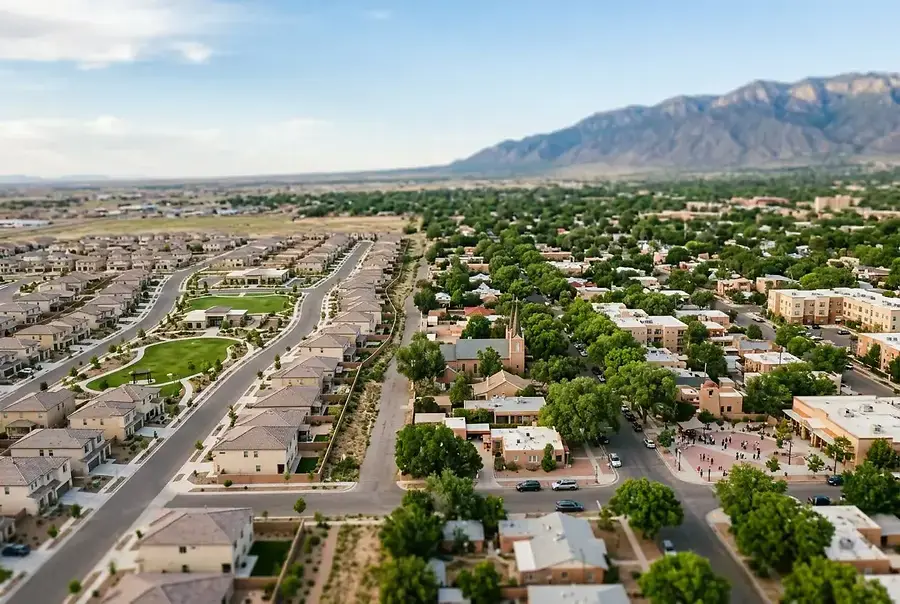
Understanding Each Community's Unique Character and Demographics
Albuquerque and Rio Rancho represent two distinct yet complementary residential markets in New Mexico. Albuquerque, the state's largest city, offers an established urban environment with rich cultural heritage, diverse neighborhoods, and a population exceeding 560,000 residents. The city attracts professionals, families, and retirees seeking an eclectic mix of traditional and modern living.
Rio Rancho, located northwest of Albuquerque, has emerged as one of the nation's fastest-growing communities with a population approaching 100,000. This planned community appeals to families and young professionals seeking newer construction, planned developments, and suburban convenience with proximity to urban amenities.
Demographic Differences
Albuquerque's demographic profile is more diverse, with a median age of approximately 36 years and a rich blend of Hispanic, Native American, and Anglo populations. Rio Rancho skews slightly younger, with a median age around 34 years, and attracts families with children seeking quality schools and safe neighborhoods.
Income levels in Rio Rancho tend to be slightly higher, with median household incomes reflecting the community's appeal to middle to upper-middle-class families. Albuquerque offers greater economic diversity, with neighborhoods ranging from affordable to upscale residential areas.
Comparing School Districts, Amenities, and Quality of Life Factors
Educational Excellence
Both communities prioritize education, but with different approaches. Rio Rancho Public Schools consistently ranks among New Mexico's top-performing districts, with modern facilities and strong test scores. The district benefits from newer infrastructure and growing investment in educational resources.
Albuquerque Public Schools offers greater diversity in educational options, including magnet programs, charter schools, and specialized academies. While performance varies by school, many Albuquerque schools provide innovative curricula and cultural enrichment opportunities.
Recreation and Amenities
- Rio Rancho: Features planned parks, golf courses, shopping centers, and family-friendly recreational facilities. The community emphasizes outdoor activities with well-maintained trails and sports complexes.
- Albuquerque: Offers world-class museums, galleries, performing arts venues, and the famous Balloon Fiesta Park. The city provides diverse cultural experiences, farmers markets, and established entertainment districts.
Quality of Life Considerations
Rio Rancho provides a quieter, more suburban lifestyle with planned community aesthetics and newer infrastructure. Residents enjoy lower crime rates and family-oriented environments. Albuquerque offers urban vibrancy, cultural diversity, and established neighborhoods with character, though some areas experience higher crime rates than Rio Rancho.
Evaluating Commute Times, Cost of Living, and Long-Term Growth Potential
Commute and Accessibility
Rio Rancho residents commuting to Albuquerque typically face 20-30 minute drives via I-25, depending on destination. However, Rio Rancho's growing employment base reduces commute necessity for many residents. Albuquerque offers shorter commutes within the city but may experience traffic congestion during peak hours.
Both communities benefit from proximity to Kirtland Air Force Base, a major regional employer, and the growing tech and film industries centered in Albuquerque.
Cost of Living Analysis
Rio Rancho generally features higher home prices, reflecting newer construction and planned community premiums. Median home prices in Rio Rancho typically range 10-15% higher than comparable Albuquerque properties. However, Rio Rancho offers better value for families prioritizing new construction and modern amenities.
Albuquerque provides greater affordability and diversity in housing options. Buyers can find everything from historic homes in established neighborhoods to modern developments at various price points. Utility costs and property taxes are comparable between communities.
Long-Term Growth Potential
Rio Rancho's Growth Trajectory: The community continues experiencing rapid population growth, with new residential developments, commercial expansion, and infrastructure improvements. Real estate appreciation has been strong, making it attractive for investment-minded buyers.
Albuquerque's Stability and Diversification: While growth is steady rather than explosive, Albuquerque benefits from economic diversification through technology, film production, healthcare, and government sectors. The established real estate market offers stability and consistent appreciation potential.
Making Your Decision: Which Market Aligns With Your Real Estate Goals
Choose Rio Rancho If You Prioritize:
- New construction and modern amenities
- Family-oriented suburban living with excellent schools
- Lower crime rates and planned community aesthetics
- Strong real estate appreciation potential
- Newer infrastructure and minimal maintenance concerns
Choose Albuquerque If You Value:
- Cultural diversity and urban amenities
- Greater housing affordability and variety
- Established neighborhoods with character and history
- Proximity to arts, culture, and entertainment
- Economic diversity and employment opportunities
The Bottom Line
Your choice between Albuquerque and Rio Rancho ultimately depends on your lifestyle preferences, family needs, and investment objectives. Rio Rancho excels for families seeking newer homes, excellent schools, and rapid growth potential. Albuquerque appeals to those valuing cultural richness, affordability, and urban convenience.
Consider visiting both communities, exploring neighborhoods firsthand, and consulting with local real estate professionals who understand each market's nuances. Whether you're drawn to Rio Rancho's planned suburban development or Albuquerque's established urban character, New Mexico's two largest residential markets offer compelling opportunities for homebuyers and investors alike.