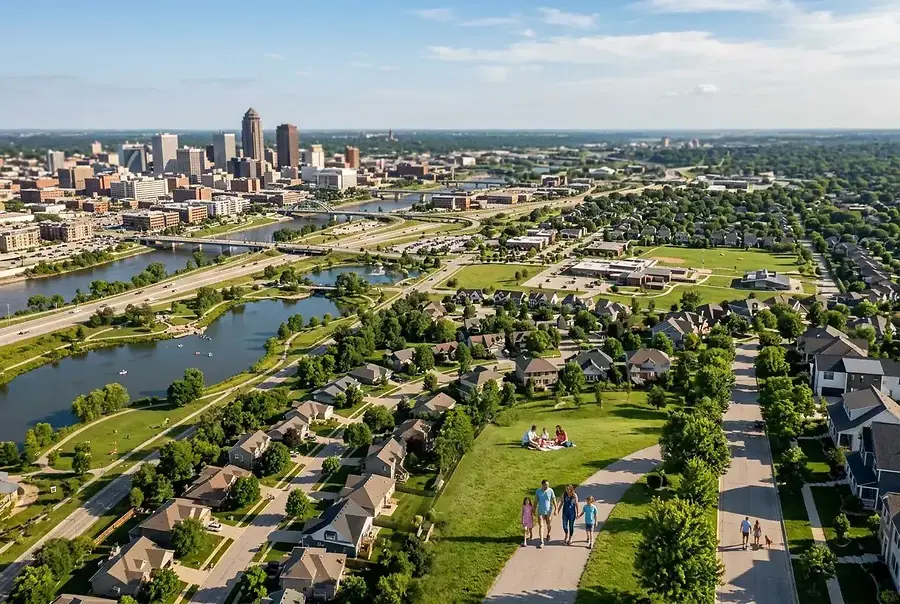
Why Location Matters in Your Home Search
Choosing where to live is one of the most significant decisions you'll make when purchasing a home. Your neighborhood shapes your daily experience, influences your quality of life, and impacts your long-term investment. The Des Moines metropolitan area offers diverse communities, each with distinct characteristics, amenities, and lifestyle benefits.
Whether you're a young professional seeking urban convenience, a growing family looking for excellent schools, or someone seeking a peaceful suburban retreat, the Des Moines metro has something for everyone. Understanding the unique features of each neighborhood helps you make an informed decision that aligns with your priorities and values.
Community Profiles: Key Features and Lifestyle Characteristics
Urban Core Communities
The heart of Des Moines offers vibrant neighborhoods with walkable streets, diverse dining options, and cultural attractions. These areas appeal to those who value convenience and community engagement. Residents enjoy proximity to entertainment venues, art galleries, and local businesses within minutes of their homes.
Key benefits include:
- Shorter commute times to downtown employment centers
- Access to public transportation and bike-friendly infrastructure
- Diverse dining and entertainment options
- Strong sense of community and neighborhood events
Suburban Family-Friendly Communities
Suburban neighborhoods surrounding Des Moines provide the perfect balance between urban convenience and peaceful living. These communities feature spacious homes, excellent schools, and family-oriented amenities. Parks, recreation centers, and community pools create environments where families can thrive.
Popular suburban features:
- Award-winning school districts
- Larger homes with yards and outdoor space
- Family recreation facilities and parks
- Safe, established neighborhoods with strong community bonds
Emerging Growth Communities
Newer developments on the metro's edges offer modern amenities, contemporary home designs, and planned community features. These areas attract buyers seeking the latest in home construction and neighborhood planning. Growing populations bring new businesses, restaurants, and services to these dynamic areas.
Characteristics of growth communities:
- New construction and modern home designs
- Planned community amenities and infrastructure
- Competitive pricing compared to established neighborhoods
- Room for expansion and future development
Comparing Neighborhoods: Schools, Amenities, and Property Values
School District Excellence
For families with children, school quality is often the primary consideration. The Des Moines metro includes several highly-rated school districts known for academic achievement, extracurricular programs, and dedicated educators. Research school ratings, test scores, and program offerings when evaluating neighborhoods.
Top-performing districts consistently offer:
- Strong academic programs and test scores
- Diverse extracurricular activities and sports
- Modern facilities and technology integration
- Active parent involvement and community support
Amenities and Lifestyle Features
Beyond schools, neighborhood amenities significantly impact daily life. Consider proximity to shopping, dining, healthcare, and recreation. Some communities offer golf courses, nature trails, and fitness centers, while others emphasize walkability and cultural attractions.
Essential amenities to evaluate:
- Parks, trails, and outdoor recreation areas
- Shopping centers and grocery stores
- Healthcare facilities and medical services
- Restaurants, cafes, and entertainment venues
- Community centers and fitness facilities
Property Values and Investment Potential
Property values vary significantly across Des Moines metro neighborhoods, reflecting location, amenities, school quality, and market demand. Established neighborhoods with strong schools and amenities typically command higher prices but offer stability and appreciation potential. Emerging communities may offer better entry prices with growth potential.
Consider your budget, timeline, and investment goals when evaluating property values. Work with local real estate professionals who understand market trends and can provide insights into neighborhood appreciation patterns and future development plans.
Making Your Neighborhood Choice with Confidence
Finding your ideal Des Moines metro community requires balancing multiple factors. Start by identifying your priorities—whether that's excellent schools, walkability, affordability, or community character. Visit neighborhoods at different times of day to experience the atmosphere and lifestyle firsthand.
Steps to evaluate neighborhoods effectively:
- Research school ratings and academic performance
- Visit neighborhoods during various times and seasons
- Talk to current residents about their experiences
- Review property values and market trends
- Assess commute times to your workplace
- Explore local amenities and community events
- Consider future development and growth plans
The Des Moines metropolitan area's diverse neighborhoods offer something for every lifestyle and budget. Whether you're drawn to the energy of urban living, the comfort of established suburbs, or the promise of emerging communities, taking time to explore and understand each area ensures you'll find a neighborhood where you truly belong.
Your home is more than just a building—it's the foundation of your daily life and community connections. Choose wisely, and you'll enjoy years of satisfaction in your ideal Des Moines metro neighborhood.