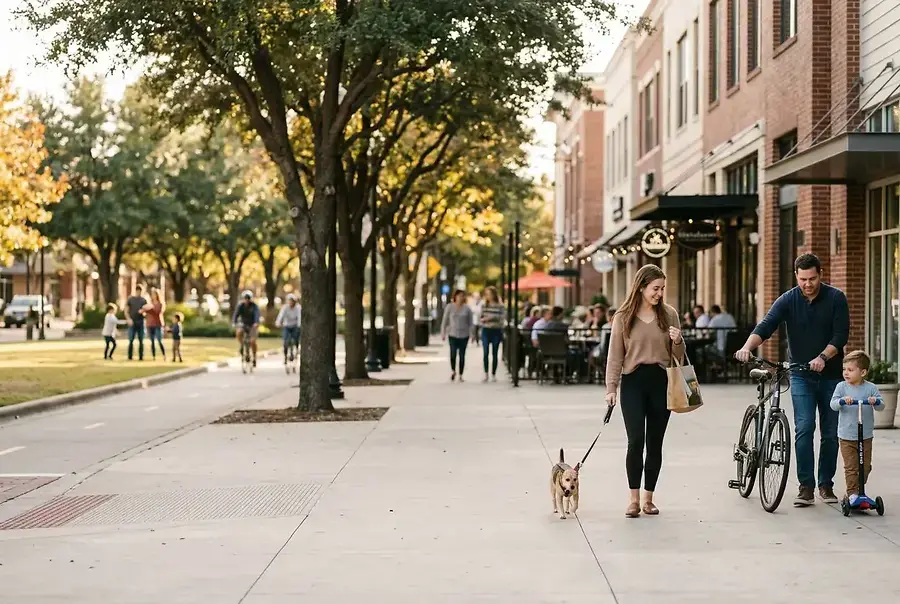
Why Walkability Matters for Your Home Choice
When choosing where to live in the Dallas-Fort Worth metroplex, most people focus on square footage, price, and school ratings. However, one critical factor often gets overlooked: neighborhood walkability. The ability to walk to shops, restaurants, parks, and services isn't just a convenience—it's a lifestyle choice that impacts your daily happiness, health, and property value.
Walkable neighborhoods foster stronger community connections, reduce transportation costs, and encourage physical activity. Families with children benefit from safe, pedestrian-friendly streets where kids can ride bikes and explore independently. Young professionals appreciate the vibrant social scenes that naturally develop in walkable areas. Even retirees find that walkable communities enhance their quality of life by reducing dependence on driving.
Research shows that homes in highly walkable neighborhoods appreciate faster and maintain stronger resale values compared to car-dependent areas. Beyond economics, walkability contributes to environmental sustainability and creates more vibrant, engaging communities where neighbors actually interact.
Evaluating Walkability Features Across the 18 Premier North Texas Communities
What Makes a Neighborhood Truly Walkable?
Before exploring specific North Texas communities, it's important to understand what defines walkability. A truly walkable neighborhood typically features:
- Mixed-use development with residential, retail, and dining options within a quarter-mile walk
- Connected street networks that provide direct routes rather than forcing long detours
- Pedestrian infrastructure including wide sidewalks, crosswalks, and traffic-calming measures
- Public spaces like parks, plazas, and gathering areas that encourage outdoor activity
- Public transportation access that reduces reliance on personal vehicles
- Safety features including good lighting, clear sightlines, and active street presence
Top Walkable Communities in the DFW Area
North Texas boasts numerous neighborhoods that excel in walkability. Communities like Uptown Dallas, Deep Ellum, and Bishop Arts District offer urban walkability with trendy restaurants, galleries, and nightlife. Lakewood, White Rock, and University Park provide suburban walkability with tree-lined streets, local shops, and excellent parks.
In the Fort Worth area, Sundance Square, Magnolia, and Near Southside deliver impressive walkable environments with cultural attractions and dining destinations. Suburban options like Arlington's Entertainment District and Plano's Legacy Town Center combine shopping, dining, and entertainment within pedestrian-friendly layouts.
Each community offers distinct advantages. Urban neighborhoods provide cultural amenities and nightlife, while suburban walkable areas emphasize family-friendly parks and schools. The key is matching the walkability style to your lifestyle preferences.
Lifestyle Amenities and Community Benefits That Increase Property Appeal
Dining and Entertainment Options
Walkable neighborhoods attract diverse restaurants and entertainment venues. Rather than driving to distant shopping centers, residents enjoy local coffee shops, farm-to-table restaurants, breweries, and specialty retailers within walking distance. This concentration of dining options creates vibrant street scenes and supports local businesses, making neighborhoods more economically resilient.
Parks, Recreation, and Outdoor Spaces
Quality parks are essential to walkable communities. White Rock Lake Park, Klyde Warren Park, and Trinity Park provide excellent recreational facilities, jogging trails, and gathering spaces. Families value neighborhoods where children can safely walk to playgrounds, and adults can access fitness opportunities without driving.
Walking trails, dog parks, and sports facilities further enhance community appeal. These amenities encourage residents to spend time outdoors, build social connections, and maintain active lifestyles.
Local Shopping and Services
Walkable neighborhoods feature independent boutiques, grocery stores, pharmacies, and professional services within reasonable walking distance. This reduces shopping trips and supports local economies. Residents appreciate the convenience of grabbing groceries or visiting their dentist on foot, especially during busy weeks.
Community Character and Social Connection
Perhaps most importantly, walkable neighborhoods foster genuine community. When people walk their streets regularly, they encounter neighbors, recognize familiar faces, and develop social bonds. Street festivals, farmers markets, and community events naturally flourish in walkable areas, creating shared experiences that strengthen neighborhood identity.
This sense of belonging increases resident satisfaction and loyalty, making walkable communities more stable and desirable places to raise families or build careers.
Health and Wellness Benefits
Living in a walkable neighborhood encourages physical activity without requiring gym memberships. Regular walking reduces obesity rates, improves cardiovascular health, and enhances mental well-being. Studies consistently show that residents of walkable neighborhoods are more active and healthier than those in car-dependent areas.
Additionally, reduced traffic congestion means cleaner air and lower stress levels. These health benefits translate to lower healthcare costs and improved quality of life for families.
Choosing a Neighborhood That Matches Your Active Lifestyle
Selecting the right North Texas neighborhood requires honest assessment of your lifestyle priorities. Ask yourself:
- Do you prefer urban energy or suburban tranquility?
- How important are restaurants and nightlife versus parks and schools?
- Will you walk regularly, or do you primarily drive?
- What's your budget for walkable neighborhood properties?
- Do you need public transportation access for commuting?
Visit neighborhoods during different times of day to observe pedestrian activity, parking availability, and street safety. Walk the streets yourself to experience the neighborhood from a resident's perspective. Talk to current residents about their experiences and satisfaction levels.
Consider your long-term plans. A walkable neighborhood that's perfect for young professionals might not suit families with young children, and vice versa. However, the best walkable communities offer something for everyone across different life stages.
The Dallas-Fort Worth area offers exceptional walkable neighborhoods that combine Texas charm with modern urban planning. Whether you're drawn to the cultural vibrancy of Deep Ellum, the family-friendly appeal of Lakewood, or the entertainment focus of Sundance Square, North Texas has walkable communities that support active, engaged lifestyles.
Investing in a walkable neighborhood isn't just a real estate decision—it's an investment in your health, happiness, and community connection. Take time to explore these premier communities and discover where your family's next chapter begins.