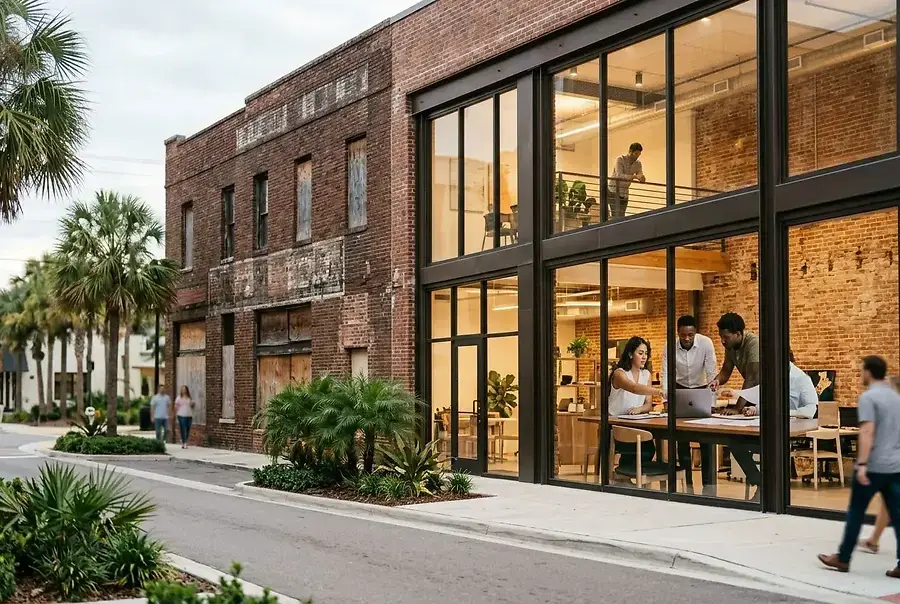
The Opportunity in Adaptive Reuse Projects
Orlando's commercial real estate landscape is experiencing a transformative shift. Rather than demolishing aging structures, forward-thinking developers and investors are breathing new life into historic buildings through adaptive reuse projects. This approach not only preserves architectural heritage but also unlocks significant profit potential in a competitive market.
Adaptive reuse—converting existing buildings for new purposes—has become a cornerstone strategy for commercial success in Orlando. Whether transforming a defunct warehouse into trendy loft offices or converting a historic bank into a boutique hotel, these projects offer investors multiple advantages: lower acquisition costs compared to new construction, faster time-to-market, and strong community support for preservation efforts.
The Orlando market presents unique opportunities for adaptive reuse investors. The city's rapid growth has created demand for diverse commercial spaces, while older neighborhoods contain underutilized properties ripe for conversion. Smart investors recognize that these overlooked buildings represent diamonds in the rough.
Identifying Prime Candidates: What Makes a Building Suitable for Conversion
Structural Integrity and Bones
The foundation of any successful adaptive reuse project begins with thorough structural assessment. Look for buildings with solid bones—strong foundations, quality framing, and minimal structural damage. A comprehensive engineering inspection is non-negotiable. Buildings constructed before the 1980s often feature superior craftsmanship and materials that modern construction struggles to replicate.
Location and Market Demand
Location remains paramount. Identify neighborhoods experiencing revitalization or positioned for growth. Orlando's downtown corridor, Winter Park, and emerging areas like Thornton Park offer excellent opportunities. Analyze foot traffic patterns, proximity to transportation hubs, and demographic trends. A building in the right location can command premium rental rates regardless of its current condition.
Zoning and Land Use Compatibility
Before falling in love with a property, verify zoning regulations. Can the building legally be converted to your intended use? Some properties require zoning variances or conditional use permits. Understanding these requirements early prevents costly surprises later. Consult with local planning departments to confirm feasibility.
Size and Layout Flexibility
Ideal candidates feature flexible floor plans that accommodate multiple tenant configurations. Open layouts adapt more easily to various commercial uses—from office spaces to retail to creative studios. Buildings with high ceilings and minimal load-bearing walls offer greater design flexibility and command higher market values.
Navigating Permits, Codes, and Regulatory Requirements in Orlando
Understanding Orlando's Building Codes
Orlando enforces the Florida Building Code, which includes specific requirements for adaptive reuse projects. These regulations address life safety, accessibility, energy efficiency, and structural integrity. Non-compliance can result in project delays, fines, or forced redesigns. Engage experienced architects and contractors familiar with local code requirements from the project's inception.
Historic Preservation Considerations
If your target building is historically designated, additional regulations apply. The City of Orlando's Historic Preservation Board reviews projects affecting historic structures. While this adds complexity, historic properties often qualify for tax incentives and grants that offset compliance costs. The federal Historic Preservation Tax Credit can provide substantial financial benefits.
Permitting Timeline and Strategy
Plan for extended permitting timelines. Adaptive reuse projects typically require multiple permits: building permits, electrical permits, plumbing permits, and potentially environmental assessments. Budget 3-6 months for the permitting process. Develop relationships with the city's planning and zoning departments early. Regular communication prevents misunderstandings and accelerates approvals.
Environmental Assessments
Older buildings may harbor environmental concerns—asbestos, lead paint, underground storage tanks, or soil contamination. Phase I Environmental Site Assessments identify potential issues before purchase. Phase II assessments quantify contamination levels. Remediation costs can significantly impact project economics, so factor these into your financial analysis.
Financial Analysis: Calculating ROI on Adaptive Reuse Investments
Acquisition Strategy
Successful investors negotiate aggressively on purchase price. Undervalued properties—those with deferred maintenance, unclear zoning status, or market perception issues—offer the best opportunities. Conduct thorough due diligence to justify lower offers. Many sellers underestimate adaptive reuse potential and accept below-market prices.
Renovation Budget Development
Accurate cost estimation is critical. Adaptive reuse projects typically cost 20-40% less than new construction, but unexpected issues arise. Build contingency reserves of 15-20% into budgets. Obtain detailed bids from contractors experienced in adaptive reuse. Factor in:
- Structural repairs and reinforcement
- Systems upgrades (HVAC, electrical, plumbing)
- Code compliance modifications
- Architectural and engineering fees
- Permitting and inspection costs
- Tenant improvements and finishes
Revenue Projections
Research comparable rental rates for similar spaces in your target market. Conservative projections account for lease-up periods and potential vacancies. Adaptive reuse projects in desirable Orlando locations command premium rents—often 15-25% above standard commercial rates—due to unique character and appeal.
Return on Investment Calculations
Calculate both cap rate and cash-on-cash returns. A typical adaptive reuse project might yield:
- Cap Rate: 6-8% annually
- Cash-on-Cash Return: 12-18% in year one
- Appreciation: 3-5% annually as the neighborhood develops
These returns often exceed traditional commercial real estate investments, particularly when factoring in tax benefits and long-term appreciation potential.
Why Adaptive Reuse is Reshaping Orlando's Commercial Landscape
Adaptive reuse represents more than a financial strategy—it's reshaping Orlando's identity. These projects preserve architectural heritage while meeting contemporary business needs. They revitalize neighborhoods, attract talented workers seeking character-filled spaces, and create vibrant mixed-use communities.
The convergence of market demand, regulatory support, and financial incentives makes this an optimal time for adaptive reuse investment in Orlando. Properties that seemed destined for demolition are becoming tomorrow's most sought-after commercial addresses. Investors who master this strategy position themselves at the forefront of Orlando's commercial real estate evolution.
Success in adaptive reuse requires patience, expertise, and strategic vision. But for those willing to see potential where others see only aging buildings, the rewards—both financial and community-focused—are substantial.