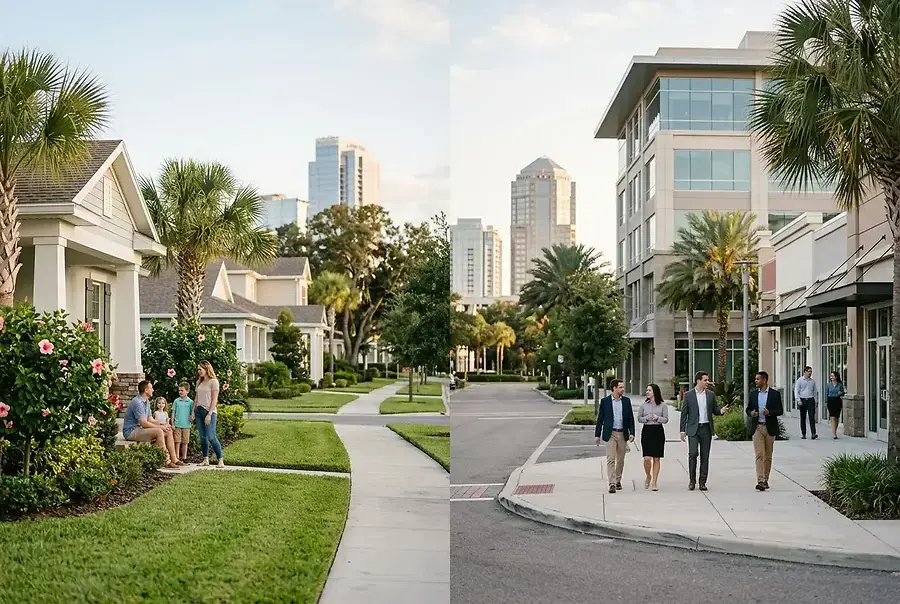
Introduction: Understanding Your Investment Options in Orlando
Orlando's real estate market has emerged as one of Florida's most dynamic investment landscapes, attracting both seasoned investors and newcomers seeking wealth-building opportunities. The city's booming tourism industry, growing population, and diverse economic base create compelling reasons to invest in property here. However, choosing between residential and commercial real estate can be challenging, as each offers distinct advantages and considerations.
Whether you're looking to generate steady passive income or pursue aggressive capital appreciation, understanding the differences between these two investment types is crucial. This guide will help you navigate Orlando's competitive market and make an informed decision that aligns with your financial objectives.
Residential Properties: Steady Income and Market Demand
Why Residential Real Estate Attracts Investors
Residential properties in Orlando continue to demonstrate strong fundamentals that appeal to conservative investors. The city's population growth, fueled by migration from other states and international relocation, creates consistent demand for housing. Single-family homes, condominiums, and multi-unit properties offer multiple pathways to generate income.
Key advantages of residential investments include:
- Predictable rental income from long-term tenants
- Lower entry barriers compared to commercial properties
- Easier financing options and favorable mortgage terms
- Simpler property management and maintenance
- Strong tenant demand in growing neighborhoods
- Tax benefits including depreciation deductions
Market Performance and Returns
Residential properties in Orlando typically deliver annual returns ranging from 6% to 10% through a combination of rental income and property appreciation. Popular neighborhoods like Winter Park, Windermere, and downtown Orlando have experienced consistent appreciation over recent years.
The residential market benefits from Orlando's status as a family-friendly destination with excellent schools, recreational amenities, and a thriving job market. Investors can expect relatively stable occupancy rates and tenant retention, particularly in well-maintained properties located in desirable areas.
Considerations and Challenges
While residential properties offer stability, they come with responsibilities. Property management requires attention to tenant relations, maintenance issues, and compliance with housing regulations. Additionally, residential properties may experience seasonal fluctuations in rental demand, particularly in areas dependent on tourism.
Commercial Properties: Higher Returns and Growth Potential
The Commercial Real Estate Opportunity
Commercial real estate in Orlando presents opportunities for investors seeking higher returns and greater wealth accumulation. Office buildings, retail spaces, industrial warehouses, and mixed-use developments can generate substantial income streams and significant appreciation potential.
Commercial properties offer compelling benefits:
- Higher rental yields, often 8% to 15% annually
- Longer lease terms providing income stability
- Professional tenant relationships with established businesses
- Potential for significant capital appreciation
- Diversification across multiple tenants and sectors
- Leverage opportunities for portfolio expansion
Growth Potential in Orlando's Market
Orlando's commercial sector is experiencing robust growth driven by corporate relocations, tourism expansion, and technological innovation. The city's central Florida location, affordable operating costs, and business-friendly environment attract companies across various industries. This creates strong demand for quality commercial spaces and positions savvy investors to capitalize on long-term growth.
Commercial properties often appreciate faster than residential properties, particularly in emerging business districts and areas experiencing revitalization. Investors who identify growth corridors early can achieve substantial returns as the market matures.
Challenges and Complexities
Commercial real estate requires more sophisticated analysis and management expertise. Higher capital requirements, complex financing structures, and tenant-specific needs demand careful due diligence. Economic downturns can impact commercial occupancy rates more severely than residential markets, and property management is considerably more involved.
Additionally, commercial properties require specialized knowledge of market cycles, tenant creditworthiness, and lease negotiations. Investors must be prepared for longer vacancy periods between tenants and potentially higher maintenance costs.
Choosing Your Path: Key Factors for Orlando Investors
Assessing Your Investment Goals
Your choice between residential and commercial properties should align with your financial objectives. Ask yourself:
- What is your desired annual return? Residential properties suit investors seeking 6-10% returns, while commercial properties target those pursuing 10-15%+ returns.
- How much capital can you invest? Residential properties typically require lower initial investments, making them accessible to more investors.
- How involved do you want to be? Residential properties demand more hands-on management, while commercial properties may require professional property management.
- What is your risk tolerance? Residential offers stability; commercial offers growth potential with higher volatility.
Market Conditions and Timing
Orlando's real estate market dynamics shift based on economic conditions, interest rates, and demographic trends. Currently, both residential and commercial sectors show strength, but investors should monitor local indicators including employment growth, population trends, and development activity.
The best investment isn't necessarily the one with the highest potential returns—it's the one that matches your expertise, capital, and long-term vision.
A Balanced Approach
Many successful Orlando investors don't choose exclusively between residential and commercial properties. Instead, they build diversified portfolios combining both asset types. This strategy balances the stability of residential income with the growth potential of commercial appreciation, reducing overall portfolio risk while maximizing returns.
Start with properties that match your current expertise and capital availability. As you gain experience and accumulate resources, expand into complementary property types. This measured approach allows you to learn market dynamics while building wealth systematically.
Final Thoughts
Orlando's real estate market offers compelling opportunities for both residential and commercial investors. Residential properties provide steady income and lower barriers to entry, making them ideal for conservative investors building long-term wealth. Commercial properties offer higher returns and growth potential for investors with greater capital and expertise.
The key to success is understanding your goals, conducting thorough market research, and making decisions based on your unique circumstances. Whether you choose residential, commercial, or a combination of both, Orlando's growing market provides fertile ground for real estate wealth creation.