Why Property Staging Matters in Today's Residential Market
In today's competitive real estate market, first impressions are everything. When potential buyers walk through your home, they're not just evaluating the physical structure—they're imagining their future in that space. Professional home staging is the art and science of presenting your property in its absolute best light, and it can make a dramatic difference in how quickly your home sells and at what price.
Studies show that staged homes spend significantly less time on the market and often sell for higher prices than unstaged properties. Buyers are more likely to make emotional connections with spaces they can envision themselves living in, and staging helps facilitate those crucial connections. Whether you're selling a cozy apartment or a sprawling estate, the principles of effective staging remain consistent: create a welcoming environment that appeals to the broadest possible audience.
Essential Staging Techniques: Decluttering, Lighting, and Furniture Arrangement
The Power of Decluttering
Before you can stage a home effectively, you must first remove the clutter that distracts from your property's best features. This means more than just tidying up—it's about creating a blank canvas that allows buyers to envision their own belongings in the space.
- Remove personal photos and memorabilia that might distract buyers
- Clear kitchen countertops of appliances and gadgets
- Minimize bedroom furniture to make rooms appear larger
- Store away hobby equipment, children's toys, and excess decorations
- Organize closets and storage spaces to demonstrate ample room
A decluttered home feels more spacious, cleaner, and more inviting. It allows buyers to focus on the home's architectural features and potential rather than your personal lifestyle.
Lighting: Brighten Your Home's Appeal
Proper lighting can transform a dark, dreary space into a warm and welcoming environment. Natural light is always preferable, so open all curtains and blinds during showings. For areas lacking natural light, strategic artificial lighting makes all the difference.
- Replace dim bulbs with brighter, warm-toned LED lights
- Add table lamps to living rooms and bedrooms for ambiance
- Ensure all light fixtures are clean and functioning properly
- Use accent lighting to highlight architectural features
- Avoid harsh overhead lighting that can feel cold and uninviting
Well-lit spaces feel larger, cleaner, and more inviting. Buyers are more likely to spend time exploring a bright home and form positive impressions.
Furniture Arrangement: Creating Flow and Function
How you arrange furniture significantly impacts how buyers perceive your home's layout and functionality. The goal is to create clear pathways and define the purpose of each room.
- Arrange furniture to create conversation areas and clear traffic flow
- Use appropriately sized furniture—oversized pieces make rooms feel cramped
- Float furniture away from walls to create a sense of intimacy
- Remove excess furniture to make rooms appear larger
- Ensure doorways and hallways are completely unobstructed
Room-by-Room Staging Strategy: From Curb Appeal to the Master Bedroom
Curb Appeal: Your Home's First Impression
Before buyers even step inside, they're evaluating your home's exterior. Curb appeal is absolutely critical because it sets the tone for the entire viewing experience.
- Maintain a well-manicured lawn and trim overgrown bushes
- Paint the front door a welcoming color
- Add fresh flowers or potted plants near the entrance
- Ensure the driveway and walkway are clean and well-maintained
- Update house numbers and ensure outdoor lighting works
- Remove clutter from the porch and entryway
Living Room: The Heart of the Home
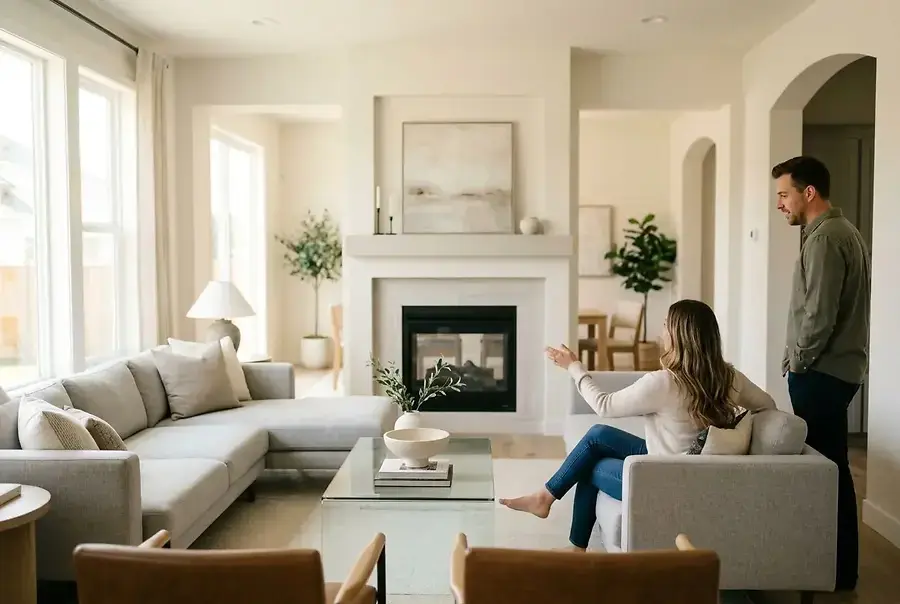
The living room should feel inviting and spacious. Arrange furniture to create a focal point, whether that's a fireplace or a window with a view. Use neutral colors and minimal accessories to allow buyers to imagine their own décor in the space.
Kitchen: A Major Selling Point
Kitchens are one of the most important rooms for buyers. Keep countertops clear except for a few decorative items, ensure appliances shine, and make sure the space feels organized and functional. A clean, well-lit kitchen can be a major deciding factor in a purchase decision.
Bedrooms: Creating Peaceful Retreats
Master bedrooms and guest bedrooms should feel calm and spacious. Use neutral bedding, minimize furniture, and ensure adequate lighting. Remove work-related items and personal clutter to create a true retreat atmosphere.
Bathrooms: Cleanliness and Shine
Bathrooms must be impeccably clean. Replace worn towels with fresh, neutral-colored ones, ensure fixtures shine, and minimize personal items. A clean, bright bathroom significantly impacts buyer perception.
Transform Your Home Into a Buyer's Dream Property
Professional home staging isn't about deceiving buyers—it's about presenting your home in its best possible light and helping them envision their future in your space.
By implementing these proven staging strategies, you're investing in your home's marketability and your bottom line. The combination of decluttering, strategic lighting, thoughtful furniture arrangement, and room-by-room attention to detail creates an environment where buyers feel welcome and emotionally connected.
Remember, effective staging is about creating a neutral, welcoming canvas that appeals to the broadest possible audience. Whether you choose to stage your home yourself or hire a professional stager, the investment typically pays for itself many times over through faster sales and higher selling prices.
Your home has tremendous potential—staging simply helps buyers see it. Start with these essential techniques, pay attention to each room's unique needs, and watch as your property transforms into an irresistible buyer's dream.