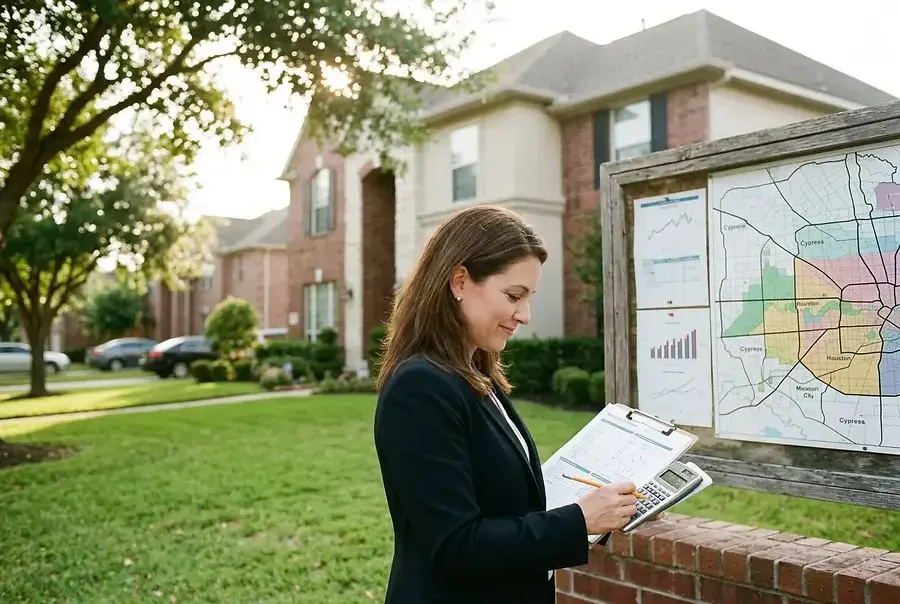
The Impact of Property Tax Assessments on Buyer and Investor Decisions
Property tax assessments are one of the most critical yet often overlooked factors in real estate investment decisions. Whether you're a first-time homebuyer or a seasoned investor, understanding how your property is valued for tax purposes can make a substantial difference in your long-term financial outcomes. In the Houston metropolitan area, property tax assessments vary significantly across different municipalities, and these variations can impact your annual expenses and overall return on investment.
Many buyers focus exclusively on the purchase price and mortgage payments while neglecting to calculate their total cost of ownership, which includes property taxes. This oversight can lead to unexpected financial burdens down the road. By understanding how assessments are calculated and comparing rates across Missouri City, Cypress, and Houston, you can make more informed decisions that align with your financial goals.
How Property Tax Assessments Are Calculated Across the Houston Metropolitan Area
The Assessment Process
Property tax assessments in Texas are conducted by county appraisal districts, which are independent governmental entities responsible for valuing all real property within their jurisdiction. The process begins with a physical inspection of the property, where trained appraisers evaluate the structure, condition, age, square footage, and other relevant features that affect market value.
The appraisal district uses several methods to determine property values:
- Market Approach: Comparing your property to similar properties that have recently sold in the area
- Cost Approach: Calculating the cost to rebuild the structure plus the land value
- Income Approach: For investment properties, determining value based on potential rental income
Factors That Influence Your Assessment
Several factors can significantly impact your property tax assessment. Location is paramount—properties in desirable neighborhoods with good schools and amenities typically receive higher valuations. The age and condition of the structure also play crucial roles, as newer homes or recently renovated properties may be assessed at higher values.
Additionally, recent sales data in your neighborhood heavily influences assessments. If comparable homes in your area have sold at higher prices, your assessment is likely to increase accordingly. Property improvements, such as adding a pool, expanding the home, or upgrading systems, will also trigger reassessments and potentially higher tax bills.
The Appeal Process
If you believe your property has been overvalued, Texas law provides a formal appeal process. Property owners can file protests with their county appraisal district, typically between January and May. To support your case, gather documentation such as recent appraisals, comparable sales data, and evidence of property defects or needed repairs. Many investors successfully reduce their tax burden through this process.
Comparing Tax Rates and Valuations Between Missouri City, Cypress, and Houston
Missouri City Tax Profile
Missouri City, located in Fort Bend County, has become increasingly attractive to real estate investors due to its strong school district and family-friendly amenities. The city's tax rate is competitive within the Houston metropolitan area, and property valuations have remained relatively stable. Missouri City offers a balanced approach for investors seeking moderate tax burdens without sacrificing quality of life or investment potential.
The Fort Bend County Appraisal District handles assessments in Missouri City, and the district is known for thorough, professional evaluations. Property owners in Missouri City benefit from the city's proactive community development, which has helped maintain property values and create predictable tax scenarios for long-term investors.
Cypress Tax Profile
Cypress, situated in Harris County, represents a rapidly growing area with significant development and appreciation potential. The Harris County Appraisal District manages assessments here, and valuations have been climbing steadily due to increased demand and new infrastructure projects. While Cypress offers excellent growth opportunities, investors should be prepared for potentially higher tax assessments as the area continues to develop.
The rapid growth in Cypress means that property values and tax assessments can increase more dramatically year-over-year compared to more established areas. Investors considering Cypress should factor in these potential increases when calculating their long-term investment returns and cash flow projections.
Houston Tax Profile
Houston, as the largest city in the region, presents a diverse tax landscape depending on the specific neighborhood and zip code. The Harris County Appraisal District manages most Houston properties, though some areas fall under other jurisdictions. Houston's tax rates vary considerably based on local school districts, municipal services, and neighborhood characteristics.
Inner Houston neighborhoods may have different tax implications than suburban areas. Investors should conduct detailed analysis of specific Houston neighborhoods, as the city's size and diversity mean that tax assessments can vary significantly from one area to another. This variation actually provides opportunities for savvy investors to identify undervalued properties in emerging neighborhoods.
Key Comparison Points
When comparing these three areas, consider the following:
- Tax Rate Stability: Missouri City generally offers more predictable assessments, while Cypress may see faster appreciation and corresponding tax increases
- Growth Potential: Cypress and emerging Houston neighborhoods offer higher appreciation potential, though with greater tax volatility
- Long-term Costs: Calculate your total cost of ownership over 10-20 years, factoring in expected tax increases
- School District Impact: Properties in highly-rated school districts command premium valuations and higher taxes across all three areas
Using Tax Assessment Knowledge to Make Smarter Real Estate Investments
Strategic Investment Planning
Armed with knowledge about property tax assessments, you can develop a more sophisticated investment strategy. Don't view property taxes in isolation—instead, integrate them into your comprehensive financial analysis. Calculate your cap rate, cash-on-cash return, and other investment metrics while accounting for current and projected tax expenses.
Timing and Market Positioning
Understanding assessment cycles can help you time your purchases strategically. Properties that were recently reassessed may offer better value than those approaching reassessment dates. Additionally, knowing which areas are experiencing rapid appreciation helps you identify whether you're buying into a market with sustainable growth or speculative pricing.
Long-term Wealth Building
Real estate investment success depends on understanding all cost factors, not just purchase price. By comparing property tax assessments across Missouri City, Cypress, and Houston, you can identify which markets align with your investment timeline and financial objectives. The most successful investors view property taxes as a critical component of their due diligence process, not an afterthought.
Whether you're seeking stable, predictable returns in established areas like Missouri City or growth potential in rapidly developing regions like Cypress, informed decision-making about property tax assessments will enhance your investment outcomes and help you build lasting wealth through real estate.
