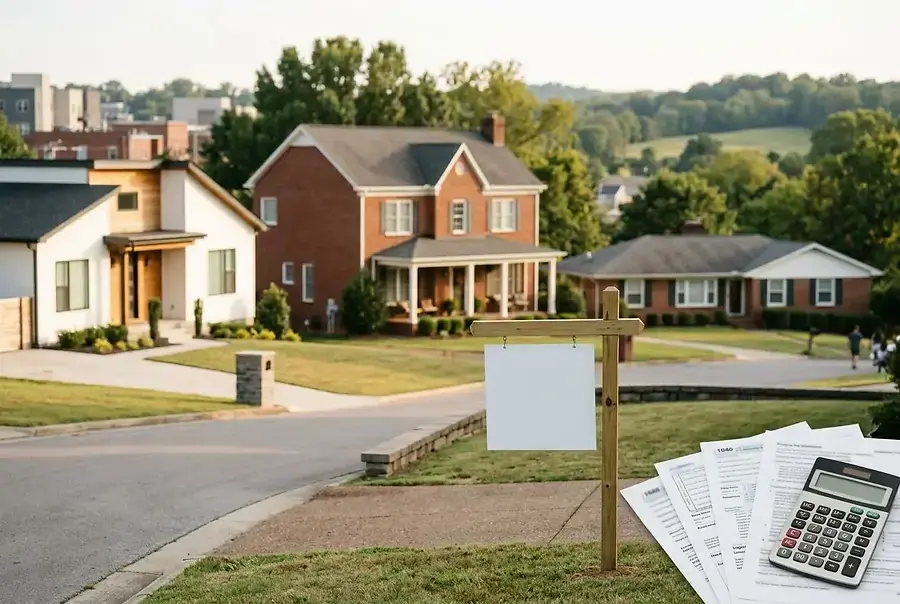
Why Property Taxes Matter When Buying or Selling in West Tennessee
Property taxes are one of the most significant ongoing costs of homeownership, yet many buyers and sellers in West Tennessee don't fully understand how they work or how they vary across different communities. Whether you're purchasing your first home, investing in rental property, or selling a family residence, understanding property tax rates and assessment methods can save you thousands of dollars over time.
Property taxes fund essential services in your community, including schools, roads, emergency services, and local infrastructure. However, the amount you pay depends on several factors: the assessed value of your property, the local tax rate, and the assessment methods used by each municipality. In West Tennessee, these factors can differ significantly between communities, making it crucial to understand the specifics of your area before making a real estate decision.
Property Tax Rates and Assessment Methods Across West Tennessee Communities
Memphis
As the largest city in West Tennessee, Memphis has a complex property tax structure. The city's property tax rate is determined by Shelby County and the City of Memphis, with rates varying based on property classification. Memphis typically has one of the higher tax rates in the region, reflecting the cost of maintaining a major metropolitan area's infrastructure and services.
Memphis uses a standard assessment method where properties are assessed at a percentage of their fair market value. The assessment ratio varies by property type:
- Residential properties: typically assessed at 25% of fair market value
- Commercial properties: typically assessed at 40% of fair market value
- Industrial properties: typically assessed at 40% of fair market value
Jackson
Jackson, the county seat of Madison County, offers a more moderate tax environment compared to Memphis. Property tax rates in Jackson are generally lower, making it an attractive option for those seeking to reduce their tax burden while remaining in an urban setting.
Jackson's assessment process follows Madison County guidelines, with properties assessed at their fair market value. The city benefits from a diverse economic base, which helps distribute the tax burden more evenly across the community.
Millington
Millington, located in Shelby County, presents a unique situation as a smaller municipality within the county. Millington's property tax rates fall between those of Memphis and smaller rural communities, offering a middle ground for property owners.
The city's assessment methods align with Shelby County standards, though Millington maintains its own municipal tax rate. This dual taxation structure means property owners pay both county and city taxes, which should be factored into your calculations.
Munford
Munford, a small community in Tipton County, typically offers some of the lowest property tax rates in West Tennessee. This makes it particularly attractive for retirees and investors looking to minimize their tax obligations.
Munford uses a straightforward assessment method based on fair market value, with a lower overall tax rate reflecting the smaller municipal budget and service requirements of a smaller community.
Atoka
Atoka, also located in Tipton County, shares similar tax advantages with Munford. Property tax rates in Atoka are among the lowest in the region, making it an excellent choice for budget-conscious property buyers.
Like Munford, Atoka's assessment process is based on fair market value, with a tax rate that reflects the community's smaller size and lower service costs.
How to Estimate Your Annual Property Tax Liability in Each Area
Step 1: Determine the Assessed Value
The first step in calculating your property tax is understanding the assessed value of your property. This is typically determined by the county assessor's office and may be different from your purchase price or market value. Contact your local assessor's office to obtain the official assessed value of the property you're considering.
Step 2: Find the Local Tax Rate
Once you have the assessed value, you need to find the applicable tax rate for your community. Tax rates are expressed as a percentage or as a dollar amount per $100 of assessed value. Here's a general comparison:
- Memphis: Approximately $1.50-$1.75 per $100 of assessed value
- Jackson: Approximately $1.10-$1.30 per $100 of assessed value
- Millington: Approximately $1.20-$1.40 per $100 of assessed value
- Munford: Approximately $0.80-$1.00 per $100 of assessed value
- Atoka: Approximately $0.75-$0.95 per $100 of assessed value
Step 3: Calculate Your Annual Tax
The calculation is straightforward: (Assessed Value ÷ 100) × Tax Rate = Annual Property Tax
For example, if you purchase a home in Jackson with an assessed value of $200,000 and the tax rate is $1.20 per $100 of assessed value, your annual property tax would be: ($200,000 ÷ 100) × $1.20 = $2,400 per year.
Step 4: Account for Additional Factors
Remember that property taxes may increase over time as property values appreciate. Additionally, some properties may qualify for exemptions or deferrals based on age, disability, or veteran status. Always check with your local assessor's office about potential tax breaks you might qualify for.
Using Property Tax Information to Guide Your Real Estate Investment Strategy
Understanding property tax rates across West Tennessee communities is essential for making informed real estate decisions. Lower tax rates in communities like Atoka and Munford can result in significant savings over the life of your mortgage, while higher rates in Memphis may be offset by greater appreciation potential and urban amenities.
Consider your long-term goals when evaluating properties. If you're planning to retire and live on a fixed income, lower-tax communities may be ideal. If you're investing for appreciation and rental income, the higher costs in Memphis may be justified by stronger market fundamentals.
By taking the time to understand property tax rates and assessment methods in your target community, you'll be better equipped to negotiate prices, budget for ownership costs, and make investment decisions that align with your financial goals. Don't let property taxes be an afterthought in your real estate decisions—they're a critical component of your total cost of ownership.
