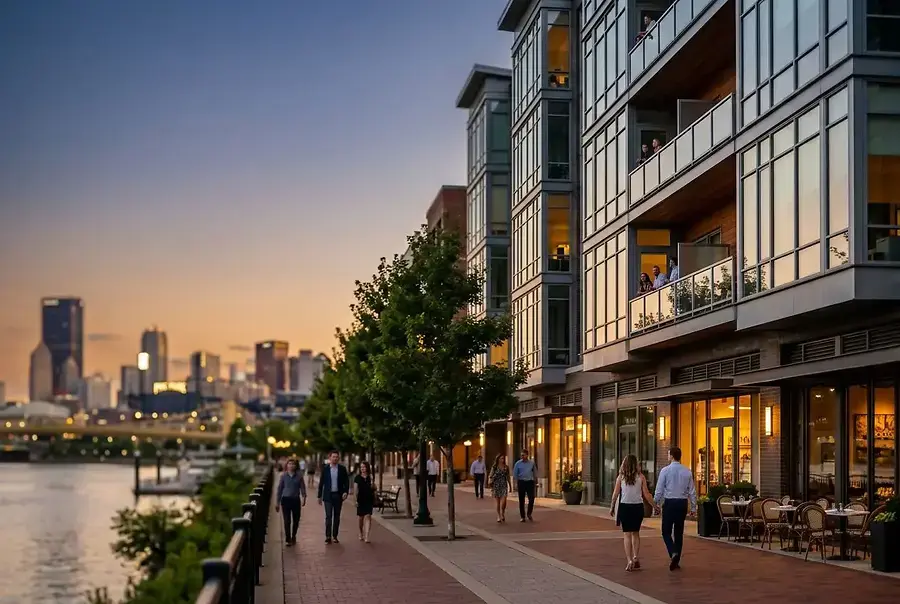
Why Pittsburgh's Real Estate Market Offers Unique Investment Opportunities
Pittsburgh's real estate market has undergone a remarkable transformation in recent years, positioning itself as one of the most attractive investment destinations in the Northeast. Unlike many saturated markets, Pittsburgh offers a unique combination of affordable entry prices, strong tenant demand, and consistent appreciation. The city's economic diversification—moving beyond its steel industry roots to embrace technology, healthcare, and education sectors—has created a stable foundation for long-term rental income growth.
Investors are increasingly recognizing that Pittsburgh's neighborhoods provide exceptional value compared to coastal markets. With lower property acquisition costs and healthy rental yields, savvy investors can build substantial portfolios while maintaining positive cash flow. The region's population growth, driven by young professionals relocating for tech jobs and healthcare opportunities, ensures a steady stream of quality tenants.
High-Demand Residential Rental Markets Across Pittsburgh's Suburbs
Emerging Suburban Hotspots
Several Pittsburgh suburbs have emerged as prime rental markets, each offering distinct advantages for property investors:
- South Hills Communities: Neighborhoods like Upper St. Clair and Mt. Lebanon attract families seeking excellent schools and suburban amenities. These areas command premium rents and maintain low vacancy rates, making them ideal for long-term buy-and-hold strategies.
- North Shore Developments: The revitalized North Shore area continues to attract young professionals and empty-nesters. Modern apartment complexes and converted lofts generate strong rental demand, particularly among those seeking walkable, entertainment-rich neighborhoods.
- East End Renaissance: Neighborhoods like Shadyside and Squirrel Hill offer a blend of established character and modern amenities. These areas attract both students and professionals, creating diverse tenant pools and multiple rental opportunities.
- Suburban Growth Corridors: Communities along major transit routes in the North Hills and South Hills are experiencing rapid development, offering opportunities for ground-floor commercial spaces with residential units above.
Tenant Demographics and Rental Demand
Pittsburgh's rental market is driven by several key demographic groups. Young professionals relocating for careers in technology and healthcare seek convenient, modern housing near employment centers. Graduate students attending universities create consistent demand for furnished and unfurnished apartments. Families looking for suburban living with good schools provide stable, long-term tenancy. Understanding these demographics helps investors position properties to capture the highest-paying tenant segments.
Rental rates in emerging neighborhoods have shown impressive growth, with many areas experiencing 5-8% annual appreciation. Properties that offer modern amenities, proximity to employment centers, and strong community infrastructure command premium rents and attract quality tenants.
Commercial Property Rentals and Tenant Demand in Western Pennsylvania
Office and Flex Space Opportunities
The commercial real estate landscape in Greater Pittsburgh is evolving rapidly. Traditional office space is experiencing transformation as companies embrace hybrid work models, creating opportunities for investors willing to adapt. Flex spaces—properties that combine office, light industrial, and retail uses—are increasingly popular among growing businesses that need operational flexibility.
Emerging neighborhoods with strong commercial potential include:
- Tech corridors in the North Shore and Strip District, where startups and established tech companies seek modern office space
- Healthcare-adjacent properties near major medical centers, serving physician offices and medical service providers
- Mixed-use developments that combine ground-floor retail with upper-level office or residential space
Retail and Service-Based Rentals
Neighborhood retail spaces continue to thrive in Pittsburgh's emerging markets. Local restaurants, boutique shops, and service providers seek affordable, high-traffic locations. Properties positioned in walkable neighborhoods with strong foot traffic generate reliable commercial income. The key to success is identifying neighborhoods experiencing population growth and demographic shifts that support new retail concepts.
Commercial properties in emerging areas often offer higher cap rates than residential investments, though they require more active management. Investors should carefully evaluate tenant stability, lease terms, and neighborhood growth trajectories before committing capital.
Maximizing Your Rental Income: Management Strategies and Market Positioning
Strategic Property Positioning
Success in Pittsburgh's rental market requires strategic positioning. Location selection is paramount—properties near universities, major employers, and transit hubs command premium rents. Investors should analyze neighborhood growth metrics, including population trends, employment growth, and infrastructure development plans.
Property condition and amenities directly impact rental rates. Modern kitchens, updated bathrooms, in-unit laundry, and smart home features justify higher rents and attract quality tenants. First-mover advantage in emerging neighborhoods often rewards investors who upgrade properties before the area reaches peak popularity.
Effective Management and Tenant Relations
Professional property management is essential for maximizing returns. Successful investors implement:
- Rigorous tenant screening to ensure reliable rent payment and property care
- Competitive market analysis to optimize rental rates without pricing out quality tenants
- Preventive maintenance programs to minimize costly repairs and maintain property value
- Clear lease agreements that protect investor interests while maintaining positive tenant relationships
- Responsive communication systems that address tenant concerns promptly and professionally
Building a Diversified Portfolio
Savvy investors build diversified portfolios across multiple neighborhoods and property types.
A balanced approach—combining stable, established neighborhoods with emerging markets—provides both steady cash flow and appreciation potential.Residential properties offer consistent, predictable income, while commercial spaces provide higher yields and portfolio diversification.
Pittsburgh's rental market rewards investors who combine thorough market research, strategic property selection, and professional management. By identifying emerging neighborhoods early and positioning properties to meet tenant demand, investors can build substantial wealth through rental income while participating in Pittsburgh's continued economic growth and revitalization.