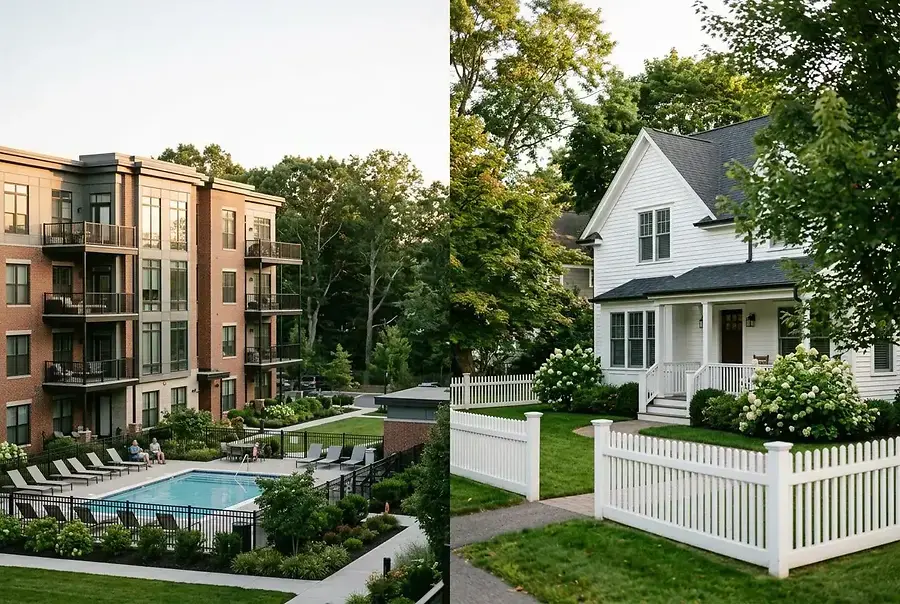
Understanding Condo Living: Benefits and Limitations
Condominiums have become increasingly popular in Rhode Island, particularly in urban areas and coastal communities. A condo offers a unique lifestyle that appeals to many buyers, especially those seeking lower maintenance responsibilities and a sense of community.
The Benefits of Condo Ownership
One of the primary advantages of condo living is the minimal maintenance burden. The homeowners association (HOA) typically handles exterior maintenance, landscaping, and common area upkeep. This means you won't need to worry about roof repairs, painting the exterior, or maintaining the grounds—a significant advantage for busy professionals and retirees.
- Lower maintenance responsibilities and costs
- Access to shared amenities like pools, fitness centers, and community spaces
- Often more affordable entry price compared to single-family homes
- Ideal for first-time homebuyers and downsizers
- Typically located in walkable, convenient neighborhoods
Condo Limitations to Consider
However, condo ownership comes with notable drawbacks. HOA fees can be substantial and tend to increase over time. Additionally, you have limited control over your property—you cannot make major renovations without HOA approval, and you're subject to community rules and regulations.
Resale value can also be affected by the overall condition of the building and the financial health of the HOA. If the building requires major repairs, special assessments may be levied against all unit owners, potentially costing thousands of dollars.
Single-Family Home Advantages: Privacy, Control, and Long-Term Value
Single-family homes represent the traditional American dream and offer distinct advantages that appeal to many Rhode Island buyers, particularly families and those planning to stay long-term.
Complete Ownership and Control
When you own a single-family home, you have complete control over your property. Want to renovate your kitchen, add a deck, or paint your house bright purple? You can do it without asking permission from anyone. This freedom is invaluable for homeowners who want to personalize their living space and make improvements that reflect their vision.
Privacy and Space
Single-family homes provide superior privacy and typically offer more square footage than condos. You won't share walls with neighbors, and you'll have your own yard—perfect for families with children, pet owners, or anyone who values outdoor space. This separation creates a distinct boundary between your home and your neighbors' properties.
Long-Term Investment Potential
Historically, single-family homes have appreciated more consistently than condos. The land value component of a single-family home tends to increase over time, making it a stronger long-term investment. Additionally, single-family homes typically have stronger resale appeal, as they attract a broader range of buyers.
Single-family homes offer the potential for greater equity building through appreciation and the ability to customize your property to increase its value.
Comparing Costs: Maintenance, HOA Fees, and Mortgage Considerations
Maintenance and Repair Costs
This is where the financial differences become most apparent. Condo owners pay HOA fees—typically ranging from $200 to $500+ monthly in Rhode Island—but avoid major repair expenses. Single-family homeowners have no HOA fees but are responsible for all maintenance and repairs, including roof replacement, HVAC systems, plumbing, and exterior work.
Over a 30-year mortgage, these costs can add up significantly. A new roof alone can cost $10,000 to $20,000, and HVAC replacement can run $5,000 to $15,000. Condo owners, conversely, may face special assessments if the building needs major work, but these are typically less frequent.
Mortgage and Financing
Lenders often view single-family homes as lower-risk investments, which can result in slightly better mortgage rates. Condo financing may come with stricter requirements, and some lenders require a higher down payment for condos. Additionally, the property's appreciation potential affects long-term equity building.
Property Taxes and Insurance
Single-family homes typically have higher property taxes based on land value, while condo taxes are often lower. Insurance costs vary but are generally comparable, though single-family homes may cost slightly more due to higher replacement values.
Making Your Choice: Which Property Type Aligns With Your Goals
Choose a Condo If You:
- Prefer minimal maintenance and want to avoid major repair responsibilities
- Value proximity to urban amenities and walkable neighborhoods
- Are a first-time homebuyer with a limited budget
- Plan to relocate within 5-10 years
- Enjoy community living and shared amenities
- Are downsizing from a larger home
Choose a Single-Family Home If You:
- Want complete control and freedom to renovate and customize
- Have a family and need more space and privacy
- Plan to stay in your home for 15+ years
- Want to build long-term equity and maximize appreciation potential
- Prefer no HOA restrictions or monthly association fees
- Enjoy outdoor space and gardening
The Bottom Line
There is no universally "better" choice between condos and single-family homes in Rhode Island—it depends entirely on your lifestyle, financial situation, and long-term goals. Condos offer convenience and lower upfront costs, while single-family homes provide control, privacy, and stronger long-term investment potential.
Take time to evaluate your priorities, calculate the true cost of ownership for each option, and consider your timeline. Whether you choose the community-oriented lifestyle of a condo or the independence of a single-family home, Rhode Island offers excellent opportunities in both markets. Consult with a local real estate agent and financial advisor to make the decision that best serves your unique circumstances.
