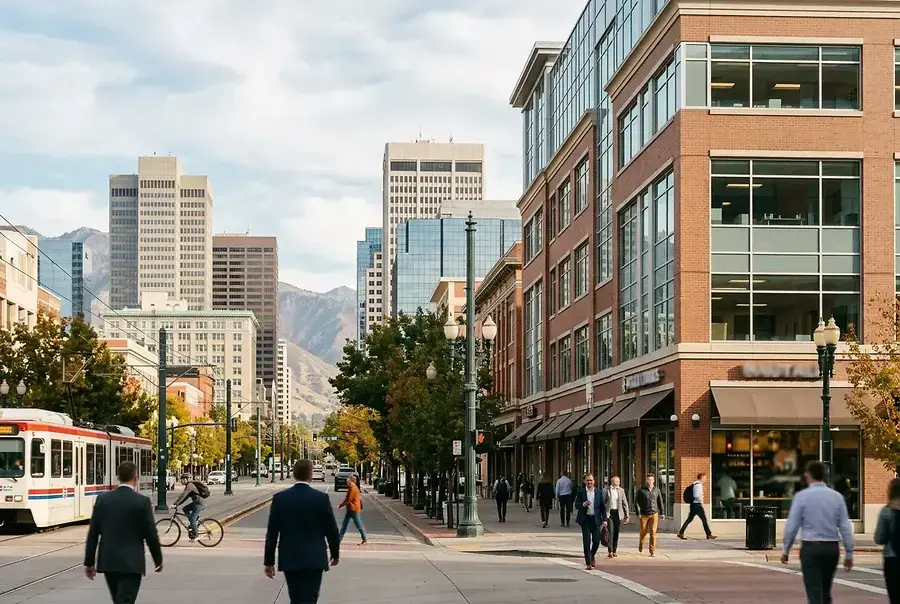
Understanding Salt Lake City's Commercial Zoning Classifications
Salt Lake City's commercial zoning system is designed to organize land use and promote sustainable development throughout the city. The primary commercial zoning classifications include General Commercial (CC), Neighborhood Commercial (CN), and Downtown Commercial (CD), each serving distinct purposes within the urban landscape.
General Commercial Zones
General Commercial zones are typically located along major corridors and support a wide variety of retail, office, and service businesses. These areas allow for higher-density development and accommodate larger commercial operations. Properties in CC zones often command premium prices due to their visibility and accessibility to major traffic patterns.
Neighborhood Commercial Zones
Neighborhood Commercial zones serve local communities and are designed to support smaller-scale retail and service businesses. These zones maintain a more intimate character while providing essential services to residents. CN zones often feature lower building heights and reduced parking requirements compared to their General Commercial counterparts.
Downtown Commercial Zones
The Downtown Commercial zone encompasses Salt Lake City's central business district and allows for mixed-use development, high-rise construction, and intensive commercial activity. This classification encourages urban density and supports the city's economic vitality through diverse business opportunities.
How Zoning Regulations Impact Property Value and Development
Zoning regulations directly influence property values, development potential, and investment returns. Understanding these impacts is crucial for making informed commercial real estate decisions.
Property Value Implications
Properties zoned for higher-density commercial use typically command higher valuations than those restricted to neighborhood commercial purposes. The permitted uses, building heights, and density allowances all contribute to determining a property's market value. Additionally, properties with flexible zoning that allows mixed-use development often attract premium prices from investors seeking diversified income streams.
Development Constraints and Opportunities
Zoning regulations establish setback requirements, floor area ratios (FAR), parking minimums, and building height restrictions. These constraints shape what can be built on a property. However, savvy investors recognize that understanding these regulations reveals opportunities:
- Properties with underutilized FAR allowances can be redeveloped for increased density
- Parking requirement reductions in transit-oriented areas lower development costs
- Height allowances in premium zones enable vertical expansion and higher returns
- Mixed-use permissions create multiple revenue streams from a single property
Market Demand and Zoning Alignment
Properties that align with current market demand and zoning permissions appreciate faster than those requiring regulatory modifications. Investors who identify emerging neighborhoods with zoning that supports future demand patterns can position themselves ahead of market trends.
Strategies for Zoning Variances and Conditional Use Permits
When a property's zoning doesn't perfectly match your development vision, zoning variances and conditional use permits offer pathways to unlock additional potential.
Understanding Zoning Variances
A zoning variance is a request to deviate from specific zoning requirements, such as setback distances, lot coverage, or height restrictions. Variances are granted when an applicant demonstrates that strict compliance creates an undue hardship and that the variance won't negatively impact the surrounding community. Successful variance applications require thorough documentation and often benefit from professional planning expertise.
Conditional Use Permits Explained
Conditional Use Permits (CUPs) allow uses that aren't automatically permitted in a zone but are deemed compatible with proper conditions. For example, a restaurant in a primarily retail zone might require a CUP to address parking and noise concerns. CUPs are often more achievable than variances because they acknowledge that the proposed use can coexist with existing zoning.
Application Best Practices
Successfully navigating the variance and CUP process requires strategic planning:
- Engage Early: Meet with city planning staff before formal application to understand feasibility and requirements
- Document Hardship: For variances, clearly articulate why strict compliance creates undue hardship specific to your property
- Community Support: Build relationships with neighbors and stakeholders to demonstrate community benefit
- Professional Representation: Hire experienced planning consultants and attorneys familiar with Salt Lake City's processes
- Comprehensive Plans: Submit detailed site plans, traffic studies, and mitigation measures addressing potential concerns
Timeline and Cost Considerations
Variance and CUP applications typically require 60-90 days for processing, though complex cases may take longer. Budget for professional fees, application costs, and potential appeals. While these expenses add to project costs, they often pale in comparison to the value unlocked by obtaining necessary approvals.
Conclusion: Leveraging Zoning Knowledge for Commercial Success
Salt Lake City's commercial zoning system presents both constraints and opportunities for investors. Properties that align with zoning regulations offer straightforward development paths and stable value appreciation. However, the most sophisticated investors recognize that understanding zoning classifications, regulations, and modification processes reveals hidden opportunities in properties that initially appear limited.
Success in Salt Lake City commercial real estate depends on viewing zoning not as a barrier, but as a roadmap to unlocking property potential.
By thoroughly analyzing zoning classifications, understanding how regulations impact value, and strategically pursuing variances or conditional use permits when appropriate, you can maximize returns on your commercial investments. Partner with knowledgeable professionals, conduct thorough due diligence, and approach zoning as a strategic advantage rather than an obstacle. The investors who master these principles will consistently identify and capitalize on opportunities that others overlook, building a portfolio of high-performing commercial properties throughout Salt Lake City.