Introduction: Why Zoning Matters for San Diego Real Estate Investors
Zoning regulations are the invisible force shaping San Diego's real estate landscape. For investors and property owners, understanding these rules isn't just helpful—it's essential. Zoning laws determine what you can build, how you can use your property, and ultimately, how much your investment is worth. Whether you're considering a residential purchase in Pacific Beach or evaluating a commercial opportunity in downtown San Diego, zoning classifications directly affect your property's potential and profitability.
Many investors overlook zoning until they encounter restrictions on their development plans. By then, it's often too late to maximize returns. This guide will help you understand San Diego's zoning system, recognize how it influences property values, and identify opportunities that others might miss.
Understanding San Diego's Zoning Classifications and Their Effects
The Basics of San Diego Zoning
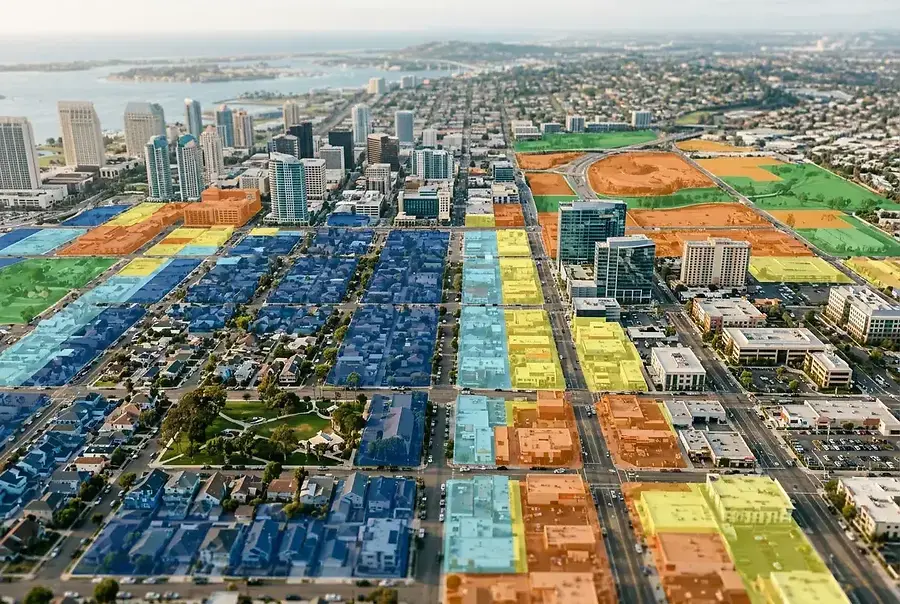
San Diego's zoning system is divided into several primary categories that determine permitted land uses:
- Residential Zones (R-1, R-2, R-3, R-4): These range from single-family homes to multi-unit residential buildings. R-1 is the most restrictive, allowing only single-family dwellings, while R-4 permits higher-density apartment complexes.
- Commercial Zones (C-1, C-2, C-3): These support retail, office, and service businesses. C-1 is neighborhood-oriented, while C-3 accommodates larger commercial operations.
- Industrial Zones (M-1, M-2): These allow manufacturing, warehousing, and heavy industrial uses.
- Mixed-Use Zones: These increasingly popular zones blend residential, commercial, and sometimes office spaces in single developments.
How Zoning Affects Property Values
Zoning directly impacts property values in several ways. Restrictive zoning in single-family residential areas often protects property values by limiting density and preserving neighborhood character. Homeowners in R-1 zones typically enjoy stable, appreciating properties because the neighborhood cannot be dramatically transformed.
Conversely, properties in transitional zones or areas zoned for higher density may experience volatility. A property zoned for commercial use in an emerging neighborhood might appreciate significantly if the area develops, but it could also remain stagnant if development doesn't materialize as expected.
Mixed-use zoning has become increasingly valuable in San Diego's urban cores. Properties in these zones often command premium prices because they offer flexibility and access to diverse amenities. A developer can build residential units above retail spaces, creating vibrant communities that attract tenants and buyers.
Zoning Overlays and Special Districts
San Diego also employs zoning overlays—additional regulations layered over base zoning. These include:
- Coastal Zone overlays that restrict development near beaches
- Historic district overlays that preserve architectural character
- Planned District overlays that allow customized development standards
- Transit-oriented development zones near major transit hubs
Understanding these overlays is crucial. A property might be zoned for commercial use, but a coastal overlay could severely limit what you can build. Conversely, a transit-oriented overlay might increase density allowances, boosting development potential.
How Zoning Changes Impact Property Appreciation and Development
Zoning Amendments and Upzoning Opportunities
One of the most significant ways investors profit from zoning is through upzoning—when a property's zoning classification changes to allow higher density or more valuable uses. A property zoned R-1 that gets upzoned to R-3 could suddenly support a multi-unit development, dramatically increasing its value.
San Diego regularly reviews and updates its zoning code. Areas experiencing population growth, improved transit access, or neighborhood revitalization often see upzoning. Savvy investors monitor these trends and acquire properties in neighborhoods likely to be upzoned before the change occurs.
Development Potential and Feasibility
Zoning determines what's possible on a property, but feasibility depends on multiple factors. A property might be zoned for a 10-story building, but setback requirements, height restrictions, parking mandates, and environmental regulations might make that development economically unfeasible.
Density bonuses are another tool. San Diego offers density bonuses for projects that include affordable housing, sustainability features, or other public benefits. These bonuses allow developers to build more units than base zoning permits, increasing project value while serving community goals.
Case Study: The Impact of Zoning on Neighborhood Development
Consider a neighborhood that transitions from industrial zoning to mixed-use zoning. Properties that were worth $500,000 as warehouses might become worth $2 million as development sites for residential and retail projects. This transformation doesn't happen overnight, but investors who recognize the trend early can capture substantial gains.
However, zoning changes also create risks. A neighborhood zoned for single-family homes might see property values decline if it's rezoned for commercial use, as homeowners relocate and the character changes. Understanding community sentiment and long-term planning goals helps investors navigate these transitions.
Conditional Use Permits and Variances
Sometimes, a property's zoning doesn't allow your intended use, but exceptions exist. Conditional Use Permits (CUPs) allow uses not normally permitted in a zone if certain conditions are met. A property in a residential zone might obtain a CUP to operate a small business or professional office.
Variances allow deviations from zoning standards—like setback or height requirements—when strict compliance creates hardship. While these tools provide flexibility, obtaining them requires time, money, and community support. Factor these costs into your investment analysis.
Conclusion: Leveraging Zoning Knowledge for Smarter Real Estate Decisions
Zoning laws are fundamental to San Diego real estate success. They determine what's possible, influence property values, and create investment opportunities for those who understand them.
To leverage zoning knowledge effectively:
- Research thoroughly: Review zoning maps, overlays, and development standards before purchasing any property.
- Monitor planning trends: Follow San Diego's planning department updates and community plans to anticipate zoning changes.
- Consult professionals: Work with real estate attorneys and planners who understand local zoning intricacies.
- Think long-term: Zoning changes take time. Invest in areas with strong fundamentals and clear development trajectories.
- Consider flexibility: Properties with multiple zoning possibilities or in mixed-use zones offer more upside potential.
San Diego's zoning system is complex, but it's not impenetrable. By understanding how zoning classifications work, recognizing how changes impact values, and identifying opportunities others miss, you can make smarter investment decisions and maximize your real estate returns. The most successful investors don't just react to zoning—they anticipate it.
