Introduction: Why Home Staging Matters in San Francisco's Competitive Market
San Francisco's real estate market is notoriously competitive, with buyers having numerous options and high expectations. In this environment, home staging has become an essential tool for sellers looking to stand out. Staging isn't about deceiving buyers—it's about presenting your property in its absolute best light, helping potential purchasers envision themselves living in the space.
The investment in professional staging typically pays for itself many times over. Homes that are properly staged tend to sell faster and at higher prices compared to unstaged properties. In a market where first impressions are everything, staging can be the difference between a property that sits on the market and one that attracts multiple competitive offers.
Key Staging Strategies for San Francisco Properties
Declutter and Depersonalize Your Space
The first step in staging is removing excess items that distract from your home's best features. Buyers need to see themselves in the space, not your personal collections or family photos. Remove approximately 30-50% of your belongings, focusing on:
- Personal photographs and memorabilia
- Excess furniture that makes rooms feel cramped
- Kitchen countertop clutter and appliances
- Bathroom items and toiletries
- Bedroom accessories and decorative items
This creates an open, airy feeling that appeals to a broader range of buyers.
Maximize Natural Light and Views
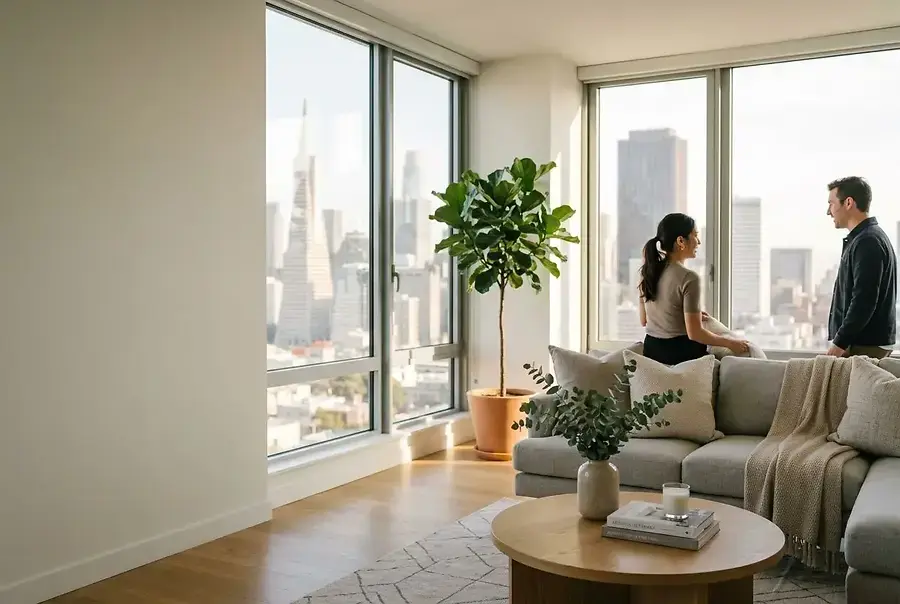
San Francisco properties often feature stunning views and natural light—two of your greatest selling points. Clean all windows thoroughly and remove heavy curtains or drapes. Replace them with light, neutral window treatments that allow maximum light penetration. Open blinds and curtains during showings to highlight these valuable features.
Create Neutral, Inviting Color Palettes
While your bold accent wall might be your favorite design choice, it could turn off potential buyers. Paint walls in neutral tones such as soft whites, warm grays, and beiges. These colors create a calm backdrop that allows buyers to focus on the home's architecture and layout rather than your personal style preferences.
Stage Each Room with Purpose
Every room should have a clear function and be appropriately furnished:
- Living Room: Arrange furniture to encourage conversation and highlight architectural features
- Bedroom: Keep minimal furniture; a neatly made bed with quality linens is essential
- Kitchen: Clear counters, polish appliances, and ensure the space feels functional and modern
- Bathrooms: Display fluffy towels, add plants, and ensure everything is spotlessly clean
Enhance Curb Appeal
Your home's exterior is the first thing buyers see. Invest in landscaping, fresh paint on the front door, and updated house numbers. A well-maintained entrance sets a positive tone for the entire showing and can significantly impact buyer perception.
Add Strategic Lighting and Ambiance
Proper lighting can transform a space. Replace dim overhead lights with layered lighting options, including table lamps and accent lighting. During evening showings, soft lighting creates warmth and invites buyers to imagine themselves entertaining in the space.
Common Staging Mistakes to Avoid
Over-Staging and Excessive Decoration
While staging is important, too much decoration can feel artificial and off-putting. Avoid:
- Overly trendy furniture or décor that dates quickly
- Excessive throw pillows and blankets
- Too many decorative accessories on shelves and surfaces
- Artificial flowers or plants
The goal is to create an inviting space, not a showroom.
Ignoring Maintenance Issues
No amount of staging can hide poor maintenance. Address visible problems before showing your home, including:
- Cracked paint or water stains
- Broken fixtures or hardware
- Carpet stains or worn flooring
- Leaky faucets or plumbing issues
These issues signal neglect and can significantly reduce buyer confidence and offers.
Poor Odor Management
Unpleasant smells are a major turnoff for buyers. Avoid cooking strong-smelling foods before showings, and eliminate pet odors completely. Instead, consider subtle, fresh scents like fresh-baked cookies or fresh linen, but avoid overwhelming artificial fragrances.
Inadequate Lighting
Dark, poorly lit homes feel depressing and smaller than they actually are. Turn on all lights during showings, open all window coverings, and consider adding additional lighting fixtures if needed.
Furniture That's Too Large or Poorly Arranged
Oversized furniture makes rooms feel cramped and limits the buyer's ability to envision their own belongings in the space. Less is more when it comes to staging furniture.
Conclusion: Taking Action to Maximize Your Home's Potential
Home staging is a strategic investment that pays dividends in San Francisco's competitive real estate market. By decluttering, depersonalizing, and strategically arranging your space, you create an environment where buyers can envision their future. The combination of proper staging, maintenance, and attention to detail can result in faster sales and higher offers.
Whether you choose to stage your home yourself or hire a professional stager, the key is taking action. Your San Francisco property has tremendous potential—staging simply helps that potential shine through. Start with the strategies outlined above, and watch as serious buyers respond to your beautifully presented home.