Why Neighborhood Selection Matters More Than House Features
When searching for a home in Seattle, many buyers focus primarily on the house itself—the number of bedrooms, updated kitchen, or hardwood floors. However, experienced real estate professionals know that choosing the right neighborhood is often more important than the property features. You can renovate a kitchen, but you cannot relocate your neighborhood.
Your neighborhood shapes your daily life in countless ways. It determines your commute time, influences your children's educational opportunities, affects your property value appreciation, and defines your social connections. Seattle's diverse residential landscape offers something for everyone, but finding the right fit requires thoughtful evaluation.
Key Factors for Evaluating Seattle Neighborhoods: Walkability, Schools, and Commute Times
Walkability and Urban Convenience
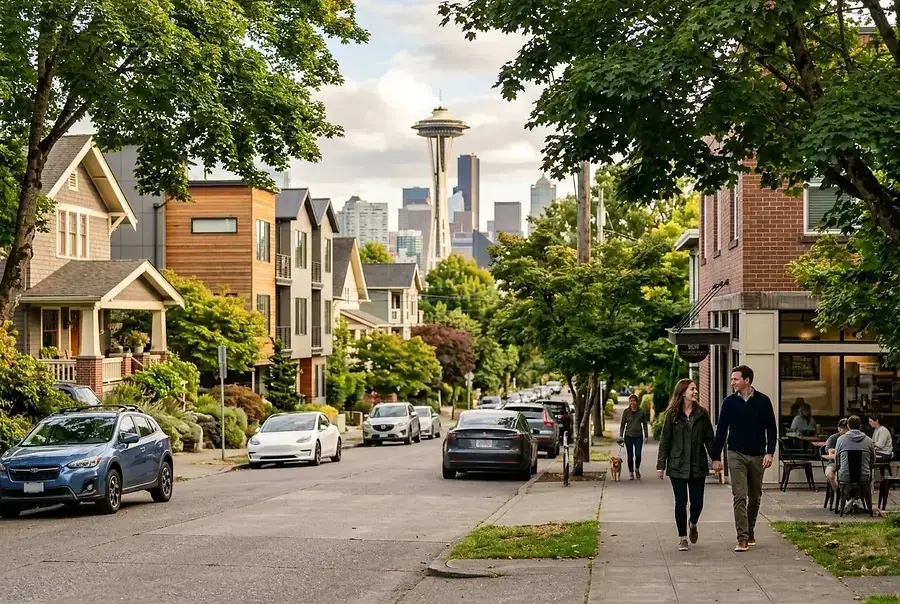
Seattle's neighborhoods vary dramatically in walkability, from highly pedestrian-friendly urban cores to car-dependent suburban areas. Walkability scores measure how easily you can access essential services on foot, including grocery stores, restaurants, parks, and public transportation.
High-walkability neighborhoods offer numerous benefits:
- Reduced transportation costs and environmental impact
- Increased physical activity and community engagement
- Better access to dining, shopping, and entertainment options
- Stronger sense of community through street-level interactions
- Typically higher property values and better long-term appreciation
Consider your lifestyle when evaluating walkability. If you prefer car-free living or enjoy urban exploration, prioritize neighborhoods with high walk scores. If you value space and quieter surroundings, suburban areas with moderate walkability may suit you better.
School Quality and Educational Opportunities
Even if you don't have school-age children, school quality significantly impacts neighborhood desirability and property values. Seattle Public Schools vary considerably in academic performance, resources, and community engagement.
When evaluating schools, research:
- Test scores and graduation rates
- Teacher-to-student ratios and staff experience
- Extracurricular programs and special offerings
- Parent involvement and community reputation
- Diversity and inclusive policies
Beyond traditional public schools, Seattle offers excellent private schools, charter schools, and alternative educational programs. Visit schools in person, talk to current parents, and review recent performance data to make informed decisions.
Commute Times and Transportation Access
Seattle's geography and traffic patterns create significant variation in commute times across neighborhoods. A seemingly short distance can translate to a lengthy commute during peak hours. Consider both your primary workplace and potential future employment locations.
Evaluate transportation options including:
- Public transit access (buses, light rail, ferries)
- Highway proximity and traffic patterns
- Bike-friendly infrastructure and trails
- Parking availability and costs
- Carpooling opportunities
Seattle's expanding light rail system continues to improve connectivity. Neighborhoods near light rail stations often command premium prices due to reduced commute times and increased convenience.
Seattle's Diverse Residential Communities: From Urban Core to Suburban Comfort
Urban Core Neighborhoods
Seattle's urban core includes vibrant neighborhoods like Capitol Hill, Ballard, and Queen Anne. These areas feature walkable streets, diverse populations, excellent restaurants and entertainment, and strong community identities. Urban neighborhoods typically offer smaller lots, older homes with character, and higher price points. They appeal to young professionals, empty nesters, and those seeking cultural engagement.
Mid-Range Urban-Suburban Neighborhoods
Areas like Fremont, Wallingford, and Green Lake offer a balanced lifestyle. These neighborhoods provide good walkability, excellent schools, parks and recreation, and a strong sense of community while maintaining more space and affordability than the urban core. They attract families seeking neighborhood character without sacrificing convenience.
Suburban Communities
Neighborhoods like Shoreline, Edmonds, and Sammamish offer larger homes on bigger lots, excellent schools, family-friendly amenities, and quieter living environments. These areas require more car dependency but provide space, safety, and strong community institutions. They appeal to families prioritizing schools and space.
Emerging Neighborhoods
Areas like Beacon Hill and Rainier Valley are experiencing significant revitalization. These neighborhoods offer more affordable entry points, improving transit access, growing commercial development, and increasingly diverse populations. Early buyers in emerging neighborhoods may benefit from appreciation as infrastructure and amenities improve.
Making Your Neighborhood Decision with Confidence
Choosing a Seattle neighborhood requires balancing multiple factors against your personal priorities. Create a weighted list of your must-haves versus nice-to-haves. Are schools your top priority? Do you need walkability? Is commute time critical?
Visit neighborhoods at different times—weekdays and weekends, mornings and evenings. Walk the streets, visit local coffee shops, talk to residents, and imagine yourself living there. Your neighborhood should feel like home, not just a location.
Work with a knowledgeable local real estate agent who understands Seattle's neighborhoods intimately. They can provide insights into neighborhood trends, future development plans, and hidden gems that match your criteria. Take time with your decision—the right neighborhood will enhance your quality of life for years to come.