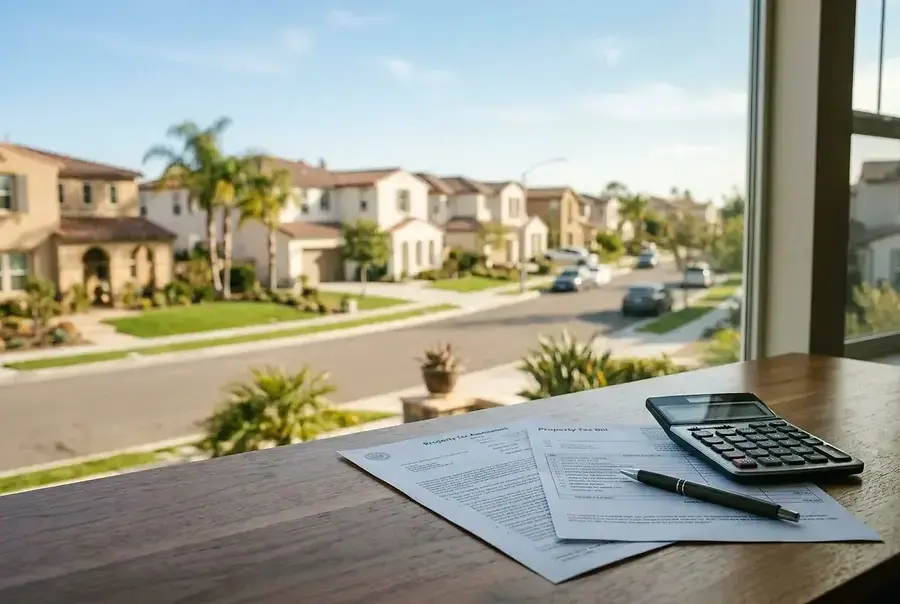
Introduction: Why Property Taxes Matter for Homebuyers
When purchasing a home in Southern California, most buyers focus on the mortgage payment, down payment, and interest rates. However, property taxes represent a significant ongoing expense that deserves equal attention during your financial planning. Understanding how property taxes work in Los Angeles and San Bernardino counties is essential for making informed decisions about your home investment.
Property taxes fund critical community services including schools, fire departments, police protection, and local infrastructure. For homebuyers, these taxes typically represent the second-largest housing expense after your mortgage payment. By learning how property taxes are calculated and what factors influence your annual bill, you can better prepare your budget and avoid financial surprises.
How California's Property Tax System Works for Residential Properties
The Proposition 13 Foundation
California's property tax system is built on Proposition 13, a landmark law that fundamentally shapes how homeowners are taxed. This proposition established that property taxes cannot exceed 1% of the assessed property value. This rate applies uniformly across the state, including Los Angeles and San Bernardino counties.
What makes Proposition 13 unique is its protection against rapid tax increases. When you purchase a home, the property is assessed at its current market value. However, your assessed value can only increase by a maximum of 2% annually, regardless of how much your home's actual market value increases. This protection continues until the property is sold or transfers ownership.
The Assessment Process
Each county maintains an assessor's office responsible for determining property values. In Los Angeles and San Bernardino counties, assessors use various methods to establish fair market value, including:
- Comparable sales analysis (comparing your property to recently sold similar homes)
- Cost approach (calculating replacement cost of structures)
- Income approach (for investment properties)
Once assessed, your property value is multiplied by the 1% tax rate to determine your annual property tax bill. For example, a home assessed at $500,000 would generate an annual property tax of $5,000.
Additional Taxes and Assessments
Beyond the base 1% property tax, homeowners may face additional assessments and bonds that appear on their tax bills. These might include:
- School bonds and parcel taxes
- County assessments for infrastructure improvements
- Special district taxes (fire, water, sanitation)
- Mello-Roos assessments (in newer developments)
These supplemental taxes can add 0.3% to 1% or more to your total tax burden, making it crucial to review the complete tax bill before purchasing.
What Affects Your Property Tax Assessment and Annual Costs
Purchase Price and Initial Assessment
Your property's purchase price directly determines your initial assessed value. The higher the purchase price, the higher your property taxes will be. This is why it's essential to factor property taxes into your overall home affordability calculation. A $100,000 difference in purchase price translates to approximately $1,000 in annual property taxes.
Property Improvements and Renovations
One often-overlooked factor is how home improvements affect your assessed value. Major renovations and additions can trigger a reassessment of your property, potentially increasing your tax bill. The assessor's office may increase your property's value if you add square footage, upgrade systems, or make significant structural improvements.
However, routine maintenance and repairs typically do not trigger reassessment. It's wise to consult with your county assessor before undertaking major projects to understand potential tax implications.
Location and Market Conditions
While your assessed value is protected by the 2% annual cap, the initial assessment depends on current market conditions in your specific neighborhood. Properties in desirable areas of Los Angeles County typically have higher assessed values than comparable homes in San Bernardino County, resulting in higher annual taxes.
Neighborhood factors affecting assessment include:
- School district quality and ratings
- Proximity to employment centers and transportation
- Local amenities and recreational facilities
- Crime rates and neighborhood safety
- Recent comparable home sales
Exemptions and Special Circumstances
Certain homeowners may qualify for property tax exemptions or reductions. These include:
- Homeowner's exemption (reduces assessed value by $7,000 for primary residences)
- Senior citizen exemptions (for those 65 and older)
- Disabled veteran exemptions
- Agricultural property exemptions
If you believe you qualify for any exemptions, contact your county assessor's office to apply. These exemptions can provide meaningful tax savings over time.
Conclusion: Making Informed Financial Decisions About Your Home Investment
Property taxes are a permanent part of homeownership in Southern California, but understanding how they work empowers you to make better financial decisions. By factoring property taxes into your home purchase budget, you ensure that your investment remains affordable long-term.
Before making an offer on a home in Los Angeles or San Bernardino counties, request the current property tax bill and research any pending assessments or bonds. Use online assessment tools provided by county assessor offices to estimate taxes on properties you're considering. Remember that while your assessed value is protected by Proposition 13's 2% annual cap, your total tax bill may increase due to supplemental assessments and bond measures.
Take time to understand your local tax situation, explore available exemptions, and consult with a real estate professional or tax advisor if you have questions. With this knowledge, you'll be better prepared to evaluate the true cost of homeownership and make a confident investment in Southern California real estate.