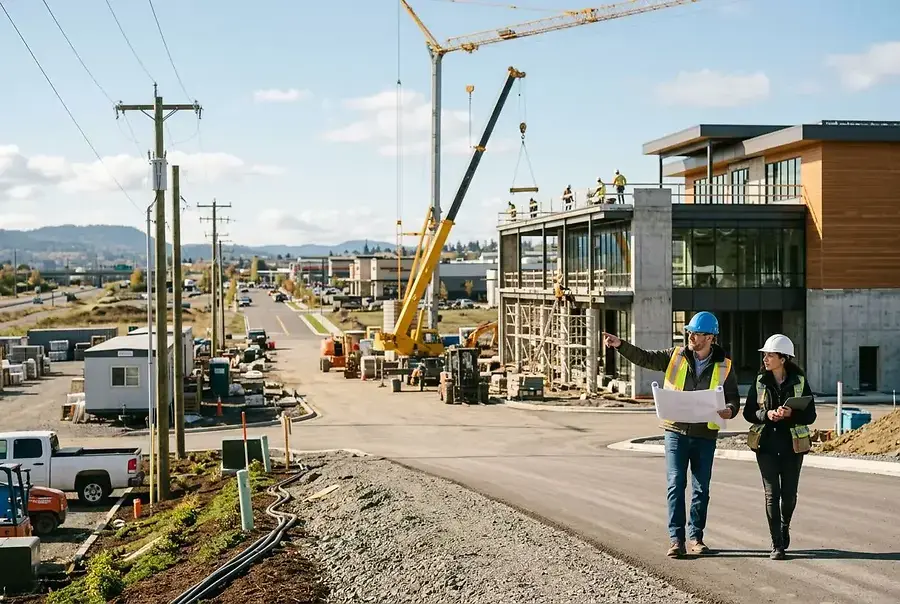
Understanding Build-to-Suit Commercial Development
Build-to-suit commercial development represents a transformative approach to real estate where developers construct properties specifically tailored to meet the unique needs of anchor tenants. Unlike traditional speculative development, this model creates a collaborative partnership from inception, ensuring that the final product aligns perfectly with tenant requirements and market demands.
In this arrangement, a tenant commits to a long-term lease before construction begins, providing developers with the financial certainty needed to move forward. This mutual commitment creates a foundation of trust and shared success, allowing both parties to invest confidently in the project's future.
The Core Benefits of Build-to-Suit Models
For Tenants: Build-to-suit arrangements offer customized spaces designed around operational workflows, reducing costly retrofitting and enabling faster time-to-market. Tenants gain control over facility specifications, layout, and technology infrastructure while securing favorable long-term lease rates.
For Developers: This model eliminates speculative risk by guaranteeing occupancy before breaking ground. Developers benefit from pre-leased revenue streams, easier financing, and the ability to scale projects based on proven tenant demand rather than market speculation.
Key Markets and Tenant Demand Drivers
Emerging Growth Corridors
Growth markets are experiencing unprecedented demand for commercial space as businesses expand operations beyond traditional urban centers. These emerging corridors offer several compelling advantages:
- Lower Operating Costs: Reduced real estate and labor expenses compared to established metropolitan areas
- Access to Talent: Growing populations and quality-of-life improvements attract skilled workforces
- Infrastructure Development: Improved transportation networks and utilities support business expansion
- Regulatory Incentives: Many growth markets offer tax breaks and development incentives to attract businesses
Driving Tenant Demand
Several factors are fueling tenant interest in build-to-suit opportunities within growth markets:
Technology and Innovation Sectors: Companies seeking to establish regional hubs require modern, flexible spaces with advanced connectivity and collaborative environments. Build-to-suit developments can incorporate cutting-edge infrastructure from the ground up.
E-commerce and Logistics: The explosive growth of online retail has created massive demand for distribution centers and fulfillment facilities in strategically located growth corridors. Build-to-suit models allow developers to construct facilities optimized for supply chain efficiency.
Corporate Relocations and Expansions: Established companies expanding operations or relocating divisions seek purpose-built facilities that reduce transition costs and operational disruptions. Custom-designed spaces accelerate productivity and employee satisfaction.
Structuring Deals for Long-Term Success
Establishing Clear Partnership Frameworks
Successful build-to-suit deals require comprehensive agreements that address all aspects of development and operation. Key components include:
- Detailed specifications for building systems, layout, and finishes
- Clear timelines with realistic construction schedules and contingency plans
- Defined cost structures with mechanisms for handling overruns
- Lease terms that balance tenant flexibility with developer security
- Performance standards and quality benchmarks throughout construction
Financial Structuring and Risk Management
Effective deal structuring protects both parties while enabling project success. Developers should secure pre-leasing commitments strong enough to attract institutional financing, while tenants should negotiate lease terms that provide operational flexibility and cost certainty.
Consider incorporating:
- Graduated rent structures that reflect market conditions over the lease term
- Renewal options that provide long-term occupancy security
- Tenant improvement allowances that align incentives with quality construction
- Performance guarantees and warranty provisions
Site Selection and Market Analysis
Choosing the right location within a growth market is critical. Evaluate factors including:
Proximity to transportation networks, workforce availability, supplier ecosystems, and future development plans should all inform site selection decisions.
Comprehensive market analysis helps identify emerging corridors with sustainable growth fundamentals. Look for areas experiencing population growth, business expansion, infrastructure investment, and positive economic indicators. This due diligence reduces long-term risk and maximizes the asset's value.
Construction and Project Management Excellence
Build-to-suit success depends on flawless execution. Establish clear communication protocols, regular progress reviews, and quality assurance checkpoints. Experienced project management teams that understand both development and tenant operations can bridge potential gaps and ensure the final product meets expectations.
Implement contingency planning for supply chain disruptions, labor challenges, and market changes. Flexibility and proactive problem-solving separate successful projects from troubled ones.
Conclusion: Positioning Your Business for Growth
Build-to-suit commercial development represents a powerful strategy for businesses and developers seeking to capitalize on growth market opportunities. By aligning interests through long-term partnerships, both parties can secure competitive advantages while minimizing risk.
For tenants, build-to-suit arrangements provide customized facilities that enhance operational efficiency and competitive positioning. For developers, pre-leased projects offer financial certainty and the ability to scale operations strategically.
As growth markets continue to attract business investment and population growth, the demand for purpose-built commercial space will only intensify. Organizations that embrace build-to-suit models and commit to collaborative partnerships will be best positioned to thrive in these emerging corridors.
The future of commercial real estate belongs to those who can align development with tenant needs, secure long-term partnerships, and execute with excellence. By understanding market dynamics, structuring deals thoughtfully, and maintaining operational focus, businesses can unlock significant value in growth markets for years to come.