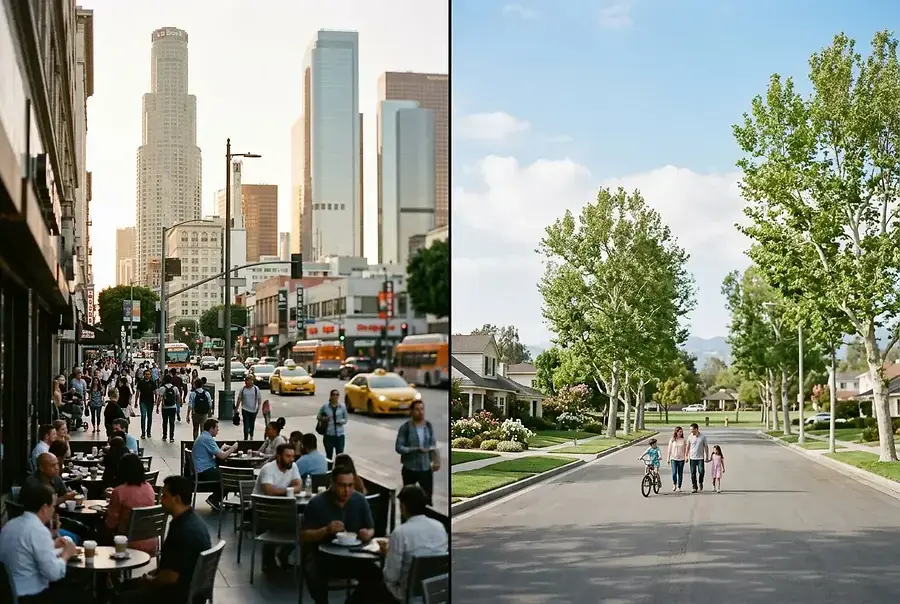
Understanding Suburban and Urban Characteristics in LA County
Los Angeles County presents a fascinating spectrum of living environments, from the densely populated urban cores of downtown LA and Long Beach to the sprawling suburban communities of the San Gabriel Valley and Orange County border regions. Understanding the fundamental differences between these two lifestyle options is the first step in making an informed decision about where to call home.
Urban neighborhoods in LA County are characterized by high-density residential areas, walkable streets, diverse cultural communities, and proximity to entertainment, dining, and employment centers. Cities like Los Angeles, Santa Monica, and Long Beach offer vibrant nightlife, world-class museums, and an eclectic mix of residents from around the globe.
Suburban communities, found in areas like Pasadena, Torrance, and the San Gabriel Valley, offer larger properties, quieter streets, family-oriented amenities, and a stronger sense of neighborhood community. These areas typically feature single-family homes, local parks, and schools that serve as community gathering points.
Comparing Lifestyle, Commute, and Community Amenities
Lifestyle and Daily Experience
Your daily lifestyle differs significantly between urban and suburban settings. Urban living means having restaurants, shops, and entertainment venues within walking distance or a short drive. You'll experience diverse cultural events, art galleries, live music venues, and a constant buzz of activity. However, this comes with higher noise levels, crowded spaces, and less personal space.
Suburban living offers a more relaxed pace, with emphasis on family activities, local community events, and outdoor recreation. You'll enjoy quieter evenings, more spacious homes, and a stronger sense of knowing your neighbors. The trade-off is that you'll need to drive to access many amenities and entertainment options.
Commute Considerations
Commuting patterns vary dramatically across LA County. Urban residents often benefit from shorter commutes if they work downtown or in nearby business districts, with options for public transportation via Metro buses and trains. However, traffic congestion can still be significant during peak hours.
Suburban commuters typically face longer distances to employment centers, often requiring a personal vehicle. The I-10, I-405, and I-710 freeways are major arteries connecting suburban areas to urban job centers, and traffic can be unpredictable. However, some suburban areas have developed their own employment hubs, reducing commute times for local workers.
Community Amenities
- Urban areas: Museums, theaters, restaurants, nightlife, public transportation, cultural events, shopping districts
- Suburban areas: Parks, schools, recreational facilities, community centers, shopping malls, family-friendly events
Financial Considerations: Pricing and Investment Potential
Real Estate Pricing
LA County's real estate market is among the most expensive in the nation. Urban properties command premium prices due to location desirability and limited land availability. A modest apartment in Santa Monica or downtown LA can easily exceed $800,000, while similar square footage in suburban areas might cost $600,000 to $700,000.
Suburban properties generally offer more space for your investment. You can typically purchase a three-bedroom home with a yard in areas like Torrance or Pasadena for prices comparable to a smaller urban condo. However, property taxes and homeowners association fees should be factored into your budget.
Investment Potential
Urban properties historically appreciate steadily due to consistent demand and limited supply. Walkable neighborhoods with strong job markets tend to maintain value well, making them solid long-term investments. Rental income potential is also higher in urban areas.
Suburban properties offer different investment advantages. While appreciation may be slower, the lower entry price means better cash flow for rental properties. Family-oriented suburbs with excellent schools often see steady appreciation as families prioritize education.
Cost of Living
Beyond housing, consider the total cost of living. Urban residents may spend less on transportation due to walkability and public transit options, but dining and entertainment expenses tend to be higher. Suburban residents spend more on vehicle maintenance and fuel but may save on dining and entertainment costs.
Making Your Decision: Which LA County Community Fits Your Needs
Choose Urban Living If You:
- Work downtown or in a major urban employment center
- Prefer walkable neighborhoods and public transportation
- Value cultural diversity and entertainment options
- Don't mind smaller living spaces and higher density
- Are single or a young couple without children
- Enjoy an active nightlife and restaurant scene
Choose Suburban Living If You:
- Have a family with school-age children
- Desire more space and a yard
- Prefer a quieter, more family-oriented environment
- Work in suburban employment centers
- Value community connection and neighborhood stability
- Want more affordable housing options
The Hybrid Approach
Many LA County residents find success with a hybrid approach. Consider urban-adjacent suburbs like Pasadena, Eagle Rock, or Long Beach, which offer suburban charm while maintaining proximity to urban amenities. These communities provide a balance of space, community feel, and access to entertainment and employment.
Alternatively, explore emerging neighborhoods in both urban and suburban areas that are experiencing revitalization. These areas often offer better value while maintaining growth potential.
Final Thoughts
The choice between suburban and urban living in LA County ultimately depends on your personal priorities, career, family situation, and lifestyle preferences. Visit neighborhoods at different times of day to experience the true character of the area. Talk to current residents, explore local schools and parks, and consider your long-term goals.
LA County's diversity means there's truly a perfect home for everyone—whether you're drawn to the electric energy of the city or the peaceful comfort of the suburbs. Take your time, do your research, and trust your instincts when you find the community that feels like home.